
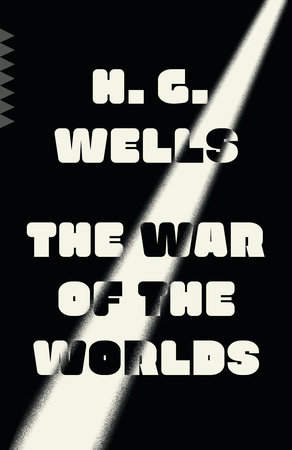
The War of the Worlds
When a Martian cylinder lands near Woking, a writer watches the first visitors emerge and sees their heat-ray scatter the crowd.
About
Spoiler notice: Spoilers for the opening cylinder and first attacks, the narrator’s separation from his wife, the curate’s fate in the ruined house, the brother’s escape from London, the Martians’ defeat by terrestrial bacteria, and the narrator’s reunion with his wife.
The novel begins by looking back on the confidence of late nineteenth-century England. While people continue their ordinary routines, astronomers observe flashes on Mars without understanding that projectiles are being launched toward Earth. The narrator, a speculative writer living near Woking, recalls his own evening at an observatory with the astronomer Ogilvy. Their observations give him no warning of what is coming: he watches a small red planet and returns home to his wife, still absorbed in his work and the familiar business of life. Wells sets the disaster against this ordinary calm, then follows the narrator as that security narrows to immediate questions of shelter, food and escape.
The first projectile lands on Horsell Common, where a metal cylinder is mistaken for a meteorite. When its top unscrews, the crowd expects human visitors and instead sees tentacled Martians struggling under Earth’s heavier gravity. The narrator watches the heat-ray strike the little deputation that has approached with a white flag; Ogilvy, Stent and Henderson are among the men later identified as part of that effort to communicate. The crowd scatters, while the narrator remains fascinated and frightened by what he has seen. More cylinders arrive, and the Martians move through Surrey in towering fighting-machines. Their heat-ray burns through people and buildings; black smoke fills low ground and makes escape more dangerous. The narrator’s account is limited to what he sees, hears or later learns, so rumour and delayed explanation shape his understanding.
The danger becomes personal when the narrator takes his wife toward Leatherhead in a dog-cart borrowed from the Spotted Dog innkeeper, promising to bring it back by midnight. He leaves his wife with her cousins and returns because he made that promise, while also admitting that he wants to witness the fighting. In a thunderstorm near Maybury Hill, his horse bolts at the sight of two fighting-machines; he overturns the cart and scrambles home. A soldier climbs into his garden, and the narrator brings him inside: this is the artilleryman, who recounts how his gun and battery were destroyed and how he hid among the dead before escaping. The narrator travels with him for a time, then continues toward Leatherhead. Later he meets the curate amid the devastation near Weybridge. Their different responses make companionship difficult: the narrator tries to stay practical and quiet, while the curate interprets the destruction through religious terror and becomes unable to control his speech or hunger.
The narrator and curate become trapped when the fifth cylinder strikes the house where they have stopped for food, burying them beneath its ruins. Through a gap they watch the Martians working outside and hear their machines, while the cramped darkness sharpens every small disagreement. The curate’s loud outbursts risk drawing attention. When he rushes toward the kitchen to preach, the narrator strikes him down with the butt of a meat chopper. A Martian handling-machine enters the ruined house; the narrator hides as its tentacle drags the curate’s body toward the opening. He briefly sees the Martian examining the curate’s head, then retreats and waits until he can escape. He cannot follow what happens to the curate after the body is taken away. This imprisonment leaves him to piece together events beyond his hiding place after he crawls into a changed countryside.
The book’s second perspective comes from the narrator’s brother, a medical student in London. His story is narrated by his brother, but ranges across scenes the narrator did not witness. When the danger becomes undeniable, a vast crowd flees through streets and roads jammed with carts, bicycles and people on foot. The brother escapes the crush at Chalk Farm by taking part in the looting of a cycle shop and riding away on a bicycle. He later protects two women from men trying to drag them from their pony-chaise, then travels with them via Chelmsford toward the Essex coast. There he secures passage for the three aboard a steamer bound for Ostend. From the water they watch the Thunder Child ram attack the Martians; the ironclad destroys two fighting-machines before the refugee steamer continues out to sea. The brother’s account shows the evacuation’s scale and the risky bargains and acts of help that shape his route.
After the narration returns to the narrator, he encounters the artilleryman again near Putney Hill. The survivor describes plans for an underground human community and a future resistance, but his imagined programme gives way to drink, cards and delay. The narrator leaves him and walks through an almost empty London, where red weed covers waterways and streets, and a lone Martian’s repeated cry becomes a sound that marks the city’s eerie persistence. Near Primrose Hill he sees motionless fighting-machines and discovers that the Martians are dead. Earth’s ordinary bacteria, against which humans have developed resistance, have killed the invaders after human weapons failed to stop them. The discovery ends the immediate threat, but the survivors must still navigate ruins, hunger and the uncertain work of finding one another.
The narrator returns to his damaged home and finds his abandoned papers and the remains of the meal he shared with the artilleryman. A voice he mistakes for his own thought tells him that nobody escaped, then his cousin and wife appear at the open window. The closing epilogue moves beyond this reunion. The narrator notes that some explanations of the Martians’ death remain uncertain, and he worries that a later invasion could come. His final account keeps the danger unresolved at the scale of the planets: the first attack has ended, but humanity can no longer treat Earth as a protected home. That ending balances the recovery of the narrator’s household with the broader knowledge that the invasion has changed how survivors imagine the future.
Book details
- Author
- H. G. Wells
- First published
- 1898
- Series
- No series listed
- Subgenre
- Classic science fiction, First contact, Adventure fiction
- Tags
- No tags for this book.
Review
Editor profile
Baby Bat
Goodreads and social links will be added soon.
- Goodreads — link coming soon
- Social media — link coming soon