
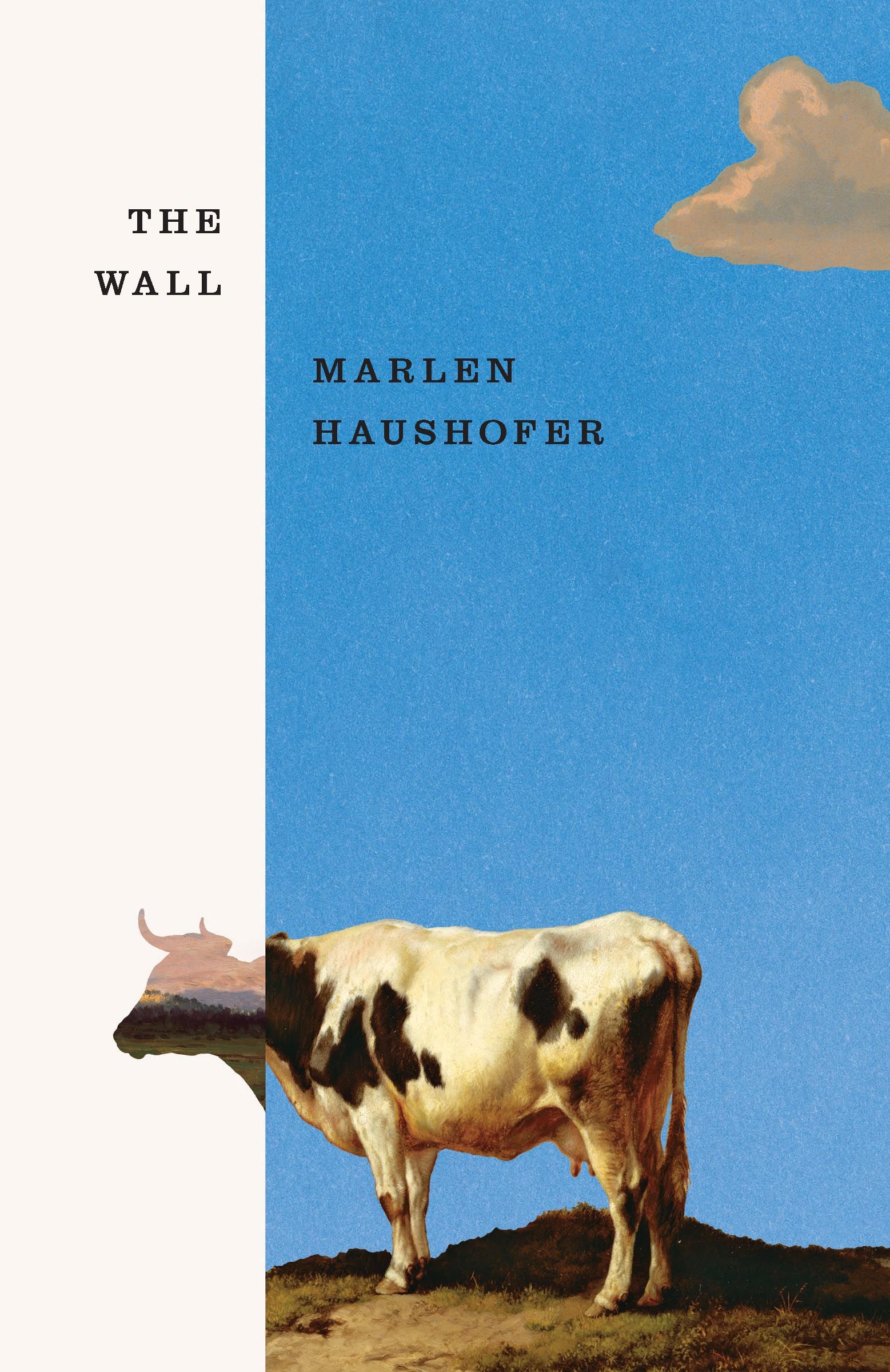
The Wall
While staying at a lodge in the Austrian mountains, an unnamed woman discovers that an invisible wall has cut her off from the rest of the world.
About
Spoiler notice: Full-novel spoilers below, including the final encounter and the narrator's decision at the end.
Marlen Haushofer's The Wall starts with a practical visit to an Austrian mountain lodge. Its unnamed narrator has come to stay with her cousin Luise and Luise's husband, Hugo. The next day, the pair are gone. Searching for them, the woman finds that an invisible, transparent barrier cuts across the gorge and encloses the lodge and surrounding land. Beyond it, people and animals appear to have stopped in place. She cannot cross the surface or get a response from the world on its other side. This is the novel's central speculative premise, but Haushofer gives no technical explanation for the wall. The narrator's immediate questions are more physical: what happened, what can she eat, and how can she live here without help? The mystery remains present while the work of staying alive begins.
She later sets down her account in a report, looking back on the months and years since the catastrophe. Writing gives the isolated woman a reason to order her days and preserve what she can remember, though the record cannot tell her why the wall appeared or whether anyone elsewhere survived. Her situation is both bounded and exposed. She can see the mountains and settlements beyond the barrier, but has no access to them; inside, the weather and seasons still govern what grows, what can be stored, and how far she can travel. A small patch of ground, the lodge and nearby alpine pasture become a whole working world. The barrier is therefore more than an uncanny image. It divides her from human society while making her depend on the land and its changing conditions in ways her former life did not.
The novel attends closely to those conditions. The narrator must find food, tend the animals, make clothing and keep the shelter usable. She learns to plan around winter, illness, fatigue and the limits of her strength. Her progress is neither a clean transformation into an expert nor a sequence of ingenious survival tricks. It consists of recurring jobs and adjustments, with mistakes and shortages still possible. The pace lets ordinary maintenance become the main action: an animal needs feeding whether or not the larger mystery has been solved. In her journal, practical detail shares space with memories of the life she left behind. The past arrives in fragments rather than as an orderly explanation, and the present is recorded through what must be done next. This everyday structure keeps the speculative disaster close to bodily needs.
The animals are companions, but their presence also changes the shape of responsibility. A dog, a cat and a cow remain with the narrator after the barrier divides her from everyone else. They need different kinds of care, and their routines give time a rhythm that human conversation once supplied. The woman is not simply using them as equipment: she watches their habits and moods, and her attachments make their losses matter. Yet she cannot protect every creature or make nature gentle. Food, shelter and safety are limited, and her own survival can come into tension with the animals around her. The novel's attention to this dependence makes the valley feel less like a private kingdom than a shared, fragile habitat. The barrier separates human beings, but it does not remove the narrator from a wider world of other living bodies.
Before the catastrophe, the narrator was a widow with two nearly grown daughters, still shaped by years of family expectations and work she rarely describes as fulfilling. She remembers her husband and two daughters without turning the past into an uncomplicated home to which she longs to return. The wall makes those relationships unreachable, but it also releases her from the roles and judgements that had organised her life. Haushofer does not make that freedom simple or triumphant. Solitude brings grief, fear and relentless labour, while the narrator's changing body and habits alter how she understands herself. Her name matters less in a place where no one uses it; what matters is whether she can judge the weather, find food and care for those with her. The novel leaves room to ask whether this new independence is liberation, deprivation, or an uneasy mixture that cannot be neatly resolved.
A later encounter prevents the enclosed valley from becoming a stable pastoral refuge. The narrator comes upon another surviving man, whose violent actions place her and the animals in immediate danger. She kills him. The event is brief in the wider span of the narrative, but it breaks the assumption that another human presence must mean companionship or a return to social life. The last man does not restore the community erased by the wall; his arrival brings danger, and the narrator acts to stop it. Critics have debated the significance of this final violence, including what it means for a novel so focused on a woman's life outside familiar social structures. The book offers no easy moral emblem in its place. The scene remains part of her record of survival, with its consequences carried forward into the quiet work that follows.
The Wall is often described through its disaster premise, yet its form is closer to a sustained record of attention: to changing weather, remembered faces, animal needs and the effort of writing when there is no reader to answer. The unexplained barrier keeps the scale of the catastrophe unknowable, while the narrator's limited point of view prevents a full account of what happened beyond her valley. Even the ending offers no broad repair or explanation. After the encounter with the man, she returns to the acts that make another day possible and continues her account. The open close leaves her future uncertain, but her persistence in living and writing gives the final pages their force. Haushofer makes isolation both a condition of danger and a way the narrator sees familiar assumptions differently, without suggesting that the natural world is a comforting substitute for human society.
Book details
- Author
- Marlen Haushofer
- First published
- 1963
- Series
- No series listed
- Subgenre
- Classic science fiction, Post-apocalyptic, Survival fiction
- Primary genre
- Sci-Fi, Literary Fiction
- Tags
- No tags for this book.
Review
Editor profile
Baby Bat
Goodreads and social links will be added soon.
- Goodreads — link coming soon
- Social media — link coming soon