
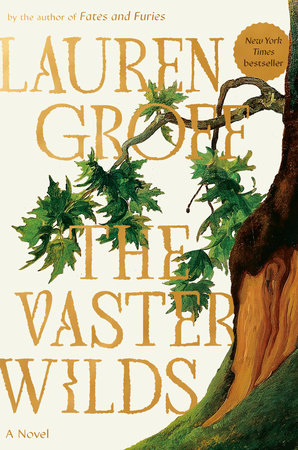
The Vaster Wilds
During a winter of famine at a colonial Virginia settlement, an unnamed servant girl escapes through the palisade and runs into the forest with only stolen clothing and a few possessions.
About
Spoiler notice: Discusses the escape, early survival scenes, memories and the broad colonial setting, including some later hazards; does not reveal the ending.
The Vaster Wilds begins with a servant girl slipping through a narrow opening in the palisade of a starving colonial settlement. It is winter, the moon is hidden, and the girl runs across frozen ruts and ruined corn. Her flight is already entangled with the lives she leaves behind: the boots she wears belonged to a boy who died of smallpox, while her gloves and cloak came from her mistress. Ahead, she sees the body of a soldier who tried to escape earlier and was killed in the forest. This opening makes survival urgent and morally unsettled. The girl has to use what the settlement has placed within reach, even as each stolen object carries the suffering of someone else. The wilderness begins as an alternative to the fort, but the novel gives no reason to mistake it for safety.
The girl is not given a personal name in the passages that introduce her; she is called by her role and treated as someone easily overlooked. She is an illiterate foundling, a person whose life conventional accounts of colonial history might leave out. That marginal position shapes both the danger she faces and the form of the story. The narrative follows her closely, but pieces of her earlier life surface as memory rather than as a separate, orderly history. Bess, a child she loved, and a Dutch glassblower return to her thoughts. These attachments keep the escape from becoming a simple tale of an isolated body against nature: she carries relationships, obligations and grief into the forest, whether or not she can return to them.
The book measures the journey through the body's changing capacity to continue. Hunger has already reduced the girl to a state of extreme weakness before she crosses the palisade; cold, fatigue and fear accompany the running that follows. Snow, frozen ground and darkness press in on her as she runs; at an iced river she has to make a small fire. After losing her gloves, she tries to warm her hands with duck fat. These concrete acts make survival less like mastery than repeated improvisation. A resource can help for a moment without making the next need disappear. The close attention to touch, temperature and exertion also keeps the historical setting material: the girl must endure weather and bodily limits before she can turn them into any larger idea about freedom.
The landscape is active in the girl's perception, but it does not settle into a single symbolic meaning. During her run, a twisted elm briefly suggests a horse, and wind-shaped snow gives her the vision of a lit city before it collapses. At the river, the ice covers water whose movement continues underneath. These scenes mingle observation with imagination at a time when exhaustion and loneliness strain the line between the two. They also show that the girl's knowledge is provisional: what she recognizes, hopes for or fears can change as she keeps moving. The story's natural world offers neither a simple refuge nor an enemy with a human plan. It has its own scale and motion, and the girl's survival depends on attention to conditions she cannot command.
Faith develops alongside that attention. The girl has learned scripture through the people who controlled her life, and the opening lets her hear her mistress's scolding voice in the forest. She answers that remembered rebuke by recalling a biblical instruction that can support escape as well as submission. The exchange is brief, almost playful, but it shows her testing the words she has been taught against the reality of her own need. Her relation to God changes alongside her experience of the natural world. The story therefore treats belief as something lived through fear, wonder and the body, rather than a settled explanation imposed from outside. Her private religious language changes as the voices and pressures around her change.
The escape also places the girl inside the violence and assumptions of colonial Virginia. In the opening, she sees a soldier's death through fear of the person who killed him; the reader encounters that moment through the frightened perspective of someone raised within the settlement. Later, encounters with Indigenous people expose different understandings of land and survival that unsettle what she has been taught. The story also revises captivity narratives that make conquest appear justified. That context matters because the girl is both oppressed by the settlement and shaped by its prejudices. The wilderness does not erase this history. It makes the limits of her inherited explanations harder to ignore, while leaving the encounter between unequal cultures morally complicated.
As the story moves beyond its initial flight, it keeps placing physical danger beside questions of belonging, ownership and what counts as a life worth recording. Memories of the people she has loved sustain the girl when human company is scarce, making the wilderness journey more than a contest with cold and hunger. The historical setting raises questions that reach beyond its period, while the narrative stays with the particular sensations and choices of its protagonist rather than turning her into a lesson. The result is a survival story attentive to more than whether one person can keep moving. It asks what kinds of knowledge the girl can carry, what parts of her past remain with her, and how a person excluded from official history might still shape the world that follows.
Book details
- Author
- Lauren Groff
- First published
- 2023
- Series
- No series listed
- Subgenre
- Historical fiction, Literary fiction, Survival fiction
- Primary genre
- Historical Fiction, Literary Fiction
- Tags
- No tags for this book.
Review
Editor profile
Baby Bat
Goodreads and social links will be added soon.
- Goodreads — link coming soon
- Social media — link coming soon