
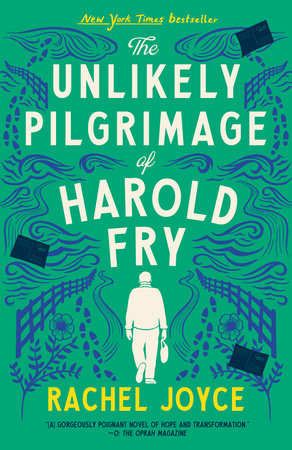
The Unlikely Pilgrimage of Harold Fry
Recently retired Harold Fry lives with his wife, Maureen, in a small English village when a letter arrives from Queenie Hennessy, a former colleague he has not heard from in twenty years.
About
Spoiler notice: Spoilers cover the opening letter, Harold’s departure from Kingsbridge, the basic nature of his pledge to Queenie and broad marriage and memory premises. Later revelations about their shared past, the outcome of the walk and the ending are withheld.
When a letter from Queenie Hennessy arrives, Harold Fry has been retired long enough for one day to resemble the next. He and his wife Maureen live in an English village; she is occupied upstairs while he prepares a short reply to Queenie, an old colleague now in a hospice. Harold intends to post the letter at the corner mailbox. A chance encounter changes his mind. He decides to walk the roughly six hundred miles from Kingsbridge to Berwick-upon-Tweed and deliver the message himself. He has no hiking boots, map, compass, waterproof or mobile phone, only yachting shoes and a light coat. That mismatch between the distance and his equipment gives the story its plain, comic starting point: a man with no real plan commits himself to one demanding purpose.
The route turns the novel into a chain of encounters rather than a race between two named places. As Harold moves across the countryside, he meets people whose stories and company stir a spirit he has kept dormant. The walk asks him to spend time with strangers instead of passing them as background to his errand. The change matters because Harold begins as a retired man whose days have lost their distinctions; each new person interrupts that sameness. Joyce’s own description of the book emphasizes an ordinary person doing something extraordinary in an ordinary way. Harold’s progress remains physical and practical, but the people he meets make it possible for the journey to become more than a test of distance. Its episodes open small windows onto lives beyond his own.
Walking also draws Harold back through his own history. The journey brings memories of his first dance with Maureen, their wedding day and the joy he found in fatherhood. Those recollections sit beside losses and regrets he has to face, so the past does not arrive as a simple collection of happy scenes. The six-hundred-mile undertaking gives him long stretches in which to think, while the encounters on the road keep that inward movement connected to other lives. The novel’s shape joins these two forms of attention: looking back at the choices and disappointments that formed Harold, and meeting people in the present without assuming he already knows what they carry. His pilgrimage asks whether a person can acknowledge painful history and still make a new promise.
Maureen’s side of the separation gives the walk consequences at home. At the beginning, she seems irritated by Harold’s habits, down to the way he butters toast; after he leaves, she finds herself missing him for the first time in years. That shift changes the marriage story without requiring the journey to solve it quickly. Harold’s absence makes their familiar arrangement newly visible, while his memories of their courtship, wedding and family life complicate any easy account of a relationship that has gone quiet. Maureen and Harold are not walking the same road, but their separate experiences of the distance matter to one another. The novel follows how a departure can unsettle a household and give two people room to reconsider what has been lost between them.
Queenie’s place in the story is both its destination and its unfinished business. Harold knows her as an old colleague and friend, but the reader is told at the outset only that she has been out of his life for twenty years and is now writing from a hospice to say goodbye. Harold believes that if he keeps walking, she will live. The pledge puts them each against the odds: Harold commits to a difficult act for Queenie while she faces the fact of dying. That mutual risk gives the letter more weight than a message to be delivered. It makes the walk an act of fidelity whose outcome Harold cannot control, and keeps the story’s central tension alive without revealing what remains unsaid between them.
The word “pilgrimage” carries a religious echo, but Harold does not set out as a practiced believer. His faith takes the form of a promise he can keep only one step at a time. He has neither careful equipment nor a route worked out in advance; the resolve comes first, and the practical difficulties follow. The contrast lets the book treat hope seriously without making Harold’s belief a certainty or a supernatural guarantee. The walk is at once eccentric and earnest, and Joyce’s story can draw humor from the gap between its scale and his preparation while keeping the danger and grief behind it in view. The journey’s spiritual dimension belongs to the question it raises: what can ordinary people attempt for one another when they cannot promise success?
Joyce first wrote the story as a radio play while thinking about her father, who was dying of cancer, then reshaped it as her first novel. That ordinary, extraordinary premise grows from modest actions: posting a letter, deciding to continue, listening to someone met along the way, remembering a marriage. Its movement is episodic, but each stop adds pressure to Harold’s choice and changes what the journey can mean. The tone makes space for comedy, tenderness and sorrow without turning Harold into a flawless hero. This account stops with the premise and the questions it opens. It leaves the later revelations about Harold’s and Queenie’s shared past, the outcome of the walk and the ending undisclosed.
Book details
- Author
- Rachel Joyce
- First published
- 2012
- Series
- No series listed
- Subgenre
- Literary fiction, Adventure fiction
- Primary genre
- Literary Fiction
- Tags
- No tags for this book.
Review
Editor profile
Baby Bat
Goodreads and social links will be added soon.
- Goodreads — link coming soon
- Social media — link coming soon