
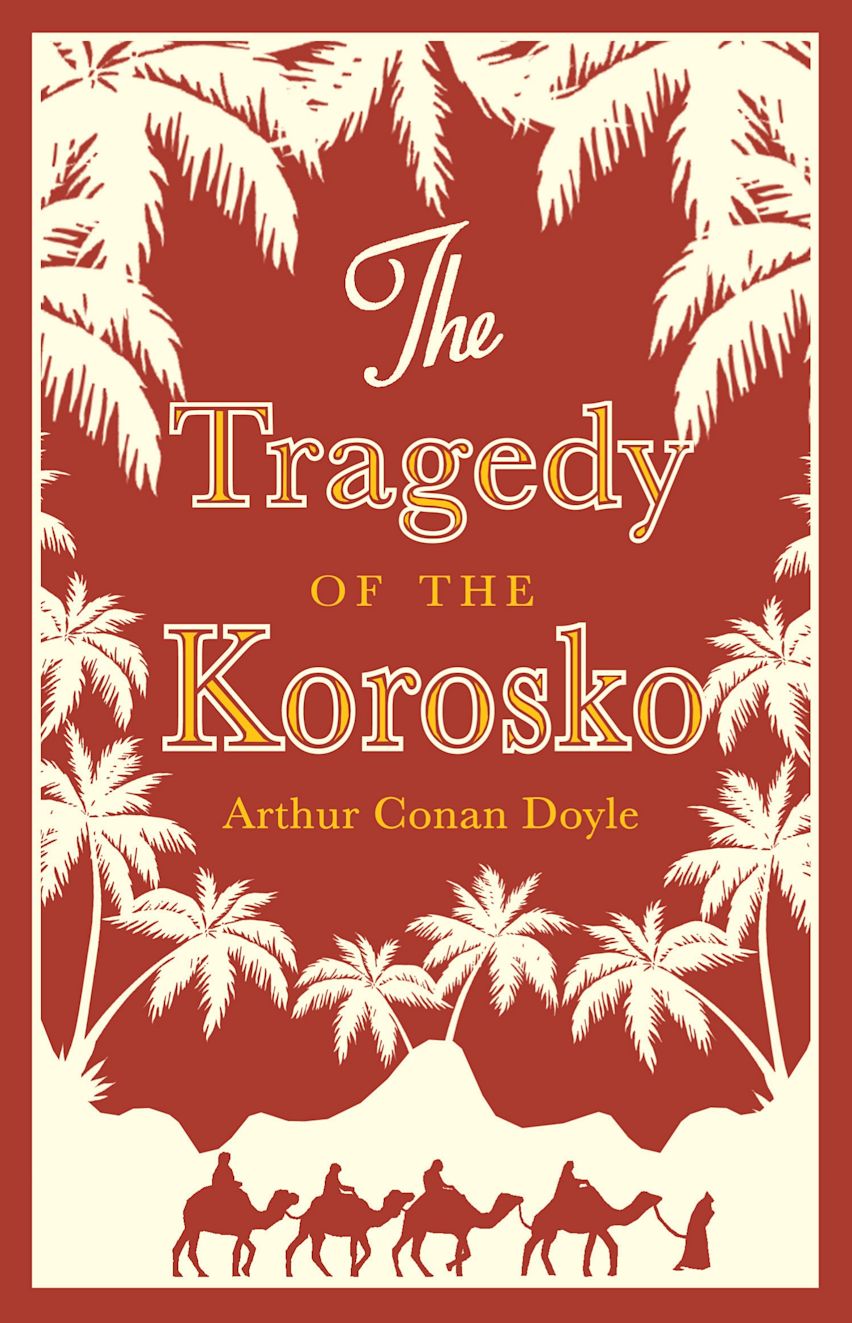
The Tragedy of the Korosko
In 1895, a party of European and American tourists sails the Korosko up the Nile and sets out on an excursion into the surrounding desert.
About
Spoiler notice: This overview discusses the attack, deaths and captivity, the rescue and the survivors’ final conversation.
The Korosko leaves Shellal in February 1895 with a party of travellers expecting to see the Nubian Nile. The Tragedy of the Korosko presents their experience through a retrospective narrative supposedly assembled from testimony and letters, giving a fictional adventure the appearance of a withheld public record. Before danger arrives, the steamer provides an ordinary social world: passengers talk, flirt, disagree and look at the country passing beside them. The journey towards Wady Halfa lets the narrator introduce people who will later have to depend on one another. Their opinions are initially part of holiday conversation, expressed at little personal cost. An excursion into the desert will test them under conditions in which being mistaken has much more immediate consequences.
The group includes Colonel Cochrane, accustomed to military judgment; Fardet, ready to challenge British claims about the region; the Belmonts; Miss Adams and her niece Sadie; James Stephens; and the Reverend Stuart. Their different backgrounds and temperaments make agreement unlikely even before captivity forces decisions upon them. The surrounding conflict is discussed from the distance of people who believe they can continue their itinerary. Doyle's narrative is shaped by the colonial assumptions of its period, particularly in its treatment of British influence and the raiders' religious identity. Those attitudes belong to the story's speakers and construction. The book's concrete drama concerns what happens when travellers accustomed to judging danger from a comfortable position lose the freedom to remain observers.
A raiding party attacks while the tourists are away from the river. Resistance cannot protect everyone: Headingly is shot when he tries to help Fardet, and the attack also kills people serving the excursion. The survivors are taken captive, with their dragoman Mansoor forced to interpret demands and threats. Fardet's attempt to claim protection through nationality and political sympathy fails when his captor asks about religion instead. The exchange exposes a mismatch between the categories by which he expected to be recognised and those being imposed upon him. The prisoners must now interpret every instruction through someone else, unable to control either the terms of the encounter or the direction in which they are made to travel.
Captivity turns the desert into a succession of physical demands. Camel journeys, exhaustion, hunger and uncertainty narrow the possibilities the group can reasonably consider. Threats of forced conversion provoke arguments about conscience, survival and responsibility for others. Stephens, whose earlier life has not prepared him for this situation, has to confront the difference between accepting death in principle and risking a desperate action to avoid it. Cochrane's experience helps him assess movements and opportunities, but it does not make his body immune to the ordeal. The captives' relationships change because each can now see what another is willing to endure or concede. Claims made in comfortable conversation acquire a weight that cannot be avoided by simply changing the subject.
Cochrane finds a possible route out through Egyptian soldiers serving among the captors. Money and the promise of reward give them reason to help, but the practical details threaten to exclude the women: the proposed escape depends on riding fast, and the soldiers doubt they can remain mounted. He refuses an arrangement that saves the men by abandoning them, making continued negotiation essential. The resulting plan still involves timing, suitable camels and a willingness to risk pursuit. Nothing about the agreement guarantees a successful reunion. As the group is divided and forced into further exhausting travel, hope repeatedly rises ahead of the evidence. Cochrane has to continue watching for relief even when his own strength is nearly gone.
The pursuing Camel Corps finally brings rescue through battle rather than a peaceful release. Those brought to safety must still face uncertainty about the companions separated from them. Mrs. Belmont recognises the returning party before others can identify it, and relief becomes a reunion with Belmont, Fardet and Stephens, accompanied by Mansoor and the soldiers who helped them. Their explanation gives Cochrane's earlier negotiation a consequence he could not see while fearing they were lost: the promised payment encouraged men to return and protect the captives left behind. Survival has depended on assistance across the boundaries that the passengers' earlier arguments treated so confidently. The reunion ends the immediate search, while the losses and suffering of the ordeal remain part of what they carry away.
A fortnight later, the survivors spend a last evening together on a boat placed at their disposal for the return north. Reverend Stuart interprets their experience through providence and an increased sense of duty. Fardet presses the unanswered question of why rescue should deserve thanks if the same providence allowed the suffering. The conversation permits both conviction and objection to remain audible. Others describe changes in their priorities, and Sadie recalls the promise she made to make someone else happy if she escaped. Stephens tells her that she has already kept it, and their hands meet beneath the table. The narrative closes with that intimate gesture beside the Nile, offering an attachment and changed lives without claiming that the debate over suffering has been resolved.
Book details
- Author
- Arthur Conan Doyle
- First published
- 1897
- Series
- No series listed
- Subgenre
- Classic adventure, Historical adventure
- Primary genre
- Adventure, Historical Fiction
- Tags
- No tags for this book.
Review
Editor profile
Baby Bat
Goodreads and social links will be added soon.
- Goodreads — link coming soon
- Social media — link coming soon