
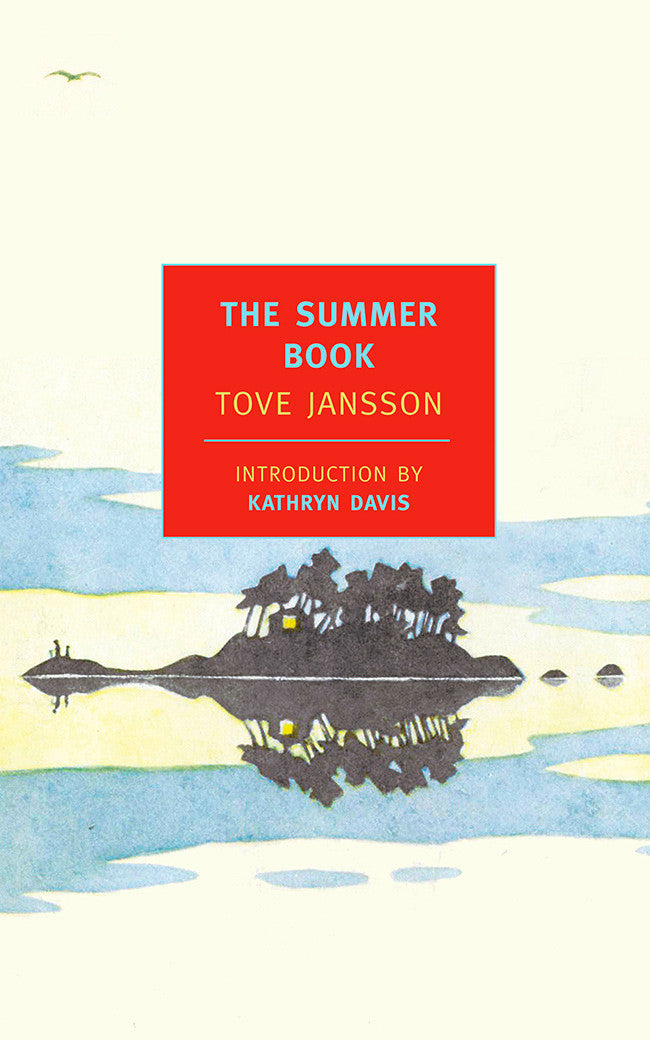
The Summer Book
Six-year-old Sophia spends the summer on a small island in the Gulf of Finland with her elderly grandmother, an artist.
About
Spoiler notice: Discusses the premise, selected early activities and relationship themes; avoids ending details.
The Summer Book follows Sophia, a six-year-old girl, and her elderly artist grandmother through twenty-two brief episodes on a small island in the Gulf of Finland. Its action is built from things they do together: walking the shore, talking, inventing games, watching the island and finding ways to occupy an open summer day. That scale gives the book its particular focus. A bark boat or a conversation can hold the chapter’s attention without having to lead into a larger adventure. Jansson lets the island’s weather and materials enter the pair’s ordinary life, so the setting becomes something they handle and respond to rather than a scenic view behind them. The resulting story is intimate without making every moment solemn.
Sophia and her grandmother create a miniature Venice on their island. A distant city becomes something small enough to build and play with in the place they know. Jansson’s attention stays with what they make together, allowing an ordinary summer activity to carry their shared imagination. The older woman and the child can bring different kinds of knowledge to the same game without either one having to lead it. This is the scale at which the book works best: a grand idea is reduced to a handmade object, and that object gives the two a reason to spend time together. The scene shows how invention can belong to both generations at once.
Other activities begin with what the island offers. The pair build boats from bark and make a fanciful study of local bugs. These are small undertakings, but they give the chapters a concrete way to show attention: a piece of bark becomes something to launch, and insects become subjects for sustained curiosity. The book is not presenting nature as a lesson that the child must learn correctly. Sophia and her grandmother approach it through use, observation and invention, with the older woman’s knowledge beside the child’s impulses. The island’s living details are part of their play and thought. This makes the natural setting feel inhabited: what matters is not only the view, but what the characters notice and decide to do with it.
Their talk also ranges into questions that are much larger than a game: life, death, God and love. Jansson lets such subjects remain part of conversation between two people who differ sharply in age and experience. Sophia’s questions are not presented as a tidy route to adult wisdom, and the grandmother’s age does not make her an all-knowing guide. The official account of the book notes that Sophia’s mother is absent without being directly mentioned. That silence gives the family’s summer an undertone of loss while leaving the novel’s day-to-day exchanges in the foreground. Seriousness enters through what the characters can ask, avoid or answer, rather than through an explanatory narrator who tells readers what to feel.
The grandmother and Sophia are close, but Jansson does not make them interchangeable. Sophia is impetuous and volatile; her grandmother is unsentimental, wise and a little cranky. Those traits make room for friction as well as tenderness. Each can be afraid, unreasonable or stubborn; each also has to make space for the other’s wishes. Sophia sometimes tends to her grandmother with the care of a new parent, a reversal of ordinary expectations that does not erase the girl’s dependence or the older woman’s agency. Their companionship grows through adjustment. Instead of presenting affection as constant agreement, the book shows a bond that can include irritation, independence and practical care.
The island gives these encounters a shared ground. Sophia and her grandmother walk its coast and forest, and the sights and sounds of that environment enter their games and conversations. Jansson drew on islands from her own life, but she transformed that experience into fiction. Her niece Sophia, an inspiration for the child character, has described the book as an imaginative work rather than a literal record of their family. Knowing this helps explain why the place feels intimate without making every incident a biographical clue. The island is carefully composed for the novel, even as its weather, shore and forest come from close observation of a lived environment.
The Summer Book’s clarity comes from letting these different scales coexist. An invented Venice can be a game; a bark boat can focus attention on a material; a question about death can enter a summer conversation without turning the book into a set of lessons. Jansson’s humour and unsentimental manner keep the bond between Sophia and her grandmother particular, not idealized. The prose was first written in Swedish as Sommarboken, published in 1972, and translated into English by Thomas Teal in 1974; this NYRB Classics paperback includes an introduction by Kathryn Davis. Across its short episodes, the novel stays with two people learning how to share time, imagination and care on one island.
Book details
- Author
- Tove Jansson
- First published
- 1972
- Series
- No series listed
- Subgenre
- Translated literary fiction, Coming-of-age, Family novel
- Primary genre
- Literary Fiction
- Tags
- No tags for this book.
Review
Editor profile
Baby Bat
Goodreads and social links will be added soon.
- Goodreads — link coming soon
- Social media — link coming soon