
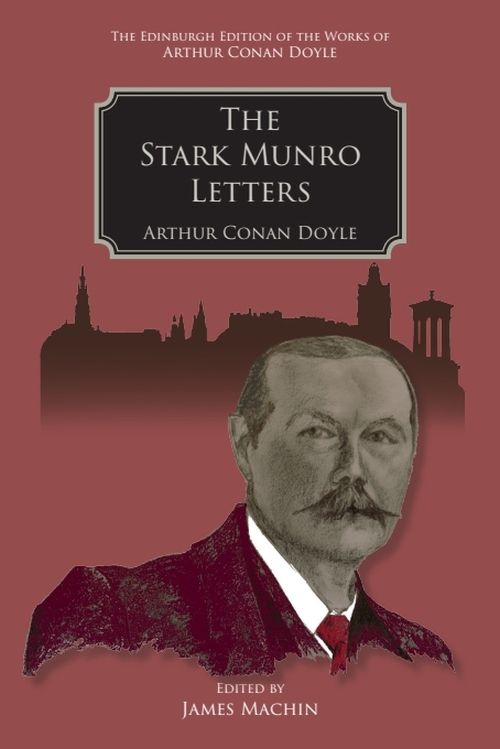
The Stark Munro Letters
In letters to his former fellow-student Herbert Swanborough, J.
About
Spoiler notice: This overview discusses Fred’s death, Munro’s marriage, his final meeting with Cullingworth and the deaths reported in the editorial postscript.
J. Stark Munro writes to Herbert Swanborough with the freedom of someone who believes he has found an unusually sympathetic listener. The letters cover the uncertain beginning of a medical career in the 1880s, moving between professional incidents, friendships, money worries and arguments about belief. The Stark Munro Letters presents them as a collection arranged after the events, making the apparent immediacy of each letter part of a larger frame. Munro can describe a disappointment while still hoping the next opportunity will repair it. His correspondent, whom he calls Bertie, receives the private explanations a public account might suppress. The result is a career story told through a young man's changing understanding of what it means to earn a living and be useful.
James Cullingworth enters that account almost at once. A former medical-school companion, he impresses Munro through athletic energy, ingenuity and an extraordinary capacity to dominate a situation. The same qualities make him volatile and difficult to trust. Munro's portrait combines affection with warning, preparing the reader for a relationship that cannot be judged entirely by whether Cullingworth is entertaining or capable. He can devise an imaginative solution and create another difficulty in the process. The letters repeatedly return to that mixture because Munro wants to understand how much admiration should excuse. Knowing someone well enough to describe his faults does not necessarily prevent becoming dependent on the next attractive plan he offers.
Munro's first employment also tests how much independence a young doctor can afford. A position at Lochtully Castle places him in Lord Saltire's household, responsible for the son James Derwent. The work offers income and a defined place, but the household's expectations reach beyond his medical duties. Conflict with Lady Saltire over religion and politics makes plain that continuing there would require disguising convictions he considers important. He resigns rather than supply the agreement wanted from him, exchanging an uncomfortable security for another uncertain search. The episode connects the professional story to the extended discussions of faith and reason running through his correspondence. Belief is something he argues about, but it can also determine whether he keeps his next month's wages.
Cullingworth's invitation to Bradfield seems to provide a different kind of opening. His crowded practice demonstrates a theatrical ability to attract patients and make confidence visible. Working beside him lets Munro inspect the business behind the performance, including the unreliable promises and personal tensions enthusiasm can conceal. The partnership breaks down, leaving Munro to acknowledge that the route he was following has ended. Cullingworth can still talk generously about helping him start elsewhere, but that help carries the history of what has just happened. Munro decides to establish his own practice in Birchespool. Independence is consequently a practical gamble made with limited money, rather than a declaration that immediately frees him from the influence of his former friend.
Birchespool requires him to find rooms, attract patients and make a professional presence out of very little. The letters record humiliation and improvisation alongside small advances, refusing to make eventual stability look like effortless success. His brother Paul becomes part of the developing household, and work gradually gives Munro a place among people who first knew him as a stranger. His medical role also exposes limits that determination cannot overcome. Caring for the gravely ill Fred La Force ends with the child's death, drawing him into a family's loss rather than producing a reassuring professional triumph. Through the La Forces he grows close to Winnie. The relationship develops towards marriage while the practice continues to provide both daily responsibility and material uncertainty.
The later correspondence allows domestic happiness and questions about a larger purpose to occupy the same pages. Munro and Winnie can make a life together without settling every argument about science, religion or social change. Near the end, Cullingworth returns with another expansive project: travelling through South America to offer eye treatment and spectacles from town to town. Munro recognises the practical energy beneath the extravagant presentation, but admiration no longer removes his distrust. They part amicably, with reservations that the letter states openly. The Atlantic will provide a distance he can welcome while wishing his friend success. This farewell brings the relationship back to its original combination of fascination and unease, now informed by what working together has cost him.
Munro's final hopes are modest: a growing practice, friends, local usefulness and an ordinary future shared with Winnie. He expects years in which small acts of tolerance and kindness might leave the world slightly better. The editorial postscript overturns that expectation. Herbert Swanborough reports that Munro and Winnie were killed in a railway collision while travelling to spend Christmas 1884 with Munro's family. Their deaths occur after the voice that has filled the novel promises to write again. The note also mentions provision for his relatives, keeping practical responsibility present after the life has ended. The book therefore closes neither with Cullingworth's next adventure nor with the domestic future Munro imagines, but with another person preserving the letters of a friend who cannot continue them.
Book details
- Author
- Arthur Conan Doyle
- First published
- 1894
- Series
- No series listed
- Subgenre
- Epistolary novel, Modern classics
- Primary genre
- Literary Fiction
- Tags
- No tags for this book.
Review
Editor profile
Baby Bat
Goodreads and social links will be added soon.
- Goodreads — link coming soon
- Social media — link coming soon