
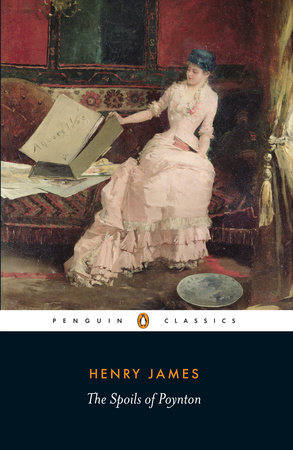
The Spoils of Poynton
A widow’s carefully assembled collection becomes the centre of a struggle over her son’s inheritance and marriage.
About
Spoiler notice: Full-plot spoilers, including Owen’s marriage and the destruction of Poynton.
Mrs Gereth has spent years making Poynton into a house where every object belongs beside every other. Furniture, textiles and small treasures have been selected with a care that seems to her inseparable from living properly. Henry James begins The Spoils of Poynton in 1897 with her enduring the decoration of somebody else’s home. At Waterbath, the Brigstocks’ possessions offend her almost physically, and meeting Fleda Vetch brings the relief of finding someone who understands. Fleda’s sympathy quickly takes her beyond being an agreeable visitor. She becomes the person Mrs Gereth can talk to about the threatened loss of Poynton, and eventually the intermediary asked to negotiate between an angry mother and the son who expects to occupy his inheritance.
Owen Gereth wants the house because he intends to marry Mona Brigstock. His mother sees that marriage as a threat to everything she and her husband assembled. To her, Mona cannot appreciate the collection and should never be allowed to control it. Owen is less interested in explaining what makes an object beautiful than in having somewhere to live with his wife. When he speaks to Fleda, he treats his father’s arrangements for his possession of the house as straightforward. The difficulty is persuading his mother to leave. Fleda understands the force of Mrs Gereth’s attachment, but understanding it does not make Owen disappear. She also begins to care about him personally, making every conversation about the property more uncomfortable.
Mrs Gereth’s proposed new home, Ricks, seems a poor substitute for Poynton until she transforms it with the things she refuses to surrender. She organises packers, porters and vans, supervises the removal and drives the work through in two days, with some of the men working through the night. When Fleda sees the result, she finds the collection installed around her friend. Mrs Gereth describes the operation with exhausted pride, down to her confidence that nothing has been chipped or lost. Her achievement also creates a dispute that Fleda cannot settle by admiring it. Owen wants the objects returned. He raises the possibility of involving a solicitor, bringing the practical consequences of the removal into rooms where his mother sees a triumph of preservation.
The negotiations become entangled with Owen’s engagement. Mona wants Poynton restored, while Mrs Gereth would prefer her son to choose Fleda instead. Fleda is therefore asked to intervene in circumstances where getting the furnishings back and getting Owen married no longer seem separate matters. She loves him, but refuses to treat his dissatisfaction with Mona as permission to take her place while the engagement continues. Owen’s readiness to seek comfort from her does not remove that obstacle. For Mrs Gereth, such restraint is maddening: she can see a possible alliance between the young woman who understands Poynton and the man who owns it. Fleda cannot accept that a desirable arrangement of people and possessions makes every means of achieving it acceptable.
The furnishings eventually go back, but their return does not produce the marriage Mrs Gereth hopes for. Owen marries Mona. His mother reports a private registry marriage before the later public church ceremony, interpreting Mona’s actions as a successful seizure of her opportunity. Fleda has to live with the outcome without adopting every part of that explanation. In their later conversations, she offers a less dramatic account of how restored expectations could have revived Mona’s charm for Owen. Mrs Gereth insists on his love for Fleda; Fleda distinguishes what she herself has admitted from what her friend believes about him. The disagreement leaves them together at Ricks, where companionship continues even though their old understanding has acquired painful silences.
A letter from Owen, written in Florence, gives Fleda a new reason to imagine entering Poynton. He wants her to choose a valuable object as a remembrance, and has instructed the people at the house to help her. He mentions the Maltese cross, but leaves the choice to her judgement. Fleda spends weeks considering what the gift might mean and which treasure she should take. She knows Owen has married someone else; the possibility of possessing something he specifically wishes her to have nevertheless becomes a private source of happiness. A small object would allow her to keep that connection close. Her planned visit grows more precious through delay, until a journey to London gives her the opportunity to make it.
Fleda travels into the country on a December morning, despite her father’s concern about the weather. The gale becomes more apparent beyond London, and her excitement turns into dread before she reaches the station. Smoke and the faces of the railway staff tell her something is wrong. Poynton is burning; the station-master describes the failed effort to reach and save its contents. His suggestions about a chimney or a portable lamp are guesses, leaving the cause unsettled. None of the Gereth family is there. Fleda briefly wants to go to the house, then gives up the attempt and waits for a train back. The collection that has organised everyone’s hopes is lost, and the gift she has imagined carrying home never reaches her hands.
Book details
- Author
- Henry James
- First published
- 1897
- Series
- No series listed
- Subgenre
- Literary fiction, Modern classics
- Primary genre
- Literary Fiction
- Tags
- No tags for this book.
Review
Editor profile
Baby Bat
Goodreads and social links will be added soon.
- Goodreads — link coming soon
- Social media — link coming soon