
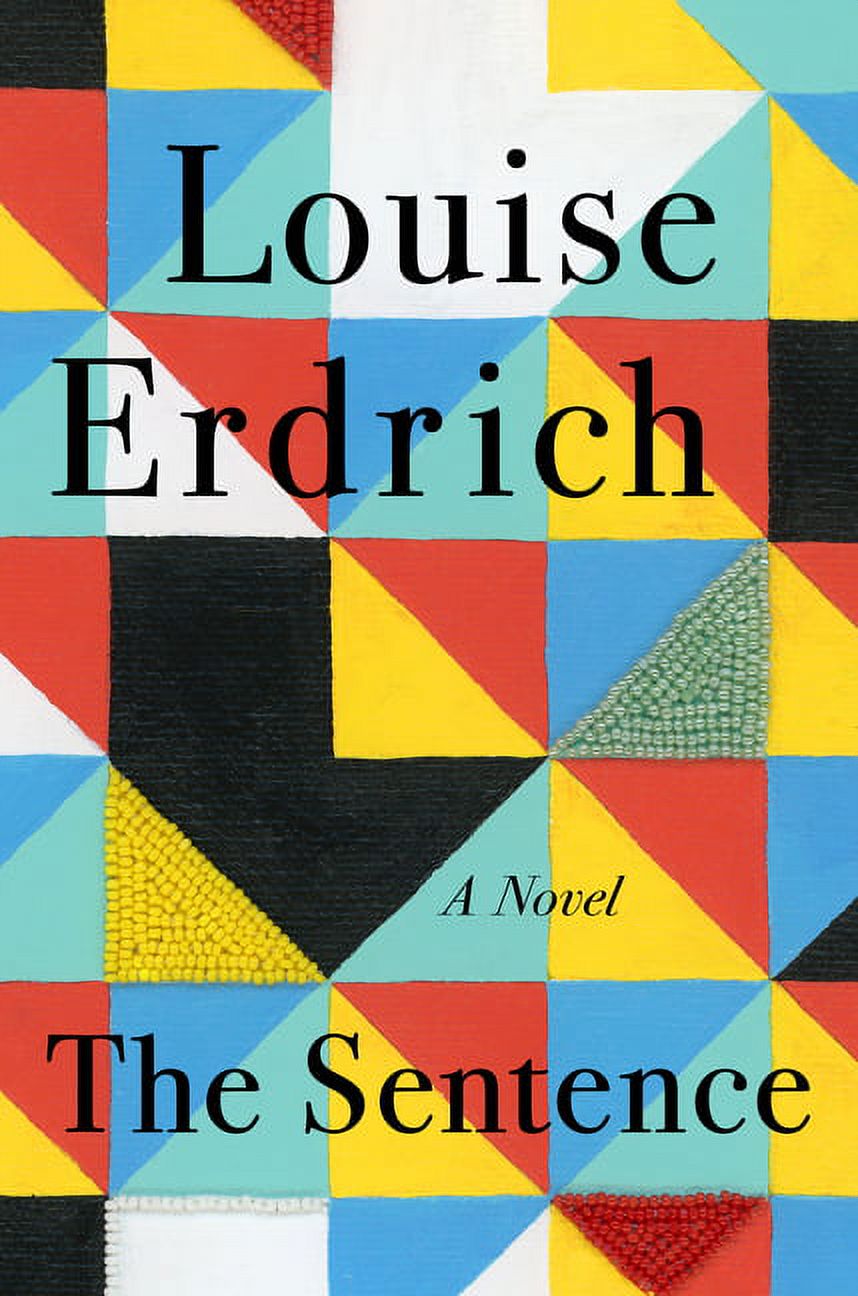
The Sentence
After leaving prison, Tookie builds a new life working at Birchbark Books, a Minneapolis bookstore.
About
Spoiler notice: Covers Tookie’s release from prison, the start of Flora’s haunting, the historical manuscript and the pandemic-era Minneapolis setting; it does not reveal how the haunting is resolved or disclose the ending.
The Sentence takes place over one year in Minneapolis, beginning on All Souls’ Day in 2019 and ending on the same observance in 2020. Its narrator, Tookie, has built her life after prison around work at Birchbark Books, an independent shop devoted to books and Native arts. The store is a place of routine and conversation, but it is also the site of an unsettling return: Flora, a customer who has recently died, continues to appear among the shelves. That premise gives the novel the shape of a ghost story while making the bookstore more than a spooky setting. It is a workplace, a community and a point where difficult questions about identity, memory and responsibility keep arriving. The haunting begins as a problem tied to one person, then draws the shop’s staff into a wider year of change.
Tookie’s past is present from the outset. She has served a prison sentence after a crime involving the transportation of a corpse, and the years inside have altered how she thinks about language, books and the time she has been given. Her return to ordinary life does not erase the circumstances that brought her to prison or the relationships that shaped her there. Reading has been one of her means of survival, and bookselling gives that attachment a daily form: she handles, recommends and argues about books while trying to make a workable life. The title holds several meanings in view at once. A sentence can be a punishment imposed by a court, a unit of language, or a written line with consequences. The novel’s mystery gives those meanings a plot connection, while Tookie’s voice keeps them grounded in an individual life rather than turning them into an abstract puzzle.
Flora’s ghost complicates the shop’s familiar rhythms. In life, she was a regular customer who claimed an Indigenous ancestry that Tookie regarded with suspicion. After Flora dies, her presence persists in a way the staff cannot simply explain away. The haunting is strange, sometimes comic and disruptive: it enters a place organized around reading, recommendation and the quiet circulation of stories. Tookie tries to understand what Flora wants and why the dead woman remains attached to the store. That search is not detached detective work. Tookie has her own ideas about what people owe one another, and the ghost’s history touches questions of belonging and self-invention that already matter to the people around her. The supernatural element therefore works both as a literal disturbance and as a way of making unresolved claims from the past difficult to ignore.
The shop’s other workers and visitors widen the story beyond Tookie and Flora. Pollux, Tookie’s husband and a former tribal police officer, carries experiences from his work into the present. Asema, a young student with Ojibwe and Sisseton Dakota heritage, encounters a disturbing historical manuscript connected to the store. These characters bring different kinds of inherited memory and personal responsibility into the same space. The manuscript’s subject reaches back to the nineteenth century, while Flora’s haunting begins in the present, so the book places a specific historical record beside a contemporary supernatural mystery. The connections are not presented as a single simple explanation for every ghost or conflict. Instead, the store becomes a meeting point for stories that have been kept, misrepresented, passed along or left unresolved, and the people in it have to decide how to respond to what they learn.
As 2020 unfolds, the novel’s calendar brings the Covid-19 pandemic and the murder of George Floyd into the life of the Minneapolis bookstore. The shop changes how it serves customers as public life narrows, while its workers reckon with events that affect their families, their city and the wider communities to which they belong. These real events are part of the narrative’s setting and pressure, not just background dates. Their presence changes what a bookstore can do and what its ordinary work means during a period of grief, isolation and protest. The story keeps its focus on the people who must continue making decisions inside that changing city. Tookie’s effort to understand Flora’s presence runs alongside these public crises, so private haunting and shared history occupy the same year without becoming interchangeable.
The Sentence joins a ghost mystery to a story about reading, incarceration, family and a city moving through a difficult year. Its central supernatural question gives the plot forward motion, while the bookstore provides a close, recurring place from which to see personal and public histories meet. The novel’s title invites attention to how words can confine, describe and carry memory; its story also asks what it means to live with what has been done and what has been left unsaid. This account covers Tookie’s release from prison, the bookstore haunting, the historical manuscript and the major 2020 events that shape the setting. It avoids the resolution of the haunting and the novel’s ending.
Book details
- Author
- Louise Erdrich
- First published
- 2021
- Series
- No series listed
- Subgenre
- Ghost story, Literary fiction
- Primary genre
- Literary Fiction
- Tags
- No tags for this book.
Review
Editor profile
Baby Bat
Goodreads and social links will be added soon.
- Goodreads — link coming soon
- Social media — link coming soon