
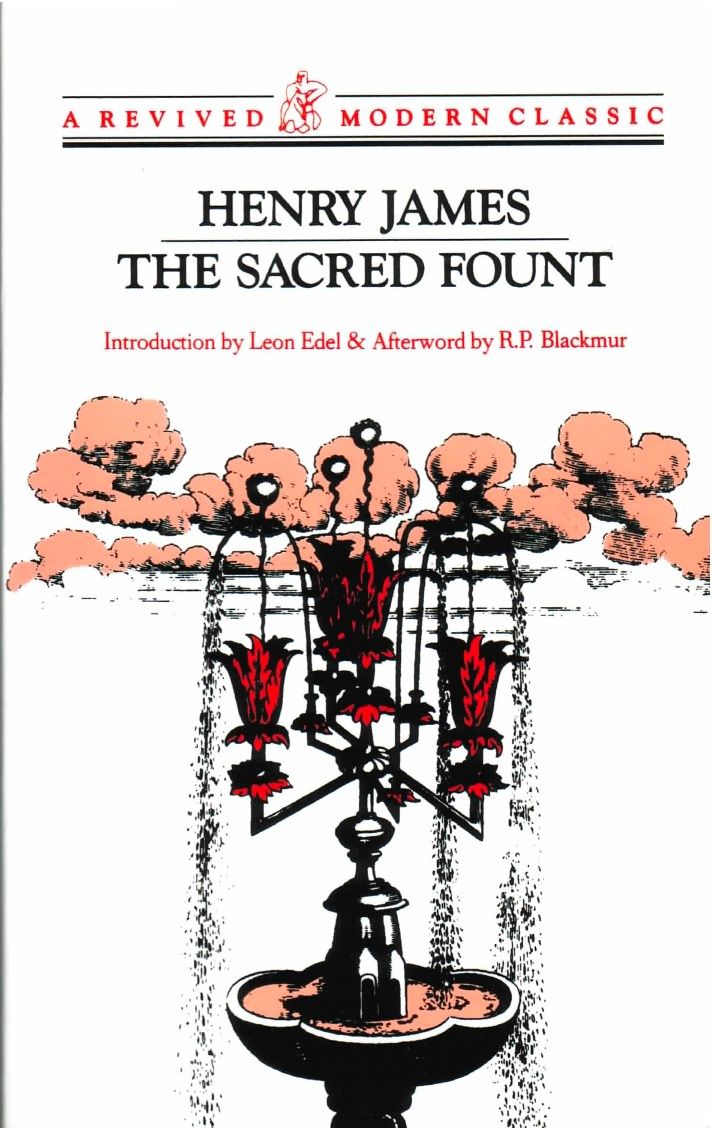
The Sacred Fount
During a weekend at an English country house, an unnamed guest begins building theories about changes in the people around him.
About
Spoiler notice: Spoilers for the narrator’s theories and the final confrontation; the novel leaves the underlying relationships unresolved.
An unnamed guest travelling to a country-house party notices that people he remembers seem to have changed. Gilbert Long appears more intelligent, while Grace Brissenden looks younger and more attractive than before. For most travellers, those impressions might provide a few minutes of conversation. For the narrator of Henry James’s The Sacred Fount, published in 1901, they become the beginning of an investigation. He is going to Newmarch, where an extended gathering will give him time to observe the same people in different company. He arrives already judging expressions, comparing appearances and considering what others may know. Everything that follows comes through this guest’s account, including his explanations of signs that the people around him do not necessarily recognise as signs at all.
Grace provides an early companion in speculation. Their conversation about Long includes the possibility that a clever woman has taken an interest in him, with Lady John suggested as someone worth considering. At Newmarch, the narrator finds opportunities to compare that account with what he thinks he sees. Encounters on paths, conversations before dinner and the changing arrangements of small groups all become material. His attention also falls on Grace’s husband Guy Brissenden, who appears to him much older than expected. The apparent contrast within that marriage helps give his observations a common pattern. He begins to imagine that an improvement in one person might require a corresponding loss in another, linking appearances through a process nobody has openly acknowledged.
The narrator calls on an image of a sacred fount to explain the imagined exchange. Grace, in his account, has drawn new youth and energy from her husband, who supplies the cost of her renewal. Love might permit such a sacrifice without the beneficiary understanding what is happening. He discusses the idea with Ford Obert, an artist who can respond to its imaginative possibilities while questioning its consequences. Their conversation gives the narrator a chance to elaborate the mechanism and make it sound coherent. It does not establish that vitality can actually move between people in this way. His growing pleasure in the explanation is part of the story, especially when an ingenious account begins to feel more persuasive to him than an uncertain observation.
May Server becomes another subject of this attention. The narrator meets her with Obert and reads significance into the artist’s look, wondering whether he has interrupted a conversation or been welcomed as a relief from it. Later, Long’s discussion of a painting impresses him as further evidence of changed intellectual powers. Mrs Server’s response, Long’s glances and the group’s movement around the picture all enter his reconstruction of a hidden relationship. A painted man holding a mask gives their looking a particularly suggestive setting. The narrator can see each additional impression as a detail that supports the larger arrangement he has begun to imagine. Other guests continue talking and moving about, without supplying a clear statement that would make that arrangement an established fact.
Observation also spreads beyond the narrator himself. Obert tells him that he has begun watching the Brissendens after hearing the theory, while their discussion of Mrs Server’s supposed lover remains inconclusive. The investigation can therefore produce more watchers without producing an agreed answer. Grace’s participation likewise changes as the weekend goes on. What she accepts, rejects or suggests affects the narrator’s confidence, but he also tries to explain her responses within his own account of her position. The difficulty is circular: disagreement may seem to him another thing requiring interpretation rather than a reason to relinquish the underlying idea. His effort to protect the privacy of the relationships he imagines sits uneasily beside the detailed questions through which he tries to identify them.
The closing confrontation with Grace brings those difficulties into direct conversation. She challenges his account of Long’s transformation and says that his interpretive habits make others wary of giving him material. She then names Lady John as the woman connected with Long, explaining that she had previously sought to protect her. This information is itself Grace’s claim, supported by what she says Guy has told her. The narrator presses for distinctions between what somebody saw, what somebody knew and what an action was intended to accomplish. Grace distinguishes an observed effect from a purposeful attempt to conceal an attachment. Each apparent clarification creates another question, while the elaborate structure he has built becomes something he wants her to admire even as she takes it apart.
Grace finally says that Mrs Server made love to Guy and that he found her sharp, an account that clashes with the narrator’s image of her. She ends by calling him crazy and bidding him goodnight. He watches her leave, feels the force of having lost the last word and goes to his room to prepare for an early departure. The encounter has shaken him without producing an explanation from outside his own perspective. He can still believe that his method exceeds hers, while recognising that he cannot match her tone. The novel stops with that unsettled comparison. No final revelation confirms a supernatural exchange, assigns every guest a secret partner or turns Grace’s verdict into a diagnosis established by a separate authority.
Book details
- Author
- Henry James
- First published
- 1901
- Series
- No series listed
- Subgenre
- Literary fiction, Modern classics
- Primary genre
- Literary Fiction
- Tags
- No tags for this book.
Review
Editor profile
Baby Bat
Goodreads and social links will be added soon.
- Goodreads — link coming soon
- Social media — link coming soon