
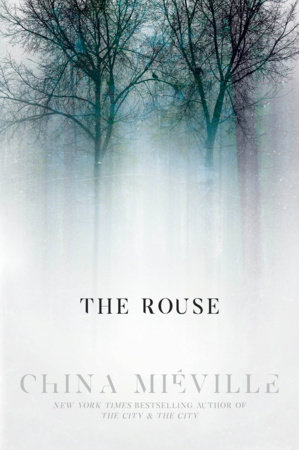
The Rouse
The opening of The Rouse places a bereaved voice amid troubling noises, missing things and questions about the dead.
About
Spoiler notice: Spoilers for the opening setup: the bereaved narrator, Maur Towns’s return to her father’s home in Lancaster in 1973, and the publisher-described link to an old soldier. Later developments and the ending are not summarized.
The Rouse begins with grief as a disturbance in ordinary perception. Its opening voice addresses someone living with the death of a child, returning to a road by the coast and to the phrases people use when someone has died. A familiar expression becomes strange under scrutiny, and the language of passing opens onto memory, absence and the dead. Its reach extends from personal grief into global upheaval and conspiracy, while those large subjects enter through intimate, unsettled moments. Rather than offering a simple account of loss, the book sets its emotional pressure beside the possibility that the world contains presences and histories its characters cannot readily explain.
Another strand follows Maur Towns into an earlier period of her life. In the excerpt, she returns to her father’s home in Lancaster in the spring of 1973, arriving by an awkward journey through a rain-darkened industrial landscape. Her memories attach themselves to recognizable places: the main street, a café, a park, a rowboat and a house she once knew as a child. But recognition does not make the past comfortable. Old routes bring back family tensions and the feeling that choices have been made by forces outside her control. The detail of a town revisited gives the story a grounded social geography while the language repeatedly unsettles the boundary between memory and present experience.
Maur’s family relationships provide an immediate human scale for that uncertainty. The sample shows her confronting her father with important news, then speaking with her sister Rhona about how the conversation went. Their exchanges are wry and familiar, but beneath the humour sit old habits of silence, loyalty and hurt. Maur is pregnant when she returns, and telling her father becomes a test of those old habits. His quick recognition of her condition does little to make the conversation easier, while Rhona gives Maur someone with whom to measure its aftermath. A family history is not presented as a neat chain of explanations; it is something the characters navigate through what they say, what they avoid saying and the places they return to. These domestic scenes give the larger mysteries a personal centre. An old soldier whose obsessions overlap with Maur’s brings another life into view, suggesting that private experience will become entangled with a much wider historical account.
That second strand expands the scale from one family and one town to a century marked by violence and political change. The story spans decades and continents, with the old soldier sharing Maur’s concerns while being pursued by unknown forces. This is enough to establish the novel’s central movement without giving away later developments: a bereavement prompts questions, those questions point toward another life, and the connection draws personal grief into public history. The structure places two lives in relation across time and distance. Its promised scope is broad, but the publisher’s emphasis on love, regret and secrets keeps that scope tied to particular people rather than to an abstract survey of events.
The supernatural enters this historical and family drama as a source of pressure and doubt. The opening pages refer to the dead, troubling noises and things that go missing, while unknown forces gather around the soldier. These details support a reading of The Rouse as weird or horror-tinged literary fiction, though the available description does not explain the rules behind the uncanny events. The uncertainty matters: the characters are not simply solving a puzzle from a safe distance. Their questions arise amid grief, memory and relationships already strained by the past. The unknown therefore links the novel’s atmosphere to its emotional concerns, making what cannot be explained part of the characters’ lived world.
The opening pages also signal a formally mobile narrative. It moves from a second-person address shaped by bereavement to a third-person account of Maur returning home in 1973, with abrupt shifts in time, perspective and the meaning of a phrase. That movement makes reading itself feel like an act of reconstruction: a place, object or turn of speech can open onto an earlier life, while the reader must hold several moments in view at once. The form suits a sprawling, encyclopaedic book, yet it remains close to bodily details such as weather, light, roads and familiar rooms. Large historical movements are approached through lived fragments rather than detached exposition.
The result is a novel where intimate family drama and large-scale historical fiction meet the uncanny. Its strongest established concerns are bereavement, memory, the persistence of the dead, and the way personal lives become caught in wider histories. Its two central lives carry love, regret and secrets through a wider account of the century. A woman returns to her father’s town, old relationships resume their familiar rhythms, and the ordinary world feels subtly unreliable. Later plot turns and the ending are left open here; the focus stays on the premise, characters and atmosphere supported by the released publisher material.
Book details
- Author
- China Miéville
- First published
- 2026
- Series
- No series listed
- Subgenre
- Weird fiction, Gothic horror
- Primary genre
- Literary Fiction, Horror
- Tags
- No tags for this book.
Review
Editor profile
Baby Bat
Goodreads and social links will be added soon.
- Goodreads — link coming soon
- Social media — link coming soon