
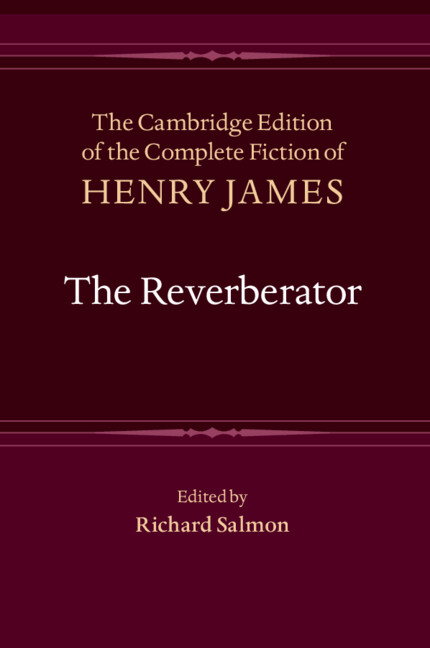
The Reverberator
American visitor Francie Dosson becomes engaged to Gaston Probert, whose Parisian family guards its private life carefully.
About
Spoiler notice: Full-plot spoilers, including Francie’s admission and Gaston’s final choice between her and his family.
The Dossons are Americans staying in Paris, with enough money to be comfortable and little sense that their everyday habits require much explanation. Mr Dosson spends time in the hotel courtyard, while his daughters Delia and Francie find their way through the city with help from George Flack. A journalist and familiar companion, Flack is useful, energetic and interested in Francie. Henry James’s The Reverberator, published in 1888, begins among these ordinary exchanges of attention and assistance. Its newspaper is initially one part of a friendly man’s occupation. The consequences appear when the Dossons’ open manner brings them into a family that considers much of what can be said in company entirely unfit to appear in print.
Flack introduces the sisters to Charles Waterlow, an artist whose interest in painting Francie leads to another acquaintance. Waterlow’s friend Gaston Probert sees her in the studio and asks to meet her. He is American by family origin, but Paris has shaped his speech, attachments and social understanding. Francie notices the difference immediately in the way he sounds. The two young men admire her beauty, and Waterlow makes arrangements for a portrait while Gaston seeks more opportunities to see her. This meeting creates a connection that will eventually put Francie inside the Proberts’ private world. It also means that Flack has helped to bring about a courtship in which he will no longer occupy the position he hoped for himself.
Gaston wants to marry Francie, but the approval of his father and sisters matters enormously to him. Their life depends on longstanding connections, carefully guarded manners and a strong sense of belonging together. Francie’s good nature does not automatically make her fluent in those expectations. As the engagement develops, she spends more time with Gaston’s sisters and learns what her future life might involve. They can be welcoming and instructive without treating privacy as something that needs to be explained from the beginning. Gaston, meanwhile, is confident enough in Francie to assure his relatives that her instincts will never lead her to offend them. That assurance places a standard around her conduct which she has not understood in the same terms.
While Gaston is away in America, Flack resumes his contact with the Dossons and complains that their new society has displaced him. Mr Dosson sees little reason why an old friend should not be welcome among the people his daughter now knows. Francie also remembers the practical kindnesses that helped them settle into Paris. During an outing with Flack, she talks about the Proberts and their connections, giving him details that he recognises as material for his readers. Her confidence in him does not include the Proberts’ distinction between information shared socially and information offered for publication. The people she speaks about understand themselves as a private circle. The journalist has an audience elsewhere for whom access to that circle is precisely the attraction.
An American newspaper arrives containing the article, and Gaston’s family is horrified. The account brings names, relationships and intimate affairs before readers they have never invited into their lives. Summoned to hear their distress, Francie acknowledges Flack’s involvement and her own participation. She is shocked by their reaction, but will not save herself by pretending that he obtained everything without her knowledge. The difference in response extends to her father. He cannot fully understand why people with nothing to hide should feel so injured by being discussed. For the Proberts, that argument misses the injury altogether. Their anger is directed not simply at whether a particular allegation is true, but at the publication’s destruction of the boundary they have built around themselves.
When Gaston returns, Francie prepares to say goodbye. He wants an explanation that will allow the family to forgive her, suggesting that matters could be arranged if she denied having knowingly supplied the details. She asks whether he wants her to lie. She is sorry for the distress, but cannot turn herself into a different person by describing the conversation falsely. Gaston then takes his predicament to Waterlow, who shifts the question towards his own independence. The artist thinks Gaston’s submission to family feeling threatens his ability to live as an individual. Advice does not instantly cure his hesitation: he continues worrying about what Francie might do another time. Loving her will require accepting a future he cannot guarantee against every offence to his relatives.
Gaston finally comes to the hotel and tells Francie that he has chosen her without his family’s assent. The Dossons are packing to leave, so he asks to travel with them. His father will no longer make him an allowance, a loss Mr Dosson receives with confidence that they have enough money without it. Francie still hopes for forgiveness and feels that some suffering would be a fitting consequence of what she has done. The others try to imagine a future beyond the quarrel, with newspapers remaining an awkward subject even in their jokes. They leave the following day, still without a clearly settled destination. The marriage is now intended to proceed, but the final scene does not supply a wedding or an accomplished reconciliation with the Proberts.
Book details
- Author
- Henry James
- First published
- 1888
- Series
- No series listed
- Subgenre
- Literary fiction, Modern classics
- Primary genre
- Literary Fiction
- Tags
- No tags for this book.
Review
Editor profile
Baby Bat
Goodreads and social links will be added soon.
- Goodreads — link coming soon
- Social media — link coming soon