
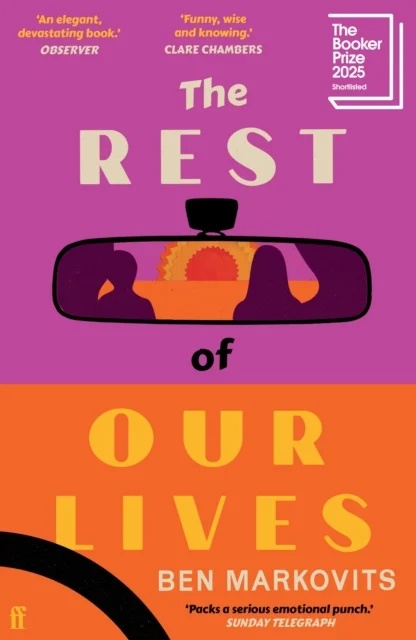
The Rest of Our Lives
After taking his eighteen-year-old daughter Miriam to university in Pittsburgh, law professor Tom Layward keeps driving west instead of returning home.
About
Spoiler notice: Spoilers for the premise and opening setup: Tom’s old promise to leave after his youngest child leaves home, his daughter’s university drop-off, his work leave and health concerns, and the beginning of his westward drive. Later encounters, developments in his marriage and the ending are not disclosed.
The Rest of Our Lives begins at a threshold that is both practical and emotional: Tom Layward is driving his eighteen-year-old daughter Miriam to Pittsburgh, where she will begin university. Her departure brings back a promise he made to himself twelve years earlier, after his wife Amy had an affair. He had decided then that he would leave once their youngest child was grown. The long gap between vow and action matters. Tom has lived through years of family routines since the betrayal, and the old decision returns at the very moment those routines are changing. The novel places this private reckoning inside an ordinary journey across the country. A parent takes a child to college; afterward, the question is whether he will go home. Tom’s first-person account stays close to his explanations and evasions, letting the reader see how a remembered promise can feel decisive and uncertain at once.
Dropping Miriam at Carnegie Mellon does not settle what Tom should do next. He keeps driving west, at first with only a loose idea of visiting people from his earlier life and perhaps reaching his father’s grave in California. The trip gives the book its shape: instead of one dramatic confrontation, Tom’s days open into separate visits, conversations and stretches of road. Friends, relatives and a former girlfriend offer points of contact with versions of himself that have been left behind. He also plays basketball along the way, a recurring interest that belongs to his history as well as his present. The route is not presented as a clean escape with a clear destination. Each stop interrupts his account of the marriage and family he has just left, and the movement west gives him space to keep thinking without requiring him to admit that he is thinking.
Tom’s marriage to Amy is long established, but its present condition cannot be measured by the affair alone. Their children are older now, and the household arrangement that once kept them together has changed. Amy has her own family tensions and beliefs, while Tom is uncertain what his old self-imposed deadline means after so much time has passed. The novel’s central conflict therefore includes the gap between the story a person tells himself and the life that story is supposed to explain. Tom can describe his vow as a settled bargain, yet the years since the affair have made its status awkward even to him. His narration circles the subject through memory, observation and self-justification. Amy is not simply a figure waiting for Tom’s decision: she remains a person with her own history, concerns and understanding of the marriage, even when Tom cannot fully speak for her.
The road also gives the novel room to connect family life with work and physical vulnerability. Tom is a law professor who has been put on leave after students objected to the politics of a law class. He has not told Amy about this. At the same time, he is dealing with health symptoms that he cannot readily explain and that his family and friends take seriously. These problems do not sit in separate compartments. Work affects how he sees his own authority and place in the world; illness makes it harder to treat the future as an abstract stretch of time. Yet Tom is inclined to continue as though he can postpone decisions about both. The distance between what he knows, what he tells other people and what he admits to himself becomes one of the trip’s steady pressures.
The people Tom visits let the story test the easy labels he applies to his own life. He sees an old college friend, his former girlfriend Jill, his brother Eric and his son Michael, among others. These relationships are not interchangeable stops on a travel itinerary. Each brings a different history of loyalty, embarrassment, affection or disappointment into the present, and Tom’s own account shapes what the reader first understands about them. His son already knows about Amy’s affair and worries about Tom’s health, while Miriam is beginning a life beyond the family home. The novel thus follows a parent travelling between children who know different parts of the family story. Tom’s visits can prompt recognition, but they also show how much he does not know about the people he assumes he understands. The road widens his perspective without making him an impartial guide to it.
The Rest of Our Lives works as a family novel and a road chronicle, with basketball, illness, work and marriage crossing through the same stretch of time. Its attention stays with small encounters and everyday choices: whom to call, what to disclose, whether to keep driving. The westward journey turns a delayed decision into a sequence of meetings, but it does not promise that movement alone can resolve the past. Tom has to consider what leaving would mean after the children have grown, how his marriage exists now rather than as it did twelve years earlier, and what responsibility he has to his own body. Markovits has said that he wanted to write about a period of family life coming to an end; that concern informs the novel’s focus on children departing and parents reimagining their place with one another. The book keeps the future open while Tom works out what his remembered promise can still ask of him.
Book details
- Author
- Ben Markovits
- First published
- 2025
- Series
- No series listed
- Subgenre
- Literary fiction, Family novel
- Primary genre
- Literary Fiction
- Tags
- No tags for this book.
Review
Editor profile
Baby Bat
Goodreads and social links will be added soon.
- Goodreads — link coming soon
- Social media — link coming soon