
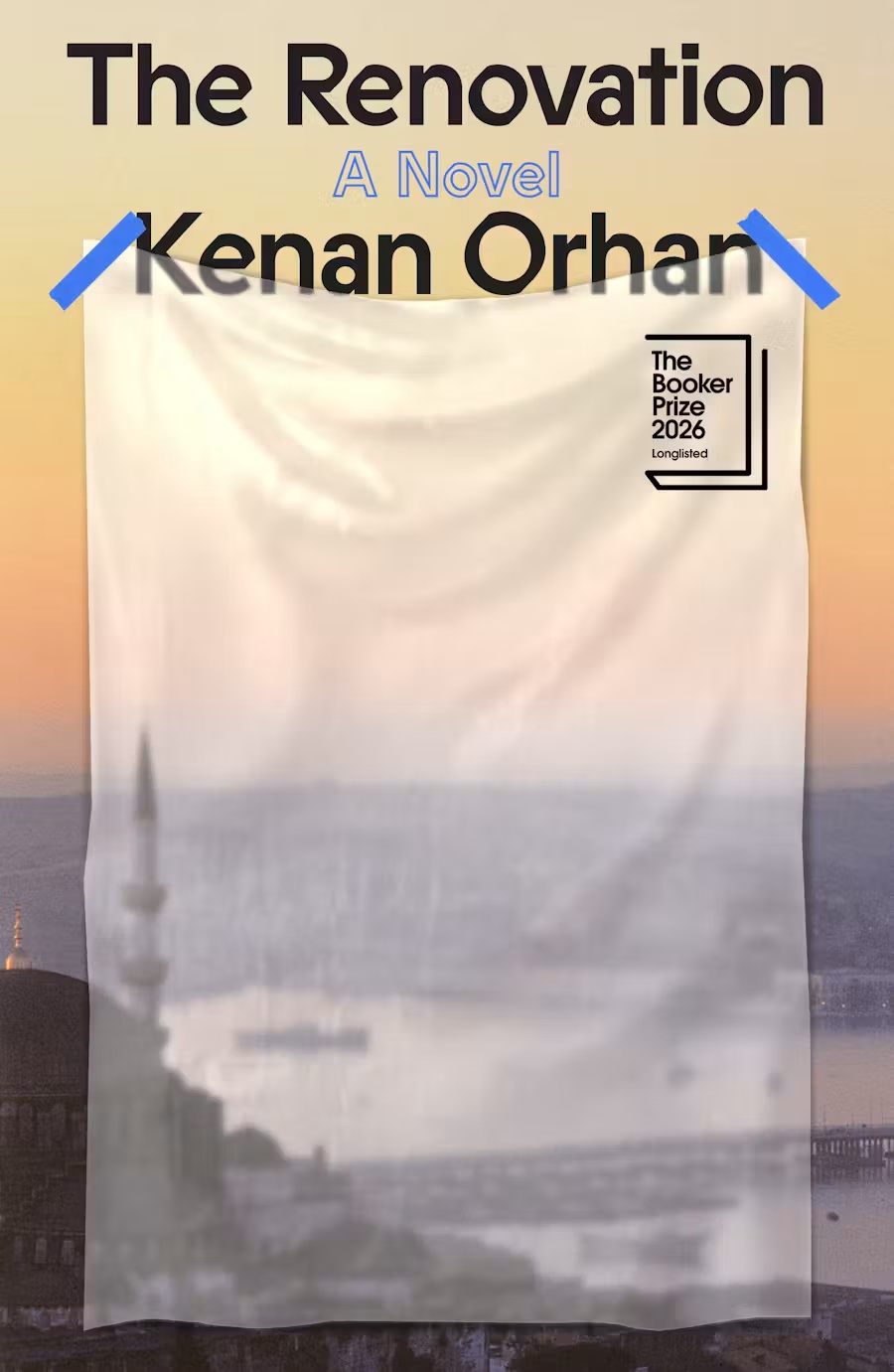
The Renovation
When builders finish remodeling the bathroom in Dilara’s Italian apartment, she finds a Turkish prison cell in place of the fixtures she expected.
About
Spoiler notice: Spoilers for the premise and opening setup, including the bathroom renovation that produces a prison cell and Dilara's initial response. Later developments and the ending are not summarized.
The Renovation begins with a mistake too complete to dismiss as a misplaced fixture. Dilara has spent five weeks waiting for builders to remodel the bathroom beside her bedroom. When they finally leave, she opens the door to find a Turkish prison cell where the shower and double vanity should be. It is modeled on Silivri Prison in Istanbul, a place she recognizes immediately. Her first response is anger at the apparent incompetence or malice, followed by a practical worry: her anxious husband will soon come home expecting to see the work. She hides the room and tries the builders’ numbers, but the calls go unanswered. The startling image sets the novel’s tone, where an impossible intrusion arrives inside ordinary domestic pressures and demands to be managed.
That bathroom was being changed because Dilara’s father can no longer live alone. She, her husband and her father are in Baronissi, a village in southern Italy; the family arrived there in 2017 after leaving Turkey. Her father had bought a flat of his own in a former monastery and resisted being treated as an invalid, but his dependence has grown. Dilara had been collecting him more often, preparing more meals and having him stay overnight. Moving him into her home is the next step in a care arrangement that had been developing by degrees. The renovation is therefore not an elective improvement. It is an expensive attempt to make space for a parent whose needs are changing, undertaken by a family already adjusting its finances and routines.
Dilara’s perspective gives that transition a specific history. In Turkey she worked as a school psychologist and sometimes conducted specialized assessments for children in psychiatric emergency care. In Italy, limited Italian, different licensing requirements and the smaller number of children in the village make it difficult to return to the same work. She stays home while looking for Turkish-language positions, while her husband, formerly an accountant in Istanbul, takes work with a local mechanic. Their migration has altered both careers, and their household has to absorb the practical consequences. Dilara describes checking on her father, bringing food, collecting him and fitting his visits around cleaning and laundry. The care is intimate and habitual, but the changes in his abilities make familiar tasks carry more weight.
The father’s dementia does not follow a smooth decline. Dilara says his faculties have been ebbing away over ten years, but not in a steady, predictable line. That unevenness matters to the family’s decisions: independence has not ended in one clear moment, and the move into Dilara’s apartment follows a succession of small increases in support. Orhan’s Booker interview identifies memory, distance from relatives and his grandmother’s lapses as among the concerns that helped prompt the book. This author-stated context helps explain why the renovation reaches beyond home improvement. A room is being rebuilt for a parent whose memories and capacities are changing, while Dilara herself lives far from the place that shaped her family. The novel holds these losses beside the daily logistics of care.
The cell makes that distance tangible in an uncanny form. In the Booker’s plot overview, Dilara first regards its appearance as an outrage and a fragment of an estranged homeland that has arrived without invitation. As she returns to it, the room seems to open onto a prison in Turkey: she glimpses guards and hears prisoners through the walls. Its air carries the scent of simit, and its sensory details lead toward Istanbul and the Anatolian landscape. The cell is thus linked to a real institution and to a city remembered from exile, yet it has appeared inside a home in Italy. The official description presents this connection without reducing it to a simple return. Dilara is drawn toward a place that belongs to her past and has also become remote.
The impossible room also changes how a domestic crisis can be read. A bathroom remodel has already exposed the household’s limited money, the need to prepare for her father and the strain of coordinating contractors. Its conversion into a prison cell makes those pressures collide with Turkey’s political history. Orhan has described frustration with the Turkish government, political violence and human rights abuses among the book’s originating concerns. The prison image brings that public history into the intimate scale of an apartment, while the family’s exile shapes how Dilara receives it. The premise joins subjects that are often separated: a parent’s dementia, a marriage under strain, migration, political imprisonment and the effort to keep a household functioning. The result is grounded in recognisable obligations even as its central room behaves impossibly.
Dilara’s relationship with her husband gives the opening its uneasy comedy. He is understanding but prone to anxiety and hypochondria; during the renovation, his curiosity led him to watch lock-picking videos, though he never bought the tools. When the builders finish, Dilara imagines him inspecting the bathroom and perhaps opening prosecco, so she delays showing him the cell. The contractors are suddenly unreachable, the final bill is still coming, and she must decide how to tell the person who helped design the room. Her concealment is not a grand scheme; it is one more improvised response to an already crowded household. The novel places absurdity beside care without treating either as a cure for the other.
Book details
- Author
- Kenan Orhan
- First published
- 2026
- Series
- No series listed
- Subgenre
- Literary fiction, Immigrant fiction, Family novel
- Primary genre
- Literary Fiction
- Tags
- No tags for this book.
Review
Editor profile
Baby Bat
Goodreads and social links will be added soon.
- Goodreads — link coming soon
- Social media — link coming soon