
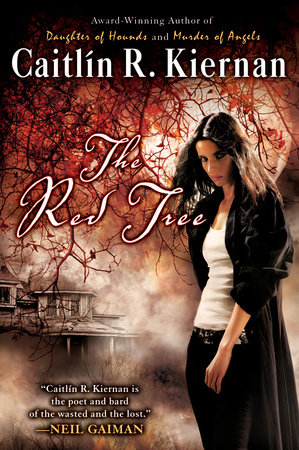
The Red Tree
After leaving Atlanta, novelist Sarah Crowe settles in an old house in rural Rhode Island, hoping to regain her footing and return to writing.
About
Spoiler notice: Spoilers cover Sarah Crowe’s relocation, the manuscript she finds, and the central setup of the tree’s lore. The manuscript’s revelation and Sarah’s fate are not disclosed.
Sarah Crowe leaves Atlanta and the remains of a turbulent relationship behind when she moves into an old house in rural Rhode Island. She has come to live alone and hopes to return to writing, but the house draws her attention away from the work she intended to do. In its basement she discovers an unfinished manuscript left by the former tenant, an anthropologist preoccupied with an ancient oak on the property. The tree is associated with local legends of supernatural power and with records of accidents and murders. Sarah begins to investigate its history and to make an account of her own. That shift gives the novel its immediate tension: she is both a writer trying to regain control of her work and a person drawn into another writer’s unfinished inquiry.
The novel’s structure places Sarah’s account alongside the manuscript she has found. These embedded writings offer different routes into the same place: Sarah records her arrival and growing interest, while the earlier text gathers material about the tree and the surrounding area. Rather than treating the older manuscript as a simple explanation, the book lets it open further questions. Its incompleteness matters. Sarah has to interpret what the former tenant collected, decide what seems credible, and contend with the parts of the local past that resist a settled account. The two acts of writing begin to overlap as she turns from reading the manuscript to shaping her own narrative around it.
The oak itself is at once a physical presence and the focus of a body of stories. PRH describes it as tied to supernatural legends as well as documented accidents and murders; the found manuscript is devoted to the former tenant’s investigation of it. That combination keeps the source of danger unsettled. A record of events can suggest a pattern without proving what connects them, while local lore offers meanings that may or may not explain what happened. As Sarah reads, researches and writes, she is pulled toward the possibility that the tree’s history reaches much further back than the house’s recent occupants. The book builds its unease through the gap between what can be documented and what the stories claim.
Sarah’s own writing is affected by the place she has come to study. The oak begins to occupy her dreams and much of her waking attention, and the project she undertakes around its history becomes difficult to separate from her private thoughts. This is not simply a mystery about whether a frightening story is true. It is also a portrait of attention narrowing: the more material Sarah gathers, the more the tree becomes a lens through which she views the house, the people connected to it and her own situation. The book’s arrangement lets readers see the process of interpretation as it happens, including the limits of Sarah’s perspective and the possibility that her account cannot settle every uncertainty it raises.
The rural setting contributes to that narrowing. Sarah has chosen a life apart from Atlanta, but isolation does not give her the clean beginning she appears to want. The house already contains another person’s unfinished work, and the oak stands within a landscape shaped by stories and recorded harms. She is trying to recover a working life while living among reminders that other people have tried to understand this place before her. The result is a quiet pressure between withdrawal and curiosity: Sarah can remain alone with her project, yet each new piece of the tree’s history invites her to look further. The setting functions as more than atmosphere because it directs what she reads and what she decides to write.
The Red Tree brings together a writer’s life, a manuscript within the novel and a history that may exceed either account. Sarah’s attempt to describe the oak becomes bound up with the question of how stories are made from evidence, memory and inherited legend. Her investigation follows a path from the former tenant’s pages to her own sustained attention, but certainty remains difficult to reach. Kiernan has described the novel as her first novel-length first-person narrative and as a story in which Sarah’s writing grows from the dead anthropologist’s manuscript; that design is visible in the book’s layered form. The central suspense rests on what Sarah can know, what she believes, and what the tree’s accumulated history may mean for her. The manuscript also changes the kind of work Sarah is doing: she must weigh another writer’s account while deciding how to frame her own. Every description of the oak is therefore both evidence and interpretation. Her attention to the former tenant’s research gives the novel a documentary texture, but the layered narration keeps that texture unsettled. Readers encounter the place through writings made at different moments, each shaped by the writer’s limited knowledge and private concerns. This structure lets the book sustain uncertainty without reducing the tree to a puzzle with an easy answer.
Book details
- Author
- Caitlín R. Kiernan
- First published
- 2009
- Series
- No series listed
- Subgenre
- Gothic horror, Psychological horror, Weird fiction
- Tags
- No tags for this book.
Review
Editor profile
Baby Bat
Goodreads and social links will be added soon.
- Goodreads — link coming soon
- Social media — link coming soon