
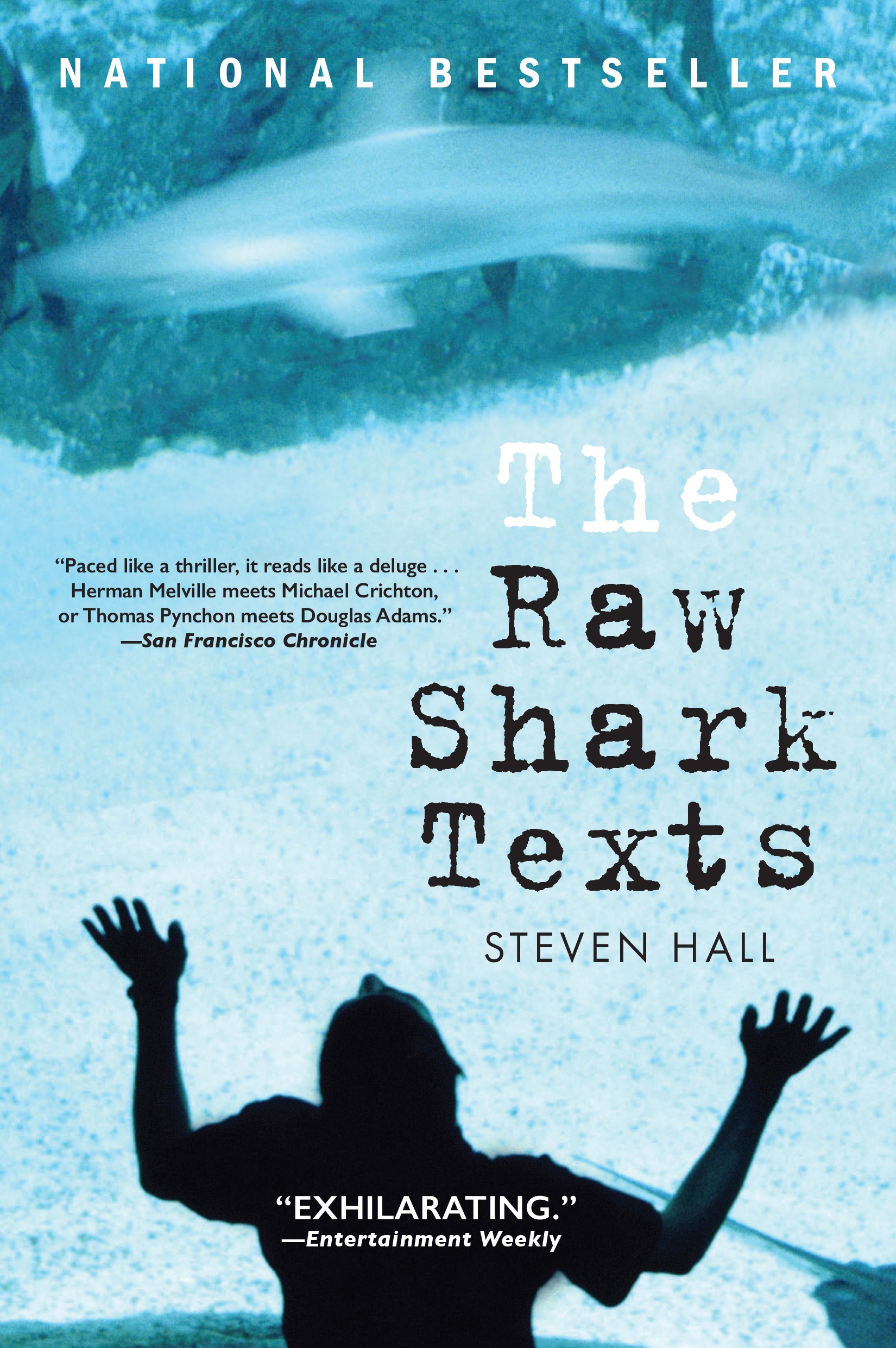
The Raw Shark Texts
Eric Sanderson wakes in an unfamiliar house with no memory of his life, and diary entries are all that remain of his relationship with Clio, who died under mysterious circumstances.
About
Spoiler notice: Spoilers cover Eric's memory loss, the missing Clio recalled in his diaries, and the novel's language-borne predator; later revelations and the ending are withheld.
The Raw Shark Texts begins with a break in the most basic kind of continuity: Eric Sanderson wakes in a house he does not recognize and cannot remember his own life. The familiar anchors that might explain him are missing, leaving a set of diary entries that recall Clio, a woman who has died in circumstances Eric does not understand. Steven Hall builds the opening around a practical question—what happened to Eric?—but lets it widen into a more unsettling one: how much of a person depends on memory, and what remains when memory cannot be trusted to provide a complete account? The novel's mystery grows from a private blank space, so the search for facts also becomes a search for a self that may have changed beyond recognition.
That search is shaped by the difference between evidence and experience. Eric has records of a past he cannot inhabit directly; the diaries give him words, but words cannot simply restore the person who wrote them. The distance between a remembered relationship and its surviving traces gives Clio a powerful presence without making her an ordinary companion in the action. She matters as someone Eric loved and as the point around which his broken history turns. Each attempt to reconstruct what happened therefore carries two kinds of uncertainty: whether a detail is accurate, and whether recovering it will make the past feel any less distant. Hall uses this tension to make memory active rather than decorative. It is not a neat backstory that can be supplied once and put aside; it is the problem that determines what Eric can know, whom he can trust, and what a restored identity might mean.
The title's shark gives this inward crisis an outward threat. The creature moves in language and swims through human interaction, making it an imaginative predator whose territory is communication itself. That premise makes ordinary acts of reading, speaking, and remembering feel newly exposed. If a danger can travel through the channels by which people understand one another, information is no longer automatically safe just because it has been written down. Eric's past may be approached through texts, but texts also belong to the uncertain world in which the danger operates. The image works on more than one level without needing to be reduced to a single allegory. It supplies a thriller's pursuing force while keeping open questions about thought, language, and the vulnerabilities that connect people. The shark is both a striking creature and a way to make abstraction feel capable of pursuit.
Eric is not left to make sense of this situation alone. Among the allies Eric encounters are Ian, his cynical cat, and Dr Trey Fidorus, the person who knows the truth he needs. Their presence shifts the story from solitary recollection toward encounters in which knowledge is shared, challenged, or withheld. The contrast between a domestic animal, a specialist with access to hidden knowledge, and a protagonist whose own history is inaccessible helps keep the book's strange idea attached to recognisable human needs. Eric must find out what happened, but he also needs other people to help him decide what counts as evidence and what kind of life can follow an erased past.
The story moves with thriller momentum while remaining interested in how a story is made. Its literary-fiction dimension also meets a set of related negatives: for every chapter in the novel, there is an un-chapter that exists beyond its covers. That formal idea makes the boundary of the book part of its imaginative design. The printed narrative remains the central reading experience, but the concept of absent or external texts echoes the novel's larger concern with gaps and traces. What is missing can still shape how a story is understood. This is a useful way to approach the book's playful strangeness: its experiments do not exist only to surprise, but to make form participate in the themes of memory, transmission, and incomplete knowledge.
The emotional centre remains Eric's attempt to recover a life that includes Clio. Because she survives in his present first as the subject of diary entries, recollection is tied to grief as well as investigation. A mystery can promise that the right clue will settle events, but emotional recognition is less mechanical: knowing what happened does not necessarily restore what has been lost. The book's danger therefore presses on intimate questions as well as intellectual ones. What does it mean to keep loving someone through fragments? Can a person regain a sense of continuity when the past arrives in pieces? These questions give weight to the novel's unusual premise and keep its language-based threat from becoming a puzzle detached from feeling. Hall connects the desire to know with the desire to hold on, while leaving room for uncertainty about whether either desire can produce a complete answer.
First published in 2007, The Raw Shark Texts is an inventive literary thriller built from a clear hook and increasingly unfamiliar consequences. Its starting point is accessible—a man wakes without his memories—but the idea of a predator moving through language lets the story unsettle the very tools Eric needs to understand himself. Mystery, speculative unease, and formal play meet in a novel that treats words as both evidence and possible danger. Readers drawn to stories about fractured identity may find its central search compelling; those interested in books that make their structure part of their subject have another path into it through the linked negatives associated with the novel. The novel keeps those interests together rather than resolving them into a single explanation. Its distinctive appeal lies in that combination: a forward-driving hunt for truth that asks what truth can mean when memory, narrative, and connection are all vulnerable.
Book details
- Author
- Steven Hall
- First published
- 2007
- Series
- No series listed
- Subgenre
- Literary fiction, Psychological thriller, Experimental fiction
- Primary genre
- Literary Fiction, Mystery & Thriller
- Tags
- No tags for this book.
Review
Editor profile
Baby Bat
Goodreads and social links will be added soon.
- Goodreads — link coming soon
- Social media — link coming soon