
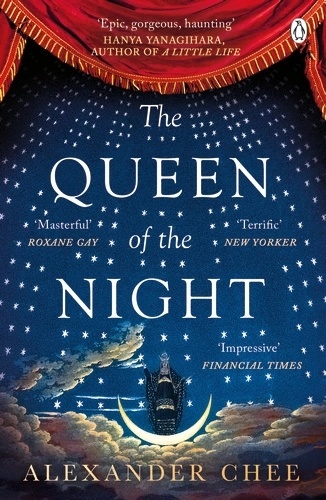
The Queen of the Night
In 1882 Paris, celebrated soprano Lilliet Berne is offered an original role in a new opera, a chance to secure a place in the art she has mastered.
About
Spoiler notice: Spoilers include the opening libretto mystery and the heroine's earlier identities as circus rider, courtesan, empress maid and stage ingénue. Later turns and the ending are withheld.
Paris in 1882 is the stage on which Lilliet Berne appears to have everything except the thing she wants most: an original role. She is already a celebrated soprano, but a new opera could make her more than an interpreter of other people’s parts. The offer sounds like a rare opening until she reads the libretto and recognizes material from a concealed past. The plot’s question is immediate and personal: which of four people who know her history has exposed it, and why? Chee begins with the pressure of a performance about to become an account of a life. Lilliet must decide whether the chance to create a part is worth letting someone else shape her story. Her investigation sends the narrative backward through the identities she has inhabited, while the present-day mystery gives those memories a purpose beyond recollection.
Lilliet’s route to stardom passes through a series of sharply different positions: circus rider, courtesan, maid to an empress and stage ingénue. These are not simply costume changes on the way to fame. Each position places her in a different relationship to power, security and the attention of others. At a ball in the Luxembourg Palace, she is celebrated, yet arrives in a dress she dislikes and feels that the wrong garment has already shaped the evening. She takes control of the mistake through an audacious public performance. The episode introduces a heroine alert to the way a room reads her, and determined to act before other people fix the meaning of her appearance. Her changing circumstances give the novel its momentum, while the story’s return to her past shows how each identity becomes part of the woman now being offered a role based on herself.
Opera supplies more than a glamorous occupation. Its roles and conventions give the book a language for the gap between a person and the part she is expected to play. Years of embodying characters onstage have made the distinction between Lilliet and her roles difficult to hold; the parts can seem more vivid than her private sense of self. The new libretto makes that division dangerous by turning fragments of her own past into material for an audience. A role can offer artistic distinction and still threaten to expose its performer. The novel’s own structure echoes this problem: it opens amid spectacle, then follows Lilliet through memories that gradually alter what the offer means. The mystery is not only about identifying a betrayer. It asks who has the right to narrate Lilliet’s life, and whether she can reclaim that authority while pursuing recognition in a world built around what audiences wish to see.
Clothing, staging and public display are closely tied to survival. In Lilliet’s world, dress carries political and theatrical force as well as offering protection and a possible weapon. Appearance can communicate rank, desire, allegiance or defiance before anyone speaks. The opening ball turns a faulty costume into an occasion for deliberate self-presentation; the story’s movement through court and theatre keeps questions of access and image in view. These details make the setting active rather than ornamental. The palace, opera house and other fashionable spaces are places where reputations are made and where a woman’s choices are judged. Lilliet’s skill as a singer matters, but so does her ability to understand the rules of display and bend them when the chance arises. An outfit can frame how others see her, yet she is capable of using that same spectacle to redirect their attention and make a public entrance on her own terms.
Invented lives share the novel’s stage with people drawn from history. Lilliet’s ascent unfolds amid the glitter and grit of Second Empire France, among powerful people and artistic institutions that shape what she can attempt. The period is more than an empty backdrop: political fortunes and fashionable spaces help define the opportunities available to her and the risks attached to them. The heightened machinery of melodrama—disguises, secrets, ambition and possible betrayal—meets a setting populated by real historical figures, without reducing Lilliet to a simple emblem of the age. Her perspective remains the story’s centre. The period’s spectacle is seen through the practical question of how she can live within it, while her changing roles bring private survival into contact with public power. That combination gives her journey both an intimate scale and a wider social world.
At heart, The Queen of the Night is concerned with reinvention and its cost. Lilliet’s transformations are necessary acts of adaptation, but each new identity carries the risk that others will own the story attached to it. Fame promises a durable place in the culture; it also makes a performer’s private life tempting material. Her rare voice gives her unusual possibility, yet the book’s opening makes clear that talent alone does not settle who controls a career or its public meaning. Ambition, desire and concealment meet in the offer of a role that may secure her reputation or make her past impossible to contain. The novel follows that choice through a long chain of remembered lives and a present-tense search for the person behind the libretto. It is a historical novel of artistic aspiration and intrigue, shaped by the theatrical question of what happens when the woman who has played so many parts is offered a role based on herself.
Book details
- Author
- Alexander Chee
- First published
- 2016
- Series
- No series listed
- Subgenre
- Literary historical fiction, Historical fiction
- Primary genre
- Historical Fiction, Literary Fiction
- Tags
- No tags for this book.
Review
Editor profile
Baby Bat
Goodreads and social links will be added soon.
- Goodreads — link coming soon
- Social media — link coming soon