
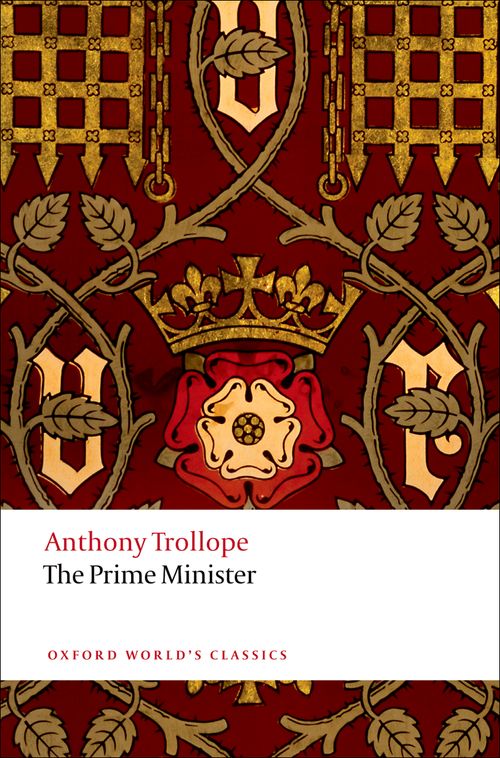
The Prime Minister
Ferdinand Lopez pursues wealth and standing through finance, marriage and political connections, while Plantagenet Palliser, Duke of Omnium, struggles to lead a fragile Coalition.
About
Spoiler notice: Full-plot spoilers, including Lopez’s death, the Coalition’s fall and the closing marriage plans.
The Prime Minister brings together two very different forms of ambition: the effort to hold political power responsibly and the effort to acquire the money and connections that make power accessible. Published in book form in 1876 after serialization in 1875–76, Anthony Trollope’s novel belongs to the Palliser series. Plantagenet Palliser, Duke of Omnium, becomes the head of a fragile Coalition government, while Ferdinand Lopez seeks advancement through finance, marriage and entry into influential society. The stories meet through the Duke’s wife, Glencora, whose enthusiasm for political entertaining gives Lopez an opportunity. Country-house hospitality, election expenses and private family arguments become parts of the same world, where an action intended to satisfy one obligation can create another that is much harder to explain.
Lopez enters the novel surrounded by uncertainty about his background and resources. People know his appearance, manners and accomplishments more readily than they know his affairs. He has worked on the Stock Exchange and continues to conduct business in the City, but even those close to him struggle to establish the condition of his finances. His carefully maintained clothes, horses and social ease help sustain an impression of prosperity. Trollope makes the labour behind that impression visible, showing how much attention Lopez gives to appearing effortlessly well placed. The society assessing him is also preoccupied with ancestry and nationality. Its suspicions must be distinguished from what the narrative actually reveals about his conduct: unfamiliar origins do not themselves establish dishonesty, even as his financial manoeuvres give people other reasons for concern.
Emily Wharton’s attachment to Lopez brings these questions into a family dispute. She believes in him and resists her father’s opposition, wanting her own judgement to carry weight in the choice of a husband. Their marriage does not end the conflict over money. Before the ceremony, Lopez is already planning how to obtain financial help from his father-in-law and how to teach Emily to use her influence on his behalf. His tenderness during the honeymoon exists alongside that calculation. Emily offers to share his troubles without yet understanding their extent, while he begins presenting her father’s fortune as something they ought to be able to draw upon. The difficulty is more intimate than a speculative loss: the husband she loves expects her loyalty to become an instrument for securing money from the parent she also loves.
The Palliser marriage has its own strain between affection and competing ideas of public duty. Glencora throws herself into the social work surrounding her husband’s office, hoping that hospitality and personal influence will strengthen his position. The Duke is far less comfortable with that activity and with the expectations it creates. Lopez’s candidacy at Silverbridge brings their difference into a particularly exposed setting. Encouragement from the Duchess does not amount to the clear political backing he wants, and the contest ends in defeat for him. The Duke subsequently pays his election expenses because he feels responsible for the loss arising from his wife’s encouragement. He regards the payment as a matter of honour, but that private explanation is difficult to offer publicly without exposing Glencora’s part in the affair.
Quintus Slide and the People’s Banner turn the payment into an attack on the Prime Minister’s integrity. The newspaper asks whether a minister who disclaims electoral interference has nevertheless used his money to support a candidate. The payment itself is real; the corrupt purpose alleged around it is a separate matter. Trollope shows the Duke reading the accusations and struggling to decide how to answer something whose literal truth does not convey his motive. His sensitivity makes repeated public criticism especially painful, while advice from those around him can feel like another judgement on his conduct. Lopez’s financial position, meanwhile, deteriorates. The story eventually takes him to Tenway Junction, where he deliberately steps into the path of a train. Public explanations connect his death with disgrace, but those explanations do not exhaust the collapse the narrative has shown.
Emily’s widowhood does not produce an immediate release from the consequences of her marriage. Arthur Fletcher continues to love her, but she regards her past as something that could disgrace him. His persistence must contend with her own sense of what she has become, rather than simply with the absence of her former husband. Near the end, she accepts his affection and the prospect of becoming his wife. The final chapter makes their position precise: they have agreed to marry, but have postponed the wedding until the following year. The Duchess is pleased by the arrangement and promises another visit once Emily is Mrs Fletcher. That conversation leaves the ceremony in the future, while allowing Emily’s story to move beyond the belief that her earlier choice has permanently disqualified her from happiness.
The political conclusion is similarly concerned with life after apparent failure. The Coalition has ended, and the Duke and Duchess return to a quieter circle at Matching. Glencora misses the excitement and remembers how intensely she worked for her husband, even while acknowledging that she cannot summon the same effort again. In the novel’s last conversation, Mr Monk argues that the Coalition fulfilled an important purpose despite its limitations and encourages the Duke not to withdraw permanently from public service. The Duke says he does not want to lead another government and would prefer several years out of office, but he leaves open the possibility of being useful again. The final prospect is therefore neither a restored premiership nor a complete retreat. Trollope closes with a difficult adjustment of ambition, as the Duke begins to imagine service without insisting on the highest place.
Book details
- Author
- Anthony Trollope
- First published
- 1876
- Series
- No series listed
- Subgenre
- Literary fiction, Modern classics
- Primary genre
- Literary Fiction
- Tags
- No tags for this book.
Review
Editor profile
Baby Bat
Goodreads and social links will be added soon.
- Goodreads — link coming soon
- Social media — link coming soon