
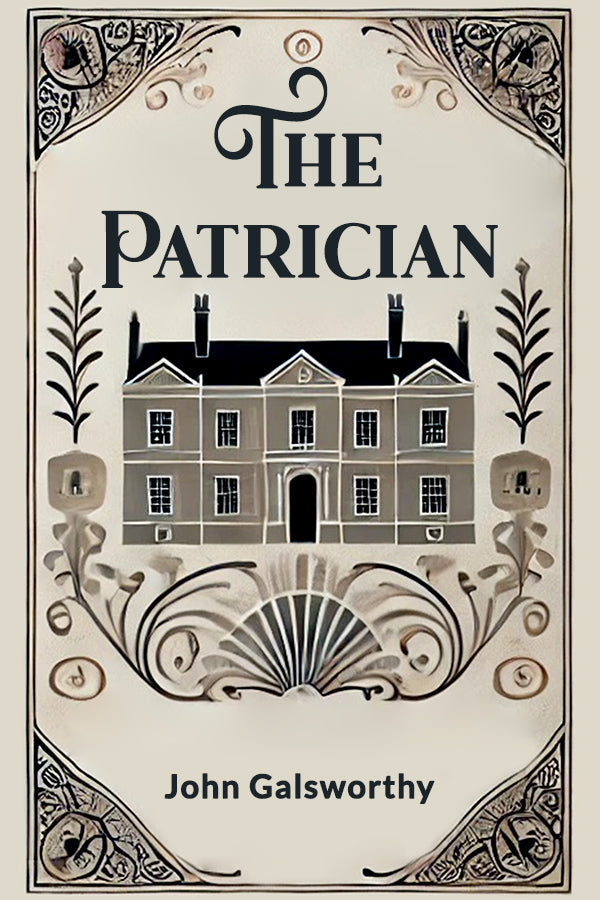
The Patrician
At Monkland Court, Eustace “Miltoun” Caradoc prepares to enter Parliament as heir to an aristocratic family whose traditions weigh on his sense of duty.
About
Spoiler notice: This overview includes Miltoun's illness, Barbara's marriage and the final scenes involving Audrey.
Before introducing the Caradoc family in conversation, The Patrician lets morning light examine its possessions. The dining hall at Monkland Court contains objects accumulated over centuries, turning family history into armour, trophies and inherited claims. John Galsworthy's opening makes those claims visible as products of time, with contradictions and accidents that their owners may prefer to overlook. The present household carries this history into public life. Lord Valleys has Cabinet business to attend to, and his eldest son Eustace, Lord Miltoun, is preparing to represent a constituency. Political ambition and family routine occupy the same rooms. The setting explains why a young man's emotional decisions will attract an interest extending far beyond the people directly involved: the family understands his future as part of its own continuing authority.
Miltoun approaches that future with a seriousness that distinguishes him from relatives more at ease with their position. At thirty, he has studied, travelled and worked in settings intended to prepare him for political responsibility, including a slum settlement, the family estates and legal chambers. His father would have preferred an earlier entry into Parliament, but Miltoun believes he must first understand the conditions he means to influence. The narrator nevertheless finds limitations in this conscientious preparation. He tends to absorb ideas that support convictions already rooted in his temperament. His contempt for the superficial advantages of rank coexists with a deep belief in his fitness to lead. This combination makes his principles more demanding than ordinary social convenience, while leaving him poorly equipped to laugh at himself or tolerate uncertainty.
Audrey Lees Noel unsettles that carefully ordered existence. Miltoun's love invests her with an almost complete moral perfection, and he intends to marry her before understanding her actual circumstances. She is separated from her husband, the Reverend Stephen Lees Noel, but remains married. The mistaken belief that she has been divorced conceals the obstacle until the relationship has become emotionally important. Audrey's own understanding of love differs from his. The marriage no longer has a living emotional reality for her, and she does not regard other people's opinions as sufficient reason to deny what she feels. Concern for Miltoun's career troubles her more than anxiety about her own standing. The conflict therefore exists inside their ideas about responsibility, as well as in the rules surrounding them.
Lady Casterley's visit to Audrey shows how family intervention can present itself as protection while making an accusation. She stresses the harm that gossip may do to her grandson and treats a woman living apart from her husband as an unavoidable object of suspicion. Audrey's quiet resistance frustrates the older woman's effort to manage the encounter. The scene gives social power a conversational form: an apparently sympathetic visitor assumes the right to demand explanations, define acceptable conduct and decide whose future deserves priority. Miltoun's sister Barbara and the independent-minded Courtier provide other perspectives within the wider story. Their presence prevents the family's interpretation from standing unchallenged, even as the influence of its name and political expectations remains substantial.
The struggle becomes physically dangerous when Miltoun works through successive nights, loses sleep and appetite, and falls into fever. Barbara finds him alone in his rooms and refuses to accept his insistence that she leave him to recover without help. She goes to Audrey, who gathers nursing supplies and comes at once. The practical details matter: ice, bedding, a watch beside the bed and the repeated effort to keep a distressed man comfortable give their attachment a reality beyond declarations. Miltoun's delirium strips away the self-command he values. His dependence upon Audrey does not settle the questions that divided them, however. Recovery restores the person who must again confront his convictions about authority, marriage and the honesty required of a public life.
Advice from Lord Dennis makes that conflict sharper by questioning Miltoun's account of himself. Dennis suspects that political leadership is the stronger element in his nature and warns against claiming a sacrifice he may be unable to sustain. Miltoun hears the argument as pressure to abandon the woman he loves and rejects a compromise. The disagreement has no simple referee: Dennis can see something the younger man resists, but his judgment remains a judgment offered by another character. Audrey eventually goes away, and Miltoun immerses himself in London and work. Barbara's marriage to Claud Harbinger supplies a parallel movement toward the family's expected future. On her wedding morning, a meeting with Audrey interrupts Barbara's exhilaration, reminding her of suffering that her own happiness cannot absorb or make disappear.
Miltoun encounters the same unresolved loss more privately that night. Returning to Audrey's cottage, he discovers that she is there, sees her figure and comes close to approaching, but finally withdraws. There is no reunion to turn separation into a completed test of love. The short final chapter then shifts to Lady Casterley reading a reassuring family letter. Barbara has married, Miltoun is performing well in the House, and the writer believes he has safely recovered from the affair. The reader has just seen how incomplete that account is. Lady Casterley's satisfaction also admits a shadow of doubt as the narration considers whether character becomes fate. The family's desired course has resumed, but the closing question concerns what that successful return has required, and whether the nature that makes authority possible can itself become a form of confinement.
Book details
- Author
- John Galsworthy
- First published
- 1911
- Series
- No series listed
- Subgenre
- Literary fiction, Modern classics
- Primary genre
- Literary Fiction
- Tags
- No tags for this book.
Review
Editor profile
Baby Bat
Goodreads and social links will be added soon.
- Goodreads — link coming soon
- Social media — link coming soon