
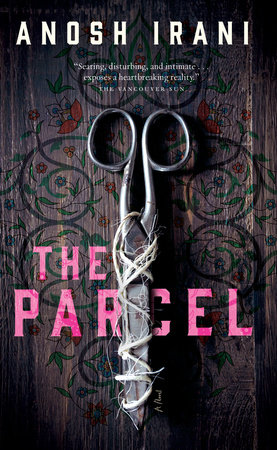
The Parcel
Madhu, a forty-year-old hijra and former sex worker in Bombay's Kamathipura, now begs to support her clan's leader, Gurumai.
About
Spoiler notice: Spoilers below cover the novel's setup and Madhu's starting circumstances only; the later outcome of her assignment is not disclosed.
The Parcel centres on Madhu, a forty-year-old hijra who has spent much of her life in Kamathipura, Bombay's red-light district. She belongs to a close-knit clan of transgender sex workers, though she has left sex work herself. Her position in that community matters as much as the dangerous errand that drives the plot. Madhu has ties to the people around her and responsibilities she cannot easily set aside; she also lives within a hierarchy that can demand more from her than she wants to give. When a powerful brothel owner brings a trafficked girl into the district, Madhu is pushed into a task that tests both her place in the clan and the life she has made there.
Madhu has moved away from prostitution, the trade she entered in her teens, but this has not made her independent or secure. She now begs on the streets to help support Gurumai, the charismatic head of her hijra clan. That arrangement establishes the pressure around her before the central task arrives: her present livelihood is tied to a community whose authority she cannot simply disregard. The publisher's account describes the clan as close-knit while also making clear that Gurumai can compel Madhu to act. The book therefore approaches community as both connection and constraint. Madhu has people around her, but the loyalties and needs binding them together do not automatically give her freedom to refuse what is demanded.
The demand comes from Padma Madam, described by the publisher as Kamathipura's most feared brothel owner. A young girl has been trafficked from the provinces; in the district's coded language, she is the 'parcel' of the title. Madhu is told to prepare the child for what awaits her in the brothel. The novel's premise is explicit about the abuse and exploitation at stake, without requiring the reader to mistake euphemism for consent: the girl has been trafficked, and Madhu is ordered to participate in the next stage of that harm. Gurumai forces the reluctant Madhu to take the job. This conflict places an immediate moral problem inside a web of dependence, coercion and survival rather than presenting it as a simple choice between a free decision and an easy escape.
The book's central tension follows from the distance between Madhu's reluctance and the work she is compelled to do. As she faces the task, her emotions become harder to contain and her past returns, threatening the identity she has built over a lifetime. The assignment becomes more than a single encounter with the girl: it presses on Madhu's history and on the self she has assembled while living in a society that repeatedly defines her from outside. Irani connects the two characters through betrayal, though their situations are sharply different. The girl has been sold by her aunt; Madhu's own memories make the demand placed on her impossible to treat as a routine job. The story keeps those pressures close to Madhu rather than turning her into a symbol for an entire community.
Kamathipura is more than a backdrop in this conflict. The district contains the clan's home and social ties, the brothel economy in which Padma Madam has power, and the streets where Madhu begs. Those places make the characters' choices material: money, shelter, labour and belonging are bound together. Irani grew up near Kamathipura and has written about how long it took him to look beyond the distance he felt from the people he saw there as a child. He spent years working on this novel and spoke with a social worker about the fate imagined for the trafficked girl. That personal connection to the setting helps explain why the book gives attention to the district's social boundaries as well as its streets. Its story is still Madhu's fictional one, shaped around a particular dilemma.
Madhu's past does not simply sit behind the present as background information: it returns forcefully enough to threaten her carefully formed identity. The endangered girl is at the centre of the immediate crisis, but the demand also raises questions Madhu must face about her own life. Caring about another person and being able to protect her are different things when power rests with Padma Madam and Gurumai. The people in the district are not reduced to a single role in that problem. Gurumai can be a source of support and a figure of authority; Madhu can be both vulnerable to pressure and implicated in the work she is ordered to perform. This makes the conflict more difficult than a story in which she only has to recognize that the order is wrong.
The Parcel is a literary novel built around this morally difficult assignment and the personal history it awakens. Sex work, the trafficking of a child and the coercive conditions surrounding Madhu's response are central to its story, not incidental sources of suspense. The book stays with the consequences of a demand made inside a network of loyalties that Madhu depends on, even as it threatens to compromise her. Its focus is one fictional woman, her clan, and a girl who has been betrayed by someone she trusted. That focus gives the novel its force: the question is not whether Madhu can see the harm ahead, but what she can do when the people who control her livelihood insist that she help bring it about.
Book details
- Author
- Anosh Irani
- First published
- 2016
- Series
- No series listed
- Subgenre
- Literary fiction, Social realism
- Primary genre
- Literary Fiction
- Tags
- No tags for this book.
Review
Editor profile
Baby Bat
Goodreads and social links will be added soon.
- Goodreads — link coming soon
- Social media — link coming soon