
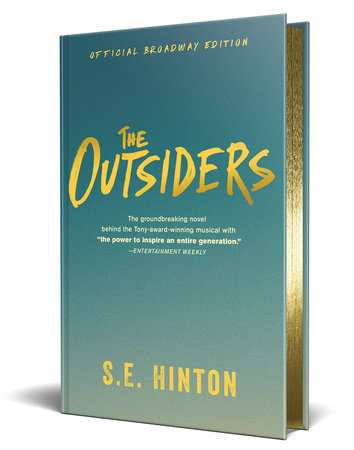
The Outsiders
Ponyboy Curtis is a greaser growing up with his brothers and friends in Tulsa, where conflict with the wealthier Socs shapes everyday life.
About
Spoiler notice: Spoilers include the fatal confrontation that forces Ponyboy and Johnny to leave Tulsa and the event that brings them back. The final chapter and the full resolution of the Curtis brothers’ story are withheld.
The Outsiders is narrated by Ponyboy Curtis, a teenager who belongs to a close group of working-class boys known as greasers. He lives with his older brothers, Darry and Sodapop, after their parents’ deaths, and thinks of his friends as an extension of that family. Their neighborhood and daily routines are shaped by limited money, loyalty, and the possibility of trouble. Across town are the Socs, short for Socials, whose wealth and status give them a different kind of security. The division between the groups is visible in their clothes, cars, and reputations, but Hinton’s story follows individual young people whose fears and attachments do not fit neatly into those labels.
Ponyboy’s opening account establishes the danger that accompanies his identity. He is attacked by Socs while walking alone, an incident that makes the group conflict personal before he has much chance to reflect on it. His friends respond with their own code of loyalty, especially Johnny Cade, whose quietness comes from a difficult home life and repeated violence. Darrel, usually called Darry, is both Ponyboy’s guardian and an authority figure in the house; Ponyboy often reads his strictness as dislike. Sodapop tries to soften the friction between them. Their shared home offers care and stability, yet the brothers’ different ages and responsibilities leave room for misunderstandings about what each expects from the others.
A meeting with Cherry Valance and her friend Marcia complicates Ponyboy’s assumptions about the Socs. The girls are associated with the wealthier group, but talking with them lets him notice common interests and vulnerabilities across the class line. Cherry can see that Ponyboy and his friends are more than the rough reputation attached to greasers, while Ponyboy begins to understand that privilege does not make every Soc’s private life simple. Their conversation does not erase the hostility around them. Instead, it gives the novel a way to examine how labels can govern public behavior even when people recognize something familiar in one another. The distance between the groups remains socially powerful because it is reinforced by their friends and surroundings.
The conflict reaches a crisis when Ponyboy and Johnny are confronted by a group of Socs. In the struggle, Johnny kills Bob, one of the Socs, while defending Ponyboy from being drowned. The boys flee Tulsa and hide in an abandoned church, where the immediate pressure of the city gives way to uncertainty about what will happen next. Their refuge creates space for conversation and reflection, but it does not remove the consequences of the violence. Dally Winston, a tougher and more experienced greaser, helps them with practical arrangements. The episode shifts the story from neighborhood rivalry to a question of what responsibility and safety can mean for two teenagers facing a serious act with lasting effects.
While the boys are away, the gang’s conflict continues to gather force. Ponyboy and Johnny’s actions draw attention to the people behind the group names, and the coming rumble between greasers and Socs becomes a public test of loyalty. Hinton keeps the focus on how the boys understand the situation rather than turning the conflict into a simple contest between heroes and villains. Darry’s role as a caregiver, Johnny’s vulnerability, and Dally’s hard-edged protectiveness each reveal different ways of surviving with few dependable choices. Ponyboy’s sense of what makes someone tough or good changes as he sees the costs that fall on people on both sides of the neighborhood divide.
The novel also follows Ponyboy’s relationship with reading, school, and the ordinary future he might have had. He notices sunsets and responds to poems and stories even while his life is surrounded by street violence. Those moments matter because they show a thoughtful person inside the public image of a greaser. Ponyboy is not simply choosing between his friends and the Socs; he is trying to make sense of grief, loyalty, family, and his own place in a world that assigns him a role. His first-person narration lets readers hear uncertainty and self-correction directly. The story’s emotional center therefore sits in the gap between how outsiders classify these teenagers and how they describe themselves.
Written by Hinton as a teenager and first published in 1967, The Outsiders became an influential young adult novel through its attention to adolescent life, social class, and belonging. Its setting is Tulsa, while the story gives few precise historical markers; clothing suggests the early 1960s, but no exact year is stated. This 2025 Broadway Edition hardcover includes material connected to the musical adaptation, while the central story remains Hinton’s original novel. The Curtis home is a small household held together by three brothers after their parents’ deaths. Darry carries adult responsibilities, Sodapop often eases tension, and Ponyboy struggles to read Darry’s strictness as care. Their friends share the household’s welcome, making loyalty part of ordinary domestic life as well as gang identity. These everyday bonds give the larger class conflict a personal scale: Ponyboy’s ideas about outsiders are tested first in conversations and relationships, then by events he cannot simply walk away from. The publisher’s synopsis names Johnny and Two-Bit among the friends Ponyboy trusts, linking his home life to the wider greaser circle.
Book details
- Author
- S. E. Hinton
- First published
- 1967
- Series
- No series listed
- Subgenre
- Coming-of-age, Literary fiction, Modern classics
- Primary genre
- Literary Fiction
- Tags
- No tags for this book.
Review
Editor profile
Baby Bat
Goodreads and social links will be added soon.
- Goodreads — link coming soon
- Social media — link coming soon