
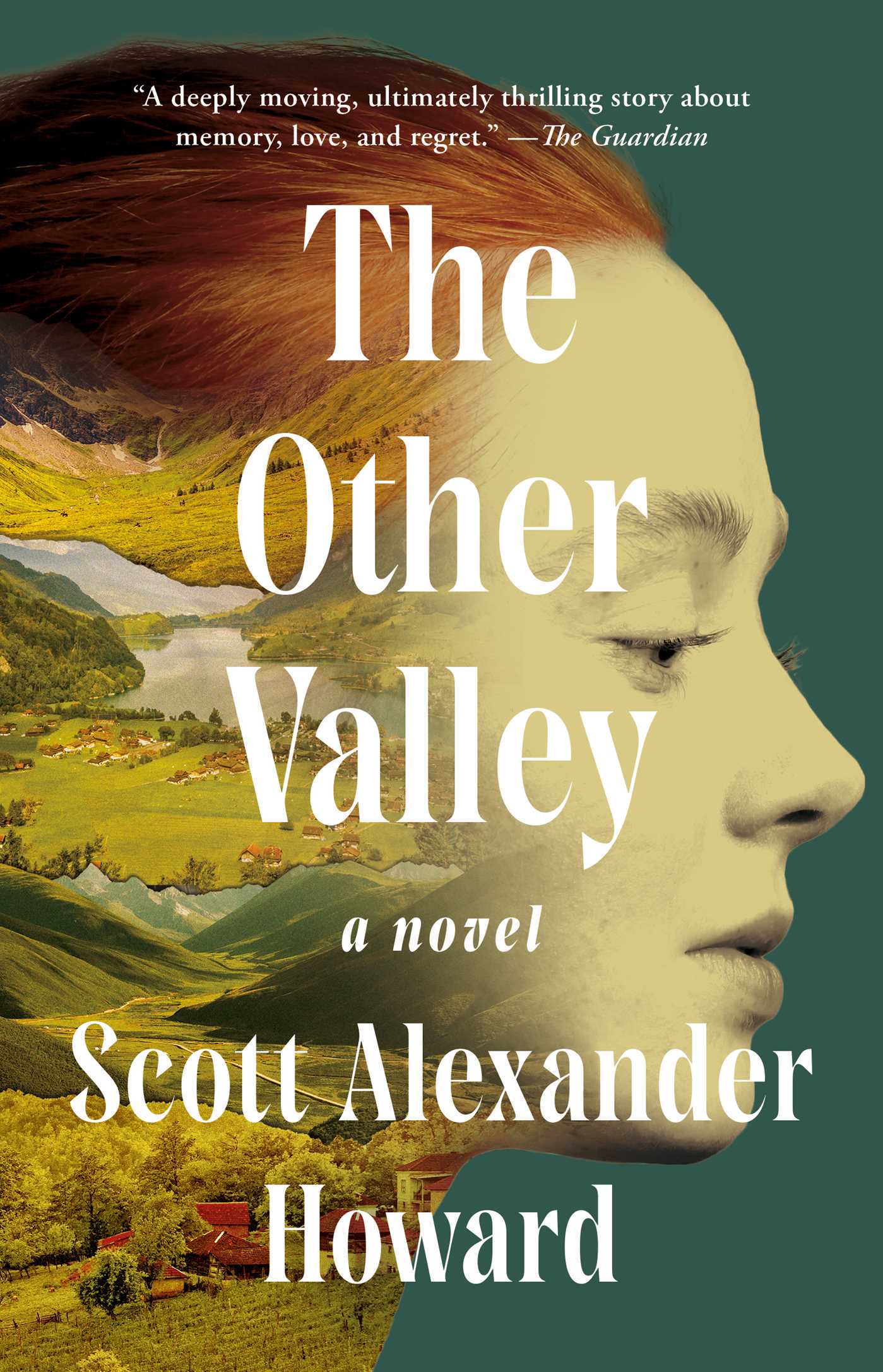
The Other Valley
Sixteen-year-old Odile lives in a valley bordered by identical towns twenty years in the past and future, where tightly controlled crossings are permitted mainly for mourners.
About
Spoiler notice: Spoilers for the future visitors Odile recognises, her connection to Edme, her Conseil candidacy and the later move into her adult life. The ending and final consequences of her choices are not described.
Odile’s town is bordered by versions of itself that occupy different points in time. Cross the eastern mountains and the same settlement is twenty years ahead; cross west and it is twenty years behind. The valleys continue in a repeating chain, so time travel is a matter of moving through a landscape rather than entering a machine. That geography is ordinary enough to shape everyday life, but movement across it is tightly controlled. The borders are guarded because an encounter with another period could alter the course of events. Visitors are masked so residents cannot identify them, and passage is usually refused. The arrangement gives Odile a world where the past and future are visible possibilities, yet access to them depends on rules made by the community and enforced at its edges.
Sixteen-year-old Odile is quiet at school and uncertain that she belongs in public life. Her mother, who works in the Hôtel de Ville archives, nevertheless imagines her joining the Conseil, the body that oversees passage between valleys. A teacher’s nomination could put Odile into a demanding vetting program, where speaking and competing are part of the test. The process begins with an essay about which direction she would travel if she were allowed to leave the valley. Odile writes about her father, who died when she was four, and questions whether seeing him as a young man in the past would offer real comfort. Her answer draws on what she has learned from her mother’s grief, but it also shows how carefully she can reason about a loss she barely remembers.
The only accepted reason for a crossing is consolation: a mourner may petition to see someone who has died or someone they will not otherwise live to meet. Odile understands the practice as a ritual held at a distance, with visitors kept anonymous and the timeline protected. Then she sees two elderly people from the eastern valley and recognizes them as the parents of her friend Edme. They have come from twenty years ahead to look at their son while he is still alive in Odile’s present. The knowledge changes what her essay meant. She had argued that people should find closure within their own time, but now she is close to someone whose future she has glimpsed through other people’s grief.
Edme is brilliant and funny, and he is the only person who truly knows Odile. She learns that he is going to die, yet she is sworn to keep the visitors’ identities secret so the timeline is not disturbed. That obligation puts private affection against the safety rules she may one day help administer. The consequence is not abstract: Odile’s silence protects her place in the Conseil’s selection process, while speaking could change the future she has been taught to treat as protected. As she draws closer to Edme, the decision becomes more difficult to contain within policy. A relationship that might have been a simple part of growing up now carries knowledge neither teenager should have to manage alone.
The Conseil gives the novel a civic centre as well as a personal one. Its vetting system selects apprentices for a powerful job, and Odile’s mother knows the institution from both sides: she works in its archives and once tried for a place herself. Petitions are recorded with names and ages blacked out, suggesting how much private sorrow passes through official hands. The rules allow mourning tours while trying to prevent other kinds of contact, and the border guards stand behind that distinction. Odile’s situation therefore grows from the same system that makes the valleys legible to their residents. The institution promises order across generations, but its procedures cannot decide what a person owes to someone they love when the rules and the known future point in opposite directions.
Odile tells the story herself, in a voice that can sound formal and bookish even when she is frightened or uncertain. Her intelligence makes her sensitive to implications, but it does not give her complete knowledge of the world she inhabits. The valleys are familiar to her, so she takes aspects of their organisation for granted that an outsider might want explained. Information arrives where it matters to her own situation, with other rules left to be inferred. This limits the distance between knowing the premise and understanding its consequences: the existence of another valley is clear, while deciding what a crossing means remains a question tied to particular people.
The novel follows Odile beyond her school years and into adulthood, making the distance from childhood part of the story itself. Her friends Edme and Alain bring irreverence and humour into the earlier chapters, qualities that sit uneasily beside her own seriousness. Later, the absence of that childhood world gives the passage of time a different weight. A landscape that offers physical access to other years cannot make growing older emotionally simple. The two parts place the possibilities of youth beside the life that follows, without treating knowledge of time travel as mastery over loss.
Book details
- Author
- Scott Alexander Howard
- First published
- 2024
- Series
- No series listed
- Subgenre
- Time travel, Literary fiction
- Primary genre
- Literary Fiction, Sci-Fi
- Tags
- No tags for this book.
Review
Editor profile
Baby Bat
Goodreads and social links will be added soon.
- Goodreads — link coming soon
- Social media — link coming soon