
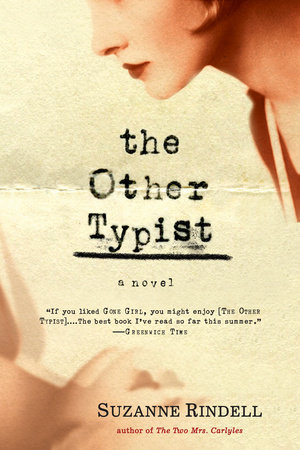
The Other Typist
In 1920s New York, police typist Rose Baker records criminal confessions and keeps her own life orderly until Odalie joins the typing pool.
About
Spoiler notice: Spoilers cover Rose Baker’s police-precinct work, her growing attachment to Odalie, and the novel’s central question of identity. The ending and final revelations are not disclosed.
The Other Typist begins with a job that puts Rose Baker close to other people’s worst moments while keeping her own life carefully arranged. In 1920s New York, she types confessions for the police department, recording the words of people accused of crimes. The work gives her a particular kind of authority: a statement becomes a document through her keystrokes, and the record may shape what happens to the person who made it. Outside the room, however, Rose presents herself as proper, controlled, and removed from the disorder she transcribes. The contrast between her desk and the city beyond it establishes the novel’s central tension. Rose can write down other people’s stories with professional precision, yet the account readers receive is hers, shaped by her own selection and interpretation. Her occupational skill and her personal restraint make a fitting frame for a story that steadily tests how much can be trusted in a first-person account.
The police precinct is both workplace and social world. Rose’s routine is disrupted when Odalie joins the typing pool. The newcomer is stylish and self-possessed, qualities that stand apart from Rose’s more restrained manner. Rose is drawn to her, and the relationship becomes the route out of the predictable life Rose has built. The two women move between official work and the city’s night life, where speakeasies and jazz offer a vivid counterpoint to the precinct’s paperwork. Prohibition is more than period decoration here: the law shapes the crimes Rose records and the illicit places where the women spend time. Rindell’s premise joins a procedural setting to the glamour of an underground social scene, letting Rose encounter a version of New York that seems to promise freedom from her old habits. That promise carries risk because the attraction is not evenly balanced; Odalie’s influence grows as Rose’s fascination deepens.
Rose’s narration makes the friendship’s development especially important. She tells the story retrospectively, describing what she noticed, what she believed, and how her feelings changed. The Historical Novel Society review emphasizes Rose’s meticulousness and proper demeanor, then traces the movement from interest to fascination and obsession. This trajectory gives the novel a psychological structure: events matter not only for what happens, but for how Rose explains them to herself. The reader follows her judgments as they are formed, rather than receiving an independent account that settles every doubt. That arrangement keeps attention on the difference between observation and certainty. Rose may report details with a typist’s care while remaining emotionally involved in what those details mean. Her work invites comparison between a confession on paper and a personal narrative shaped by desire, memory, and self-protection.
The story’s suspense grows from the gap between Odalie’s surface and what Rose can establish about her. The publisher’s description presents Rose as captivated by a stylish new colleague and says that fascination becomes an obsession; the independent review adds that a young man from Odalie’s past threatens to expose secrets. These details give the relationship an accumulating pressure without reducing it to a simple mystery to solve. Rose is not merely trying to learn who Odalie is. She is also deciding what she is willing to accept in exchange for proximity to the life Odalie represents. As the friendship draws her farther from the careful identity she has maintained, the question of character becomes personal: how much of Rose’s conduct comes from loyalty, how much from imitation, and how much from the wish to become someone else? The book’s tension rests in that entanglement.
Its historical setting adds a second kind of contrast. The novel looks toward a city of jazz, fashionable clothes, nightlife, and illegal drinking, while Rose’s day job brings her into contact with criminal statements and police authority. The Historical Novel Society identifies the period as the Jazz Age and locates the precinct on New York’s Lower East Side; PRH describes the action more broadly as 1920s New York. These sources support a picture of a story moving between institutions and leisure, between the disciplined office and spaces that evade official rules. Rose’s position as a single working woman gives the social setting an intimate scale. She participates in a changing urban culture through her friendship, yet she sees much of it through Odalie’s lead. The era therefore functions as more than atmosphere: its competing expectations help define the kinds of freedom Rose can imagine and the kinds of danger she may overlook.
The Other Typist is a debut novel built around confession, companionship, and the unstable boundary between recording a life and inventing an account of it. Rose’s work makes her a listener and transcriber; her narration turns that professional role inward. Odalie’s arrival disrupts a routine that had seemed secure, and the movement from fascination to obsession gives the plot its forward pull. Readers looking for a historical setting will find the 1920s city and Prohibition-era nightlife closely tied to the characters’ choices, while the psychological suspense comes from Rose’s changing understanding of herself and her friend. The Historical Novel Society review characterizes the story as moving toward darker territory and identity questions, without needing its concluding revelations to explain why the premise unsettles. The result is a novel whose central interest lies in perception: who controls a story, what a narrator can know, and how a person’s self-image shifts when another person becomes the measure of a life.
Book details
- Author
- Suzanne Rindell
- First published
- 2013
- Series
- No series listed
- Subgenre
- Psychological thriller, Historical mystery, Literary fiction
- Primary genre
- Mystery & Thriller, Historical Fiction, Literary Fiction
- Tags
- No tags for this book.
Review
Editor profile
Baby Bat
Goodreads and social links will be added soon.
- Goodreads — link coming soon
- Social media — link coming soon