
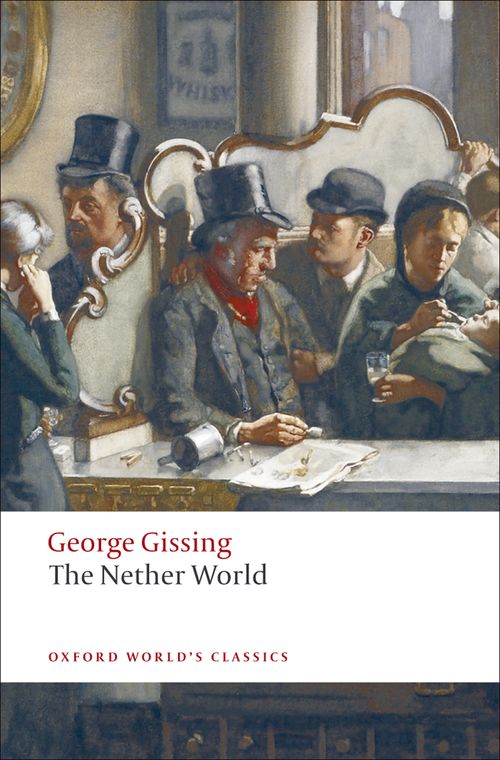
The Nether World
A returning grandfather finds Jane Snowdon living under the cruelty of the Peckovers in Clerkenwell.
About
Spoiler notice: Full-plot spoilers, including Clara’s injury and marriage, the loss of Michael’s fortune and Jane’s final meeting with Sidney.
An old man arrives in Clerkenwell looking for someone called Snowdon. Shortly after he leaves a public house, thirteen-year-old Jane comes in on an errand and hears that a stranger has asked for her name. She has little time to search for him: the Peckovers expect her to return with their beer, and Clem is waiting with threats and blows. George Gissing opens The Nether World by placing the possibility of rescue beside the ordinary demands of Jane’s life. Outside are the trades, traffic and poorly protected bodies of a crowded London district; inside is a kitchen where another person’s pleasure can depend on tormenting a child. The returning Michael Snowdon has to find his granddaughter within this world before he can change her place in it.
The Hewetts and their friend Sidney Kirkwood give the district another closely observed household. Sidney works as a jeweller, but his hopes extend beyond getting through the week. Clara Hewett also wants a life larger than the opportunities immediately around her, and refuses to let her father’s worry or Sidney’s advice determine every decision. Work at Mrs Tubbs’s luncheon bar offers one route away from home, while the stage eventually offers a more dramatic possibility. The family’s cramped rooms and uncertain resources make these ambitions urgent. Gissing follows people whose relationships are continually affected by the price of lodging, the availability of employment and the needs of children. Leaving a household can promise independence while also removing someone on whom its remaining members depend.
Michael takes Jane away from the Peckovers, but his plans reach further than giving her a comfortable home. An inheritance from Australia has left him with wealth that his appearance and chosen surroundings do not advertise. He wants that money used among working people, with Jane’s knowledge of hardship helping to guide its purpose. Sidney is drawn into the proposed future, including the possibility of marriage to her. He wants Jane to understand her position before being asked to decide. What Michael imagines therefore combines affection, education and a demanding public responsibility. The girl rescued from unpaid domestic work may eventually be expected to carry a project much larger than her own immediate happiness, under the guidance of adults who believe they know what the money should achieve.
Jane’s father, Joseph, brings a different set of expectations to the fortune. His marriage to Clem joins him to the family that formerly controlled his daughter, with each side hoping the arrangement will improve its prospects. A supposed claim on the Australian money proves mistaken: the inheritance belongs to Michael, not automatically to Joseph. Instead of ending the interest, that discovery turns their attention towards what the older man might leave in his will. Jane becomes caught between the plans of her grandfather and the influence of her father. The property that could have made her secure also gives other people a reason to manage her feelings and behaviour. Michael’s confidence in the future he has designed begins to fail while those competing claims remain unresolved.
Clara’s return makes Sidney’s future take another direction. An attack with vitriol badly burns her face and ends her acting career. Her father brings her home, where the children have to learn how to receive a sister whose suffering they scarcely understand. Sidney marries her, and their circumstances soon require him to support much more than a separate life as a couple. When John Hewett can no longer earn enough to maintain the household, Sidney takes responsibility for its needs. They move together to Crouch End, into a cheaply built house whose respectable appearance conceals its poor construction. Clara’s uncertain health and the arrival of a child leave little room for her proposed work at home. Their marriage settles an attachment without releasing them from the pressure of supporting others.
Jane continues earning her living, finding uses for her care in the lives immediately beside her. When Sam Byass leaves during a domestic quarrel, she stays with the distressed Bessie and helps manage the children and household. To reach Sam and bring back reassurance, she pawns her grandfather’s watch for the fare to St Albans. The assistance costs her wages and something personally precious, without guaranteeing that the Byasses will never quarrel again. She also visits Pennyloaf, now working among second-hand clothes and children in a small shop, and helps draw her away from painful thoughts. Scawthorne’s offer of marriage would provide a different material future, but Jane refuses. Her friendships and the attachment she retains to Sidney are part of the life she chooses to keep.
The final chapter brings news that Joseph has been ruined by speculation in America and has died. Michael’s fortune and the large charitable project attached to it are gone, leaving Jane with neither an inheritance nor the role once planned for her. On the anniversary of her grandfather’s burial, she walks to Abney Park Cemetery and meets Sidney at the grave. Their first meeting there was accidental; by the third year, each arrives as though an understanding exists, although they have not arranged it. They exchange news and ask after one another’s health, then part. The ending gives them no delayed marriage or recovered fortune. Their work continues in smaller acts beside people with fewer resources still, within the same difficult social world they had once hoped to change on a larger scale.
Book details
- Author
- George Gissing
- First published
- 1889
- Series
- No series listed
- Subgenre
- Victorian fiction, Social realism
- Primary genre
- Literary Fiction
- Tags
- No tags for this book.
Review
Editor profile
Baby Bat
Goodreads and social links will be added soon.
- Goodreads — link coming soon
- Social media — link coming soon