
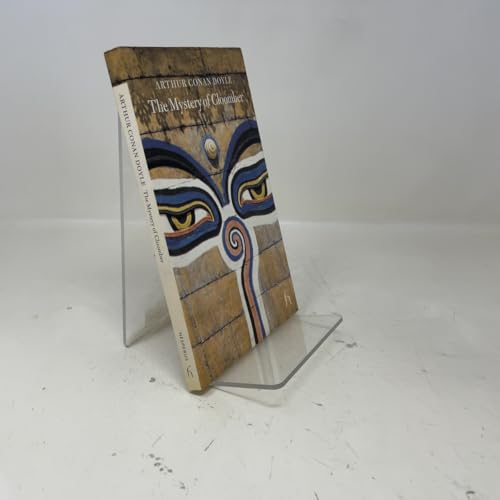
The Mystery of Cloomber
John Fothergill West and his sister Esther settle with their father near Cloomber Hall on the remote Wigtownshire coast, where they befriend Mordaunt and Gabriel Heatherstone.
About
Spoiler notice: This overview discusses Heatherstone’s past, the disappearances at the Hole of Cree and the marriages and illness described at the ending.
John Fothergill West presents The Mystery of Cloomber as an assembled record. His own experiences are joined by testimony from a coachman and a doctor, then by pages from General Heatherstone's journal. That arrangement gives the reader several approaches to a secret before its explanation becomes available. John insists that he wants to preserve evidence rather than embellish a tale, but his personal involvement means the record is never emotionally detached. He and his sister Esther have moved from Edinburgh to Branksome in Wigtownshire, where their father's estate work supports the household. Nearby Cloomber Hall becomes important when Esther notices a light moving through its tower. An apparently small disturbance in a quiet life opens the way into someone else's long-established fear.
The new occupants are the Heatherstones, whose family life combines welcome possibilities with severe restrictions. John and Esther grow close to Gabriel and Mordaunt, while the retired general keeps his household isolated and behaves as though danger may reach it at any moment. His reputation as a soldier does not explain the elaborate precautions surrounding an apparently peaceful country house. Lamps, locked rooms and nocturnal movement make the building seem occupied by a threat nobody outside the family can identify. John approaches these signs with curiosity, but affection changes the stakes. What begins as a puzzle about unusual neighbours becomes a question of whether the people he cares for can escape the consequences of their father's past.
The inserted accounts extend the mystery beyond what John can observe. Israel Stakes, formerly the coachman, describes the general from within the household and supplies a history of worsening anxiety. Dr. John Easterling adds another perspective, bringing medical experience to circumstances that resist an ordinary diagnosis. Each document changes the amount of information available without immediately settling its meaning. A repeated sound or an eccentric precaution can appear superstitious from one angle and painfully understandable from another. The structure also encourages a distinction between an event witnessed and an explanation attached to it. John wants the accumulated record to persuade, yet the reader must still decide how far the different witnesses can justify the conclusions he eventually draws.
Heatherstone's journal carries the explanation back to the Afghan campaign of 1841. It recounts violence at the Terada defile and the killing of Ghoolab Shah, followed by a warning of vengeance that transforms the meaning of an anniversary. The soldier's own account tries to explain how temperament and the conditions of action contributed to what happened. It also shows a man still seeking a way to understand the punishment he believes is approaching. The novel builds its supernatural threat from these fictional accounts and the colonial assumptions of its characters. Its descriptions of adepts and hidden powers belong to that imagined story; they do not establish facts about Buddhist practice or about the cultures the general claims to understand.
The arrival of three men on the coast brings the older warning into the present. Their refusal of ordinary hospitality and the purpose suggested by their behaviour make the general's precautions seem increasingly inadequate. A sealed packet left for John supplies the written history he had lacked, but receiving an explanation is different from being able to prevent its consequences. Heatherstone and Rufus Smith disappear with the visitors, leaving their families to confront the possibility that the feared event has finally happened. The search shifts the book from guarded interiors and documents to the surrounding landscape. John and Mordaunt must follow physical evidence through terrain whose difficulty makes every further discovery both necessary and dreadful.
At the Hole of Cree they find tracks descending towards a chasm and a returning trail made by fewer people. Five went down, but only three came back. That observation gives them grounds to infer the fate of the missing men without letting them witness the final moments. No marks of struggle explain the sequence. A sharp sound rises from below, which John cannot definitively distinguish from a natural noise made by water; it also recalls the bell associated with Heatherstone's terror. Calls into the depths bring no answer. The scene keeps the apparent fulfilment of the warning beside a gap in what can be known. John's conviction about the outcome is stronger than his evidence about its exact mechanism.
The aftermath includes recovery without a return to the earlier household. Gabriel survives a serious illness and becomes John's wife, while Esther's marriage to Mordaunt is still approaching when he writes. Mrs. Heatherstone continues to decline, and the Wests move back to Edinburgh, where their father obtains a congenial library appointment. John then returns to his stated purpose as compiler, inviting readers to judge the disappearances while insisting on the occult explanation himself. A newspaper item about the three visitors' return from Europe reinforces the connection in his mind. His final argument against scientific scepticism belongs to that increasingly forceful narrative voice. The book ends with personal futures established but the deaths unseen, allowing his assurance and the limits of his testimony to remain together.
Book details
- Author
- Arthur Conan Doyle
- First published
- 1888
- Series
- No series listed
- Subgenre
- Classic crime, Classic adventure
- Primary genre
- Mystery & Thriller, Adventure
- Tags
- No tags for this book.
Review
Editor profile
Baby Bat
Goodreads and social links will be added soon.
- Goodreads — link coming soon
- Social media — link coming soon