
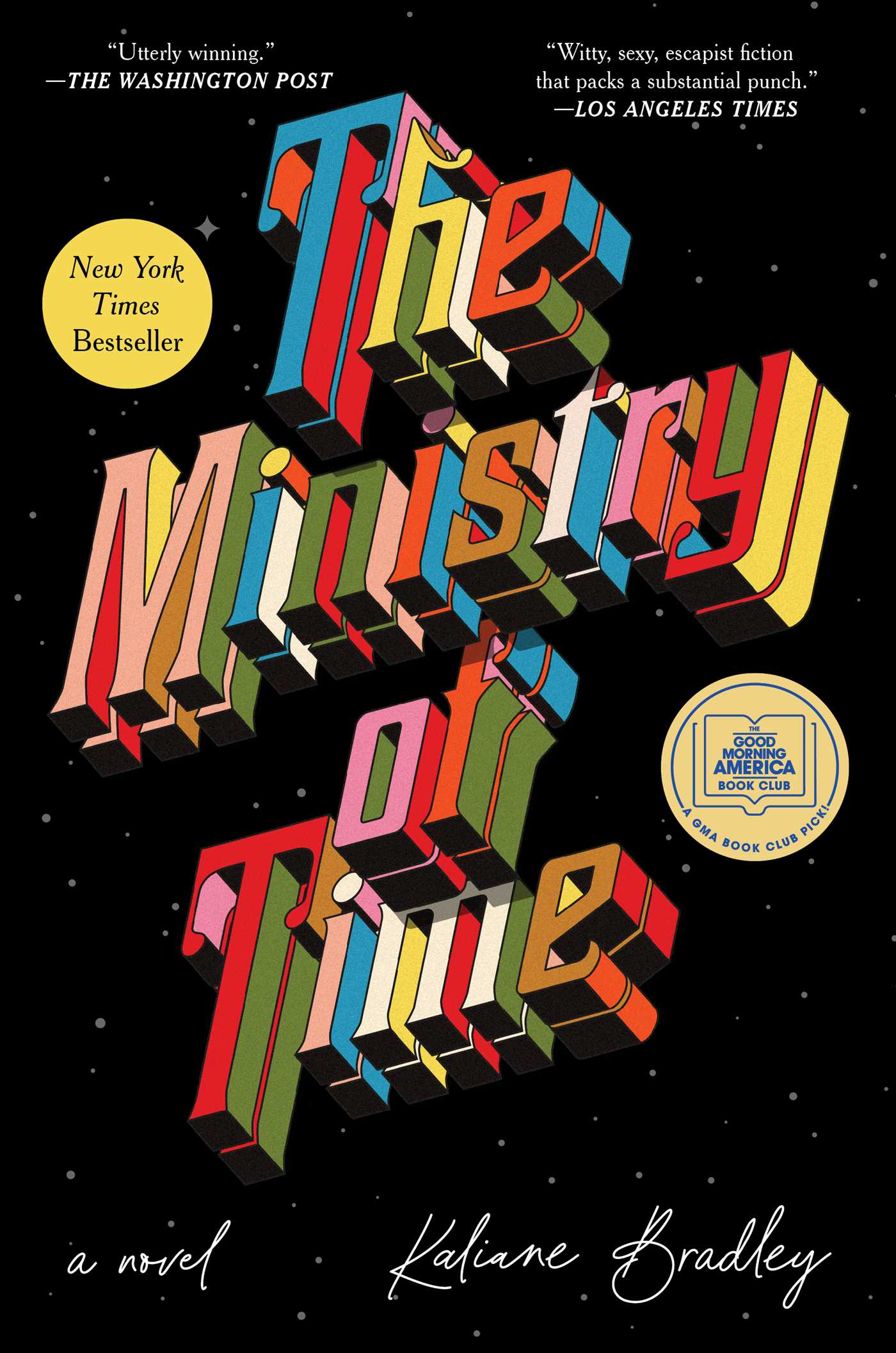
The Ministry of Time
In near-future Britain, a civil servant joins a secret government programme that has brought people from the past into the present.
About
Spoiler notice: This account covers the Ministry assignment, the expats’ adjustment to the present, and the early relationship and central ethical questions. It mentions that the Ministry’s project has a concealed purpose, but does not identify that purpose or disclose later reversals or the ending.
The novel begins in a near-future Britain that looks familiar enough for its changes to register through ordinary details. An unnamed civil servant is offered a government job with an unusually attractive salary, then learns that she has been recruited for a new ministry’s secret time-travel programme. The scheme has brought people from different historical periods into the present so officials can study what temporal displacement does to the body and to time itself. The organisation calls these arrivals “expats,” a managerial word that makes an extraordinary intervention sound like relocation. The narrator is appointed as a “bridge”: she will live with one arrival, help him acclimatise and report on his condition. The premise creates a workplace story whose project is both scientific and governmental, with the narrator’s daily duties placing her inside the experiment rather than at a safe distance from it.
Her assigned expat is Commander Graham Gore, a nineteenth-century British naval officer who was part of Sir John Franklin’s doomed Arctic expedition. History records Gore as having died during the 1845 expedition; the Ministry has instead brought him into the twenty-first century. He is known to the project as “1847,” a label that reduces a particular person to the date associated with his disappearance. Gore arrives with the habits, expectations and assumptions of his own era, and is asked to make sense of a world built around conveniences he could not have encountered: domestic appliances, digital music, changing social rules and the fact that the British Empire has ended. The historical record provides a point of departure, while the novel imagines the private life and reactions of a man whose future has been interrupted. Bradley draws on a real explorer but presents Gore’s character and the events of the novel as fiction.
The bridge’s responsibility is not simply to explain modern life. She shares a home with Gore, watches how he adjusts and becomes the Ministry’s human interface with someone who has no prior frame for the present. Everyday encounters therefore carry more than comic culture shock. The arrangement places a Victorian naval officer and a contemporary woman in a shared domestic space, where privacy, gender, manners and power have to be negotiated alongside new technology. Gore’s curiosity helps him engage with unfamiliar surroundings, while his habits and assumptions remain those of the period from which he came. The bridge, meanwhile, has her own perspective and interests; she is not a neutral instrument, even though her job asks her to observe and report. The closeness required by the assignment makes professional boundaries difficult to keep separate from personal feeling.
Gore is one member of a wider group of people drawn from different moments in history. The Ministry’s programme puts these arrivals through activities intended to help them live in the present, and it monitors them for changes that might signal bodily, psychological or temporal harm. Their shared situation gives the story a lively supporting community rather than treating the past as a single visitor’s curiosity cabinet. People who have arrived from different periods compare the rules and expectations they carried with the ones they now encounter. Their adjustment can be funny, but it also makes the labels and procedures around them matter. “Expats” sounds benign; the work of extracting people from their own times, observing them and deciding what they need is not a neutral act. The book keeps the language of administration in view because it shapes how the project understands the people at its centre.
Over the course of the assignment, the bridge and Gore move from an uncomfortable household arrangement toward an intimate relationship. The change complicates the bridge’s official role: she is responsible for supporting and monitoring a person for whom she develops strong feelings. That imbalance raises questions about consent, dependence and whether care can remain separate from the institution that arranged their proximity. The novel’s romantic development therefore sits alongside its speculative premise rather than replacing it. The bridge has to consider what she owes Gore, what the Ministry expects from her and how much of her own account of events she can trust. The story’s first-person frame keeps the reader close to her observations, but that closeness also means the narrator’s knowledge has limits; not every person or institutional motive is equally visible to her.
The Ministry’s stated research purpose does not tell the whole story. As the bridge and Gore become closer, the project’s concealed aims begin to matter, turning an acclimatisation assignment into a question about who controls the future and who bears the cost of experiments made in its name. The resulting tension draws on spy-fiction machinery as well as romance and speculative science: secrecy, observation and political decisions reach into a relationship that began as a work placement. Bradley also places the bridge’s situation beside questions of historical memory, displacement and the language used to classify people. The book does not treat time travel as a puzzle solved by technical rules; it uses the impossible arrival of the past in a present-day home to make institutional power immediate. Its central dilemma becomes personal: when the bridge understands more about the Ministry’s purpose, she must decide what action is possible and what it might change.
Book details
- Author
- Kaliane Bradley
- First published
- 2024
- Series
- No series listed
- Subgenre
- Time travel, Contemporary romance, Spy thriller
- Primary genre
- Sci-Fi
- Tags
- No tags for this book.
Review
Editor profile
Baby Bat
Goodreads and social links will be added soon.
- Goodreads — link coming soon
- Social media — link coming soon