
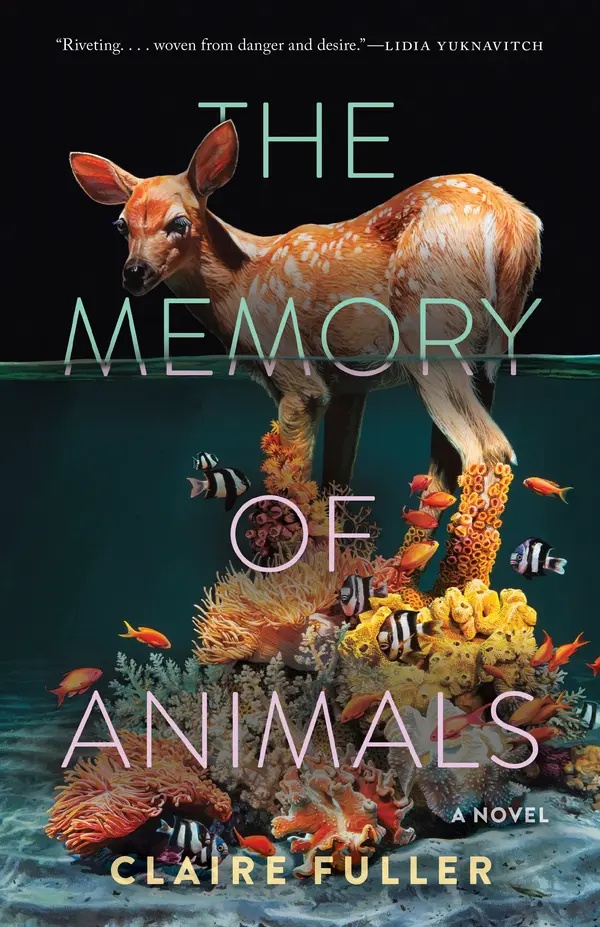
The Memory of Animals
Marine biologist Neffy enters an experimental vaccine trial in London as a deadly pandemic spreads.
About
Spoiler notice: Discusses the pandemic setup, the vaccine-trial survivors, Neffy’s Revisitor memories and her connection with octopuses; does not disclose the ending.
Claire Fuller sets The Memory of Animals in a near future where a fast-moving pandemic has turned London into a place of isolation and uncertainty. Neffy, a twenty-seven-year-old marine biologist, signs up for an experimental vaccine trial at a London clinic. She is carrying debt and a troubled past, though the reasons she has come to the trial emerge gradually. After she becomes dangerously ill, the clinic staff disappear and the outside world falls quiet. Neffy finds herself among four other volunteers: Rachel, Leon, Yahiko and Piper. Their sealed-off rooms and dwindling sense of what is happening beyond the hospital make survival an immediate practical question. The premise is familiar in outline, but Fuller places it alongside a second story about memory, the natural world and the obligations people carry into a crisis.
The novel moves between the clinic and Neffy’s remembered life. Before the pandemic, Leon had been working on a device called the Revisitor, which lets people experience memories with unusual intensity. Neffy is drawn back toward childhood split between England and Greece, a recent love affair, and her work with octopuses. She also writes letters to H, an octopus she once cared for in an aquarium. These strands do not arrive as a straightforward biography inserted between scenes of disaster. Instead, they give the present-tense crisis context: Neffy is not simply trying to outlast a changed world, but confronting decisions she has made and the stories she tells herself about them.
Fuller makes Neffy’s interest in octopuses more than a professional detail. Her marine biology background shapes how she thinks about animals held in captivity and the boundaries people draw between human and nonhuman life. The title points toward that concern, while the novel’s central situation also places people inside a restricted environment, dependent on rules and resources they do not fully control. In the clinic, the volunteers are separated from ordinary society and from reliable information; in Neffy’s memories, earlier experiences with animals and family continue to influence how she understands responsibility. The book therefore links its survival story to questions about care, confinement and what it means to treat another living being as an individual rather than an object.
The group’s circumstances create pressure between cooperation and self-preservation. The volunteers have different histories and different reasons to remain at the clinic, and their uncertain access to food, safety and news complicates the idea that they can simply trust one another. Neffy’s health and possible protection from the disease make her position especially uneasy. She has to weigh what she owes the people around her against the limits of what she can know about their intentions. The situation also asks what a person should do when the ordinary structures that organise collective life have vanished. Fuller keeps that question close to daily choices and relationships, rather than presenting survival as a matter of technical ingenuity alone.
Memory offers a second kind of uncertainty. Through Leon’s Revisitor, the past can be entered with a vividness that makes recollection feel almost present, but revisiting does not make Neffy’s history simple or harmless. Her memories include affection and curiosity as well as shame and regret. They help explain the debts and losses that precede the trial, while raising questions about whether returning to an experience can change a person’s understanding of it. The device also places pressure on the novel’s structure: scenes of confinement sit beside episodes from an earlier life, so the reader has to piece together what Neffy knows about herself and when she is ready to face it.
The animal strand gives these questions a particular focus. Fuller has said that researching octopuses for the novel deepened her interest in their physiology, and the publisher’s description foregrounds Neffy’s obsessive research and past connection with them. That material brings scientific attention into a story concerned with empathy and limits: how much can people know about another creature, and what follows when they recognise signs of character in a being they have treated as manageable? The book does not need to turn its octopus into a human stand-in for the comparison to matter. Neffy’s work makes the boundary between observation and attachment part of her own history, and the crisis intensifies the question of whose lives count when survival becomes difficult.
The Memory of Animals brings together pandemic fiction, a memory technology and a marine biologist’s attention to animal life. Its plot asks how a small group might endure when the world beyond their clinic has become unreliable; its reflective movement asks how Neffy can live with the choices that brought her there. Rather than treating the past as a secure explanation, Fuller makes memory another place where desire, guilt and uncertainty meet. The novel’s interests in care and survival reach beyond the immediate threat of disease to the ways people relate to one another and to other species. Readers looking for a conventional outbreak thriller may find that the book spends substantial time with Neffy’s inner life and earlier experiences. Its central tension lies in how she makes sense of those experiences while facing an unknown future.
Book details
- Author
- Claire Fuller
- First published
- 2023
- Series
- No series listed
- Subgenre
- Literary fiction
- Primary genre
- Literary Fiction
- Tags
- No tags for this book.
Review
Editor profile
Baby Bat
Goodreads and social links will be added soon.
- Goodreads — link coming soon
- Social media — link coming soon