
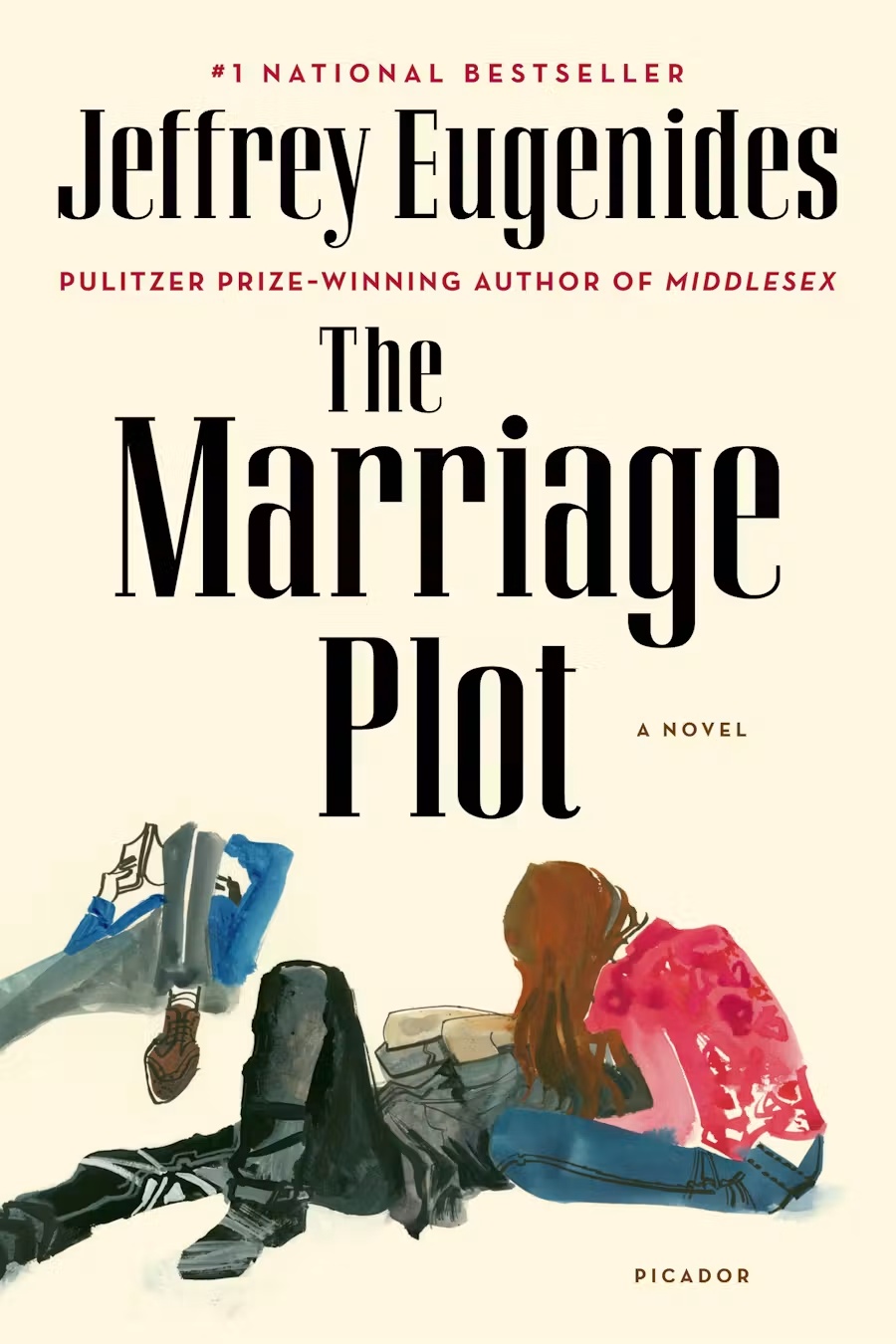
The Marriage Plot
As Brown University senior Madeleine Hanna studies Jane Austen and George Eliot’s marriage plots, graduation brings her own uncertain love life into focus.
About
Spoiler notice: Spoilers cover the opening circumstances, central relationships and post-college choices; the novel’s later developments and ending are not disclosed.
Jeffrey Eugenides begins The Marriage Plot on the morning of Madeleine Hanna’s college graduation in 1982. Madeleine is a Brown University English major, newly twenty-two, whose honors thesis concerns the marriage plot in Jane Austen and George Eliot. The day ought to mark a clean passage into adulthood, but she wakes after a difficult night with a broken relationship still pressing on her mind. Graduation brings her parents to Providence, her two roommates into the apartment, and her old friend Mitchell Grammaticus back into view. Meanwhile, Leonard Bankhead, the charismatic young man with whom Madeleine has been involved, remains central to her plans and worries. The novel follows these three educated but uncertain young people as college ends and the expectations built from books, family, belief and desire meet the less orderly business of choosing a life.
Madeleine’s academic subject provides the novel with its organizing question. In the nineteenth-century marriage plot, courtship and marriage often supplied the shape and destination of a heroine’s story. Madeleine reads Austen and Eliot closely enough to make that tradition the centre of her thesis, while her own experience refuses to behave like a literary pattern. The book places her reading among other contemporary habits of thought: students encounter semiotics and post-structuralist theory, including Roland Barthes, while listening to Talking Heads and living amid the campus culture of the early 1980s. The contrast is not simply between old books and new ideas. Madeleine is serious about literature, yet the stories she studies do not settle what she should want, how she should choose, or whether love can still provide a satisfying structure for adult life. Her thesis follows her beyond the library because its subject is also the problem she faces.
Leonard and Madeleine’s relationship brings intellectual attraction and private instability into the same frame. Leonard is presented as charismatic and intense, a college contemporary whose connection with Madeleine becomes highly charged both erotically and intellectually. By graduation morning, they have already broken up, although Madeleine has not fully abandoned hope that their plans may resume. Her parents know about the future she had imagined with him, including the possibility of living together after college; she must decide what to tell them while trying to manage the ordinary demands of the day. The opening makes clear how quickly a romantic decision affects other parts of her life. Housing, summer plans, work and graduate study all become harder to separate from the uncertain state of the relationship. The story treats attraction as powerful without presenting it as a reliable answer to those practical questions.
Mitchell offers another way of thinking about love, but he is not a simple alternative to Leonard. He and Madeleine have a friendship with its own history, distance and unresolved feelings. Mitchell studies religious subjects and is drawn to spiritual questions; after graduation he is considering travel to India with a friend. Madeleine’s parents regard him as an appealing, sensible young man, while Madeleine herself has imagined that he resembles the sort of person she ought to marry. That thought does not make him a destined partner, and their exchanges reveal differing ideas about friendship, obligation and intimacy. His interests give the novel a second intellectual current beside Madeleine’s literature and Leonard’s scientific world. Through Mitchell, the book asks how a person might search for belief or direction when inherited answers no longer seem sufficient, and whether spiritual purpose can be pursued apart from personal desire.
The transition out of college is shaped by more than romance. The graduation scenes set Madeleine’s choices against her parents’ expectations, the roommates’ plans, and the uncertain prospects facing liberal-arts graduates during a recession. Her mother raises the practical risk of depending on a boyfriend for a place to live; Madeleine has already found herself with no secure arrangement if her plans change. She has also applied to graduate school but is anxious about learning whether she has been accepted. These circumstances make independence material as well as emotional: where to live, how to support herself, and what kind of work might follow an English degree are urgent questions. The family conversations are often comic, with different generations misreading one another, but they also show how parental advice can carry both care and assumptions about women’s security. The novel gives those everyday pressures weight alongside the more abstract debates its characters have about ideas and faith.
Eugenides sets this triangle in a detailed college world, but the book’s focus widens as the characters leave its familiar routines. Madeleine’s literary education, Leonard’s intensity and Mitchell’s spiritual searching provide different ways to interpret the same unsettled period. Their paths are shaped by changing ideas about sex, marriage and women’s independence, as well as by older romantic narratives that still influence what love is supposed to mean. The title points both to Madeleine’s thesis and to the question of whether a traditional story can describe people whose choices are constrained by contemporary realities. Rather than offering a blueprint for partnership, The Marriage Plot follows young adults trying to distinguish what they genuinely want from what they have learned to expect. Its central tension lies between the satisfying order promised by fiction and the compromises, uncertainties and responsibilities that begin after graduation.
Book details
- Author
- Jeffrey Eugenides
- First published
- 2011
- Series
- No series listed
- Subgenre
- Literary fiction, Campus novel, Coming-of-age
- Primary genre
- Literary Fiction
- Tags
- No tags for this book.
Review
Editor profile
Baby Bat
Goodreads and social links will be added soon.
- Goodreads — link coming soon
- Social media — link coming soon