
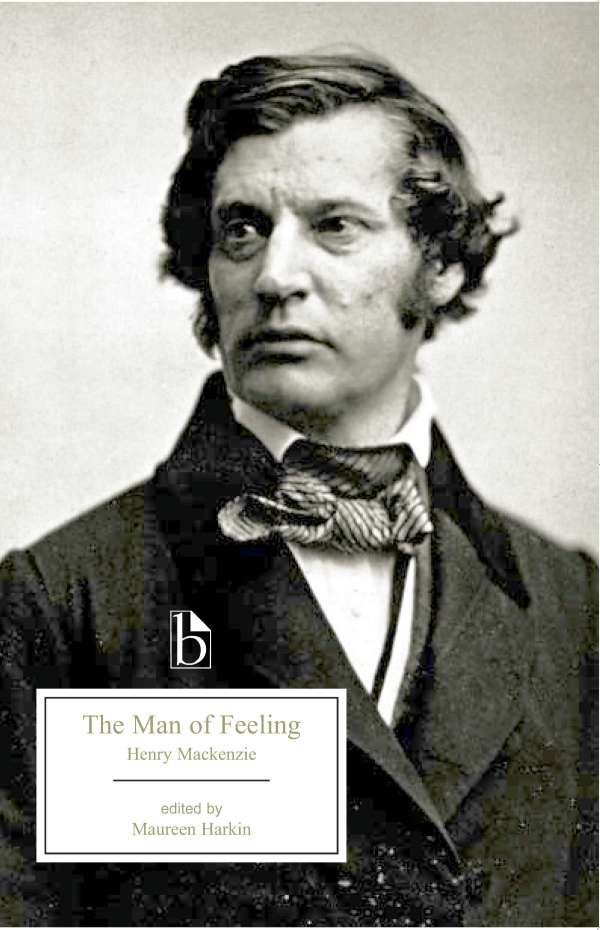
The Man of Feeling
Harley leaves his modest country estate for London, hoping that an introduction will help him obtain a useful lease.
About
Spoiler notice: Full-plot spoilers, including Miss Atkins’s reunion with her father, Edwards’s family losses and Harley’s final meeting with Miss Walton and death.
The Man of Feeling reaches its reader as a damaged bundle of papers. A narrator out shooting with a curate notices an old house and asks about its former inhabitant, Harley. The curate has acquired a manuscript left behind by another local man and has been using its pages as gun wadding. An exchange preserves what remains, but it cannot restore everything already destroyed. Mackenzie's story therefore arrives with missing chapters, abrupt transitions and an editor who keeps reminding us of the gaps. This frame gives the ordinary encounters that survive an unusual importance. Harley's life is not presented as a complete record of public achievements; it is remembered through moments when someone else's suffering interrupts his own affairs.
Harley is a country gentleman with a small inherited estate and little of the assurance his friends consider necessary for advancement. A proposed lease of neighbouring Crown land offers a way to improve his circumstances, but obtaining it requires influence with people he does not know. His neighbour Mr Walton supplies an introduction to a baronet connected with the Treasury, and Harley reluctantly agrees to travel to London. The journey begins with a practical financial purpose, though his attachment to Walton's daughter makes leaving home more complicated. His advisers praise confidence and forwardness as qualities that bring success. Harley's hesitation gives the narrative a different starting point: he must enter a world whose accepted methods do not come easily to him.
The people Harley meets prevent that journey from becoming a straightforward account of making useful connections. A roadside beggar who offers to tell his fortune admits that lying has become his profession, then describes the illness and poverty that drew him into begging. Harley listens rather than reducing him to either an innocent victim or a worthless cheat. In London, a visit to Bedlam brings another troubling collection of stories. Among the patients are a former mathematician occupied with calculations and a man whose stock-market losses have destroyed his fortune. Their histories reach Harley through people explaining the spectacle around him. The scenes ask the reader to notice the distance between being entertained by distress and responding to the person enduring it.
Miss Atkins's history gives that distinction a more intimate form. Her account traces the attraction of fashionable manners, a relationship with Sir George Winbrooke's son and the misery that follows her betrayal. She has to describe how she reached her present circumstances to someone who could judge her entirely by them. When her father appears, he initially mistakes Harley for the man responsible and draws his sword. Harley explains the mistake, but his defence of himself does not end his involvement. He kneels beside the daughter and asks her father to forgive her. The father drops the weapon and weeps. Compassion here requires a response to shame as well as poverty: the apparent offender is also a frightened daughter facing someone whose condemnation matters desperately to her.
On his way back into the country, Harley recognises old Edwards, whose home had been part of his childhood. Edwards's family occupied their farm for generations, but regular payments and careful management did not secure the renewal of his lease. The reunion brings personal memory into a story about how easily a settled life can be displaced. Further grief follows when Edwards reaches his son's grave and finds two orphaned grandchildren. Harley brings the old man and the children home, where his aunt makes practical arrangements for their comfort. He then offers Edwards a vacant small farm with a furnished house. The assistance continues into seeds, work on the garden and a miniature watermill for the boy. These details give his kindness a daily shape beyond the tears of their first meeting.
His feelings for Miss Walton remain difficult to express until the story approaches its end. Harley is seriously ill when she visits him, and the prospect of death gives urgency to an attachment he has kept restrained. She tries to persuade him that his life still has value, while he struggles to say how much she matters to him. His declaration finally receives an answering acknowledgment of her love, but the meeting brings no recovery or marriage. He dies beside her; she is revived after collapsing, while attempts to restore him fail. The scene is followed by the grief of those who survive him, especially Edwards, who repeatedly approaches the body and cannot find words. The man Harley helped now faces a loss for which that help offers no protection.
The conclusion returns to remembrance rather than supplying the missing portions of Harley's biography. He is buried in the place he wanted, near his mother's grave and beneath an old tree. The narrator visits its hollow and recalls sitting there with him, allowing a particular place to hold the affection the scattered manuscript cannot gather into a continuous life. The final editorial note again distinguishes the fragments for which the editor accepts responsibility from material left to the curate. That incompleteness remains part of the book's form. Harley can offer money, shelter, attention and forgiveness, but he cannot make a secure world for everyone he encounters. What survives him is the effect of those particular acts upon people who remember them.
Book details
- Author
- Henry Mackenzie
- First published
- 1771
- Series
- No series listed
- Subgenre
- Literary fiction, Modern classics
- Primary genre
- Literary Fiction
- Tags
- No tags for this book.
Review
Editor profile
Baby Bat
Goodreads and social links will be added soon.
- Goodreads — link coming soon
- Social media — link coming soon