
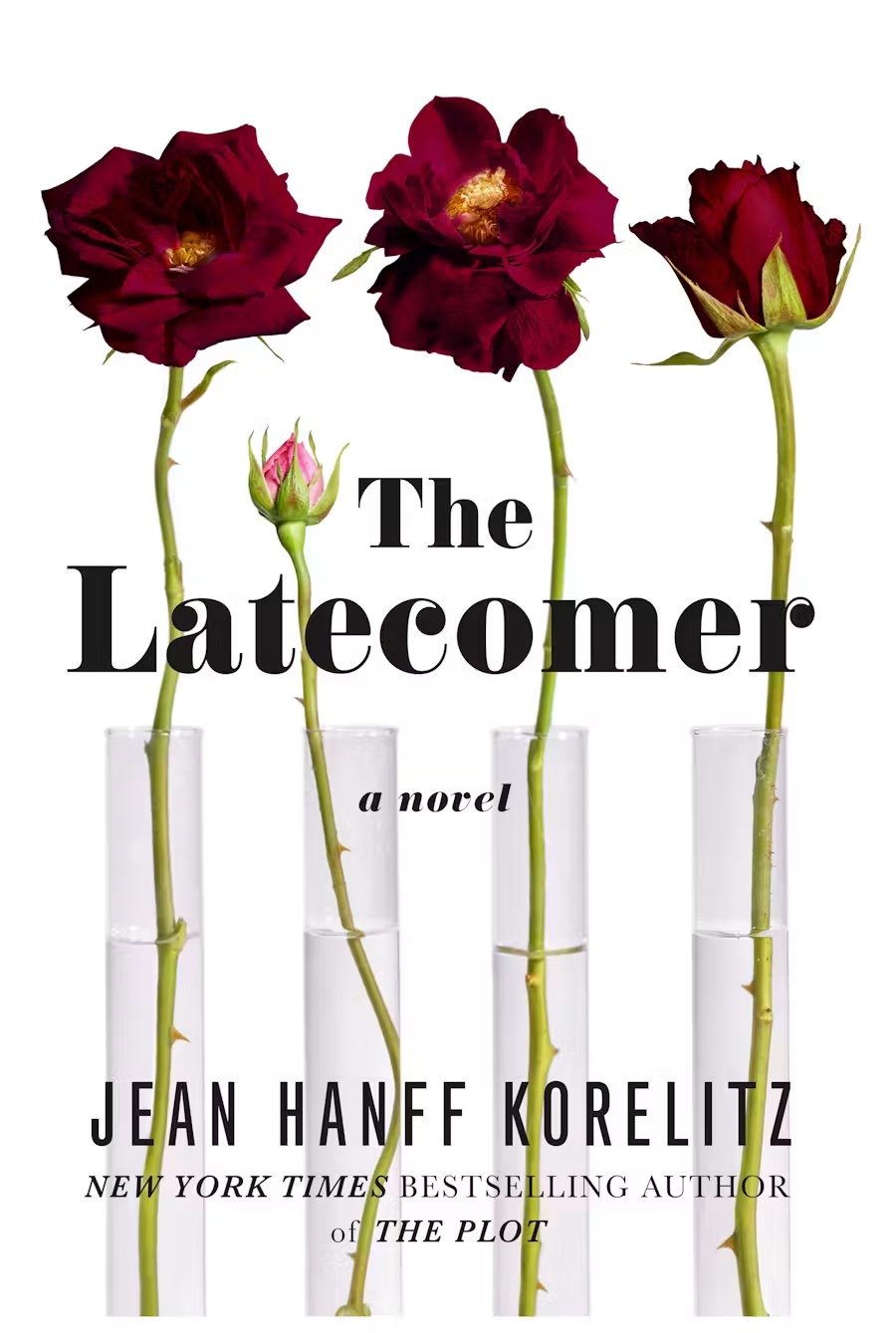
The Latecomer
The wealthy New York Oppenheimers begin with Salo and Johanna, whose lives meet under tragic circumstances.
About
Spoiler notice: Spoilers cover the family’s beginnings, the triplets’ estrangement, and the later arrival of their younger sister, Phoebe; later developments and the ending are withheld.
The Latecomer follows the Oppenheimers, a wealthy New York family whose beginnings are marked by grief before their children are born. Salo and Johanna meet under tragic circumstances, and the family they build carries that history forward in ways neither parent can neatly control. Their first three children arrive together during the early years of in vitro fertilization. The novel then traces the gap between a family’s shared story and the separate lives its members actually experience. It asks how people can live in one house, inherit the same past, and still feel like strangers to one another. That question gains new weight when the family changes again, long after its first children have begun to move away.
Harrison, Lewyn, and Sally are triplets, but they do not develop the strong sibling bond their mother hopes for. Their personalities and needs pull them in different directions, and home becomes a place they are eager to leave. Their parents respond to this distance in contrasting ways. Johanna keeps reaching for an ideal of family closeness, while Salo becomes more remote. Each child grows up with the advantages that wealth and education can provide, yet those advantages do not give them an easy language for affection or repair. The book follows their separate paths without treating birth order as a ready-made explanation. Being born together does not mean sharing a temperament, a sense of belonging, or even a reliable memory of childhood.
The Oppenheimer family’s history begins before the triplets can understand it. Salo and Johanna have a story about how they met, but the fuller circumstances are difficult to face, especially for a family that would rather preserve a usable account of its past. Grief and guilt therefore sit beneath ordinary family decisions. What parents choose to explain, conceal, or soften shapes how their children interpret them later. The novel lets the parents’ earlier lives and the children’s developing views meet across time, so a familiar family story can look different depending on who is telling it. No single account settles every question. Memory becomes one more inheritance, passed down unevenly and revised as each person finds out what the others have carried.
When the triplets leave for college, their departure makes the distance inside the family harder for Johanna to ignore. She is facing an emptier home and decides to have another child. The fourth sibling, Phoebe, arrives in a family whose history has already begun without her. That timing gives her a different relationship to everyone else: the older children share an origin and childhood she did not experience, while the parents must learn what it means to start again. The late arrival is not only a plot turn. It changes the questions the family can ask about responsibility, attention, and belonging. Phoebe’s place forces the Oppenheimers to consider what a new child might mean to people who have never managed to feel like a close-knit group.
The novel gives its characters room to move away from one another, and its multiple points of view let the reader see how incomplete any one perspective can be. The siblings’ journeys do not start at the same point or unfold on the same timetable. A decision that looks like rejection from one side may carry a different meaning to the person who made it. Korelitz builds this tension through parents and children with strong, sometimes difficult personalities rather than a single family representative who can explain the rest. The structure suits a story in which people keep discovering that their private account of a relative is not the whole person. Understanding arrives slowly, through contradiction, absence, and the details each character notices or would prefer to avoid.
Place also matters to the Oppenheimers’ idea of themselves. Their life reaches from New York and Brooklyn to Martha’s Vineyard and Ithaca, while the family’s wealth and education shape the kinds of choices available to them. The book’s concerns include privilege and race, Jewish tradition and religion, and the ways political convictions can become personal. These subjects surface through particular people rather than as detached debate. Salo’s interest in collecting art and Sally’s later work with valuable objects give the novel another way to think about what people keep, prize, and pass on. Objects may hold meaning, status, or a version of the past, but they cannot make a family agree about what its history means.
For all its focus on estrangement, The Latecomer is not a flat portrait of an unhappy household. Korelitz writes with wit and allows the siblings’ confidence, grievances, and blind spots to remain visible at once. Their choices can be exasperating while still making emotional sense from where they stand. The novel is interested in how people change their view of one another and in what forgiveness might require from a family whose members have spent years avoiding the same room, conversation, or truth. It does not offer an easy formula for closeness. Instead, it follows the Oppenheimers as they test the idea that people who have drifted apart might still return to one another, and that a new relationship can alter how an old one is understood.
Book details
- Author
- Jean Hanff Korelitz
- First published
- 2022
- Series
- No series listed
- Subgenre
- Literary fiction, Family saga, Family novel
- Primary genre
- Literary Fiction
- Tags
- No tags for this book.
Review
Editor profile
Baby Bat
Goodreads and social links will be added soon.
- Goodreads — link coming soon
- Social media — link coming soon