
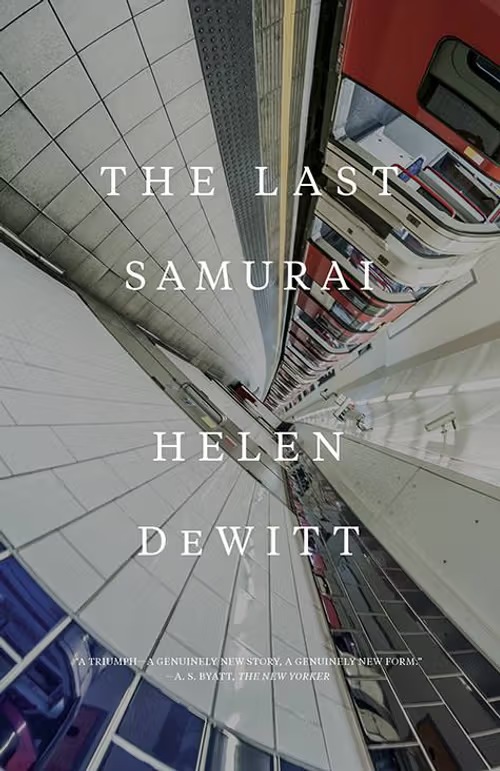
The Last Samurai
Sibylla, an American scholar raising her son in London, turns to ambitious early education and the films of Akira Kurosawa’s Seven Samurai as Ludo grows up without knowing his father.
About
Spoiler notice: Spoilers cover the circumstances of Ludo’s search for his father, his encounters during the journey and the novel’s late developments. This description withholds the answers and final outcomes.
Sibylla, an American scholar living in London, is raising her son Ludo alone after a brief relationship with a man who is absent from the boy’s life. Her approach to parenting grows from serious intellectual commitments rather than a conventional programme of lessons: she gives a very young child access to Greek and other demanding material, and Ludo absorbs it at a startling pace. School proves a poor fit, and he soon returns home. The novel begins from this unusual household arrangement, but its interest is wider than the spectacle of a child’s ability. It asks what knowledge can do in a family, what it cannot provide, and how a parent’s ideals meet the practical needs of a particular child.
The publisher’s description traces Sibylla’s confidence in her educational ideas to the example of precocious figures such as J. S. Mill and Yo-Yo Ma. In the novel, Ludo’s learning is not a simple success story in which an exceptional child steadily masters every obstacle. His intelligence changes his relation to other people and to the institutions that are meant to educate him; it also makes ordinary childhood harder to arrange. Sibylla must respond to a son who can engage with material far beyond his years but remains a child with emotional needs and limited experience. Their home becomes a place where education is both an everyday practice and a question they cannot settle once and for all.
Sibylla’s own life is shaped by the absence of Ludo’s father, and she worries about the lack of male role models in his life. One response is to replay Akira Kurosawa’s Seven Samurai, a film that becomes central to Ludo’s imagination. The book’s title points toward that Japanese film and toward the way art can enter ordinary life: not as a tidy lesson, but as material a viewer returns to, argues with and makes personally meaningful. Ludo’s attachment grows into a private project. At eleven, he sets out to discover the identity of the father he has never known, using the film as a frame for thinking about what a quest might require.
That search supplies the novel with forward motion while keeping its focus on the bond between mother and son. Ludo acts without telling Sibylla everything, and his journey tests the careful world they have built together. The publisher hints at physical danger and unlikely encounters, but the central tension is not simply whether he can complete a mission. It is the distance between what a child can imagine and what he can understand, and between Sibylla’s wish to protect him and his need to pursue an answer of his own. The plot makes the search concrete while leaving room for the pair’s contrasting temperaments: Sibylla’s impatience with boredom and Ludo’s concentrated determination.
DeWitt’s debut also brings several kinds of knowledge into a family story. Greek, music, film and ideas about education sit beside the practical details of a single-parent household. Sibylla does not merely ask whether Ludo can memorize unfamiliar words; she makes the languages and artworks available as ways to think. For Ludo, the film offers an example of courage and a set of possible roles to try on, even though the people he meets cannot be sorted into a movie’s cast. Its recurring place in the household also gives mother and son something to share without agreeing on what it means. The father question belongs to Ludo alone in a different way: no amount of study can give him an answer unless he takes his curiosity beyond Sibylla’s lessons. This movement between study and ordinary experience gives the book much of its energy. The education that makes Ludo so capable also gives him tools for questioning what his mother has left unexplained. Knowledge draws the two together, yet it can sharpen their differences as his curiosity turns outward.
The result is a story about brilliance that is attentive to its costs and limits. Ludo may learn with exceptional speed, but that does not make him omniscient or exempt from vulnerability. Sibylla is intellectually formidable too, yet the novel places her expertise beside the repetitive labour and uncertainty of parenting. Their relationship is shaped by affection, irritation, freedom and dependence at once. Seven Samurai offers them a shared imaginative language, even as Ludo uses it to move toward a question Sibylla cannot answer for him. The book’s mixture of comedy, danger and reflection grows from this family situation: an unconventional education has made Ludo unusually capable, but it cannot tell either of them what kind of person he will become or what he will find. The 2000 novel brings the household, the search and the act of learning into one connected story. It invites attention to the ways people use art and knowledge to make sense of what remains unknown, while a mother and son try to understand each other as Ludo begins to make choices beyond their home.
Book details
- Author
- Helen DeWitt
- First published
- 2000
- Series
- No series listed
- Subgenre
- Literary fiction, Experimental fiction, Coming-of-age
- Primary genre
- Literary Fiction
- Tags
- No tags for this book.
Review
Editor profile
Baby Bat
Goodreads and social links will be added soon.
- Goodreads — link coming soon
- Social media — link coming soon