
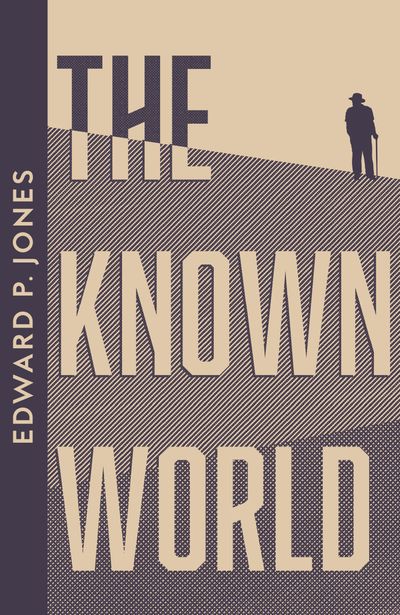
The Known World
In antebellum Virginia, Henry Townsend, a formerly enslaved Black farmer and bootmaker, becomes a plantation owner and enslaves people himself.
About
Spoiler notice: Spoilers cover Henry Townsend’s death and the resulting upheaval on his estate and in Manchester County. The fates of individual characters and the novel’s ending are not disclosed.
The Known World is set in antebellum Manchester County, Virginia, where Henry Townsend’s life unsettles the categories that are supposed to define him. A Black farmer, bootmaker and formerly enslaved man, Henry becomes a plantation owner and enslaves people himself. His rise puts a contradiction at the centre of the book: a man who has known bondage now holds power over others. This household sits within a county where race, wealth and legal status shape daily choices. The story moves outward from Henry to the people connected to him, building a portrait of a community whose arrangements rest on coercion and whose members live with its consequences.
Henry’s place in the county has been influenced by William Robbins, a powerful local figure who mentors him. Henry is a farmer and bootmaker as well as a proprietor. His fondness for Paradise Lost is another facet of a life that also includes these practical trades and the authority he has acquired. He has made a life after enslavement, yet the plantation he builds depends on the very ownership of people that once defined his own condition. The novel follows that choice without using Henry’s past to excuse the harm he causes. His ambition and the power he obtains are bound to the county’s racial order.
Henry’s unexpected death is the point at which the estate’s order begins to fail. His widow, Caldonia, is overwhelmed by grief, and those who remain must confront a household no longer held together by his authority. Enslaved people begin to escape at night. Families whose relationships had developed under slavery face betrayal and separation. The aftermath shows how people respond when they have little control over the conditions around them. The estate’s collapse makes visible the dependence of its routines on Henry’s ownership, while Caldonia’s grief and the enslaved people’s departures carry very different meanings within the same household.
The novel also follows the systems that reach beyond the Townsend property. White patrollers receive little pay while slave speculators use them to watch roads and sell free Black people into slavery. Rumours of rebellion deepen suspicion between white families and enslaved people who have served them for years. The county’s social order draws in free and enslaved Black residents, white families and the officials who police movement. It presents fear as part of ordinary life, shaping how people assess neighbours, trust claims and protect those close to them. The novel’s moral questions arise through these relationships rather than through an abstract debate about slavery.
The Known World moves among the lives of freed and enslaved Black people, white residents and Native characters, connecting individual households to a broader community. Its story ranges across past, future and present. Relationships across the county are shaped by unequal status and power. Families can be places of love and support, yet the conditions of slavery expose them to loss and betrayal. The varied lives of people with different degrees of freedom make Manchester County feel inhabited rather than a stage for one exceptional premise.
The book’s central moral tension is the gap between having suffered oppression and choosing to exercise power over others. Henry’s history as an enslaved person gives his position a particular weight, but it does not make ownership less destructive. The premise raises a hard question: can someone exercise power inside an unjust institution without being changed by it? That choice broadens the moral inquiry beyond a simple division between good and evil individuals. The story asks what happens when ambition, advantage and the wish to survive are pursued within a system that requires other people’s subjugation.
Family is one of the ways the novel measures what people stand to lose. Family bonds offer strength to people held in slavery, yet ownership, separation and fear press on those relationships throughout the book. That pressure reaches both the enslaved people held on the Townsend estate and the wider county. Families may offer care, but they cannot make an abusive system safe; love exists alongside the risk of betrayal. The book’s matter-of-fact scenes of work and violence let the conditions themselves carry moral force without softening the damage done to human relationships.
The opening chapter brings this wider account close to Moses, an enslaved field worker whose master has just died. After a fourteen-hour day, Moses tends a mule and eats a pinch of soil, a practice tied to his close attention to the fields. He then turns away from the quarters where his wife and son are waiting and walks into the woods. The scene is shaped by the long workday, the earth’s taste and texture, the approaching rain and Moses’s separation from home. These observations place the reader inside one person’s experience before the novel’s scope expands. They also show how labour, land, family and private thought meet in a world where even the end of a day belongs to someone else.
Book details
- Author
- Edward P. Jones
- First published
- 2003
- Series
- No series listed
- Subgenre
- Literary historical fiction, Family saga, Literary fiction
- Primary genre
- Historical Fiction, Literary Fiction
- Tags
- No tags for this book.
Review
Editor profile
Baby Bat
Goodreads and social links will be added soon.
- Goodreads — link coming soon
- Social media — link coming soon