
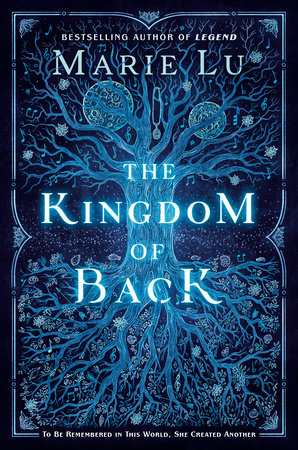
The Kingdom of Back
In eighteenth-century Europe, Maria Anna ‘Nannerl’ Mozart is celebrated as a gifted keyboard player, yet she fears that convention will prevent her from becoming a composer and being remembered in her own right.
About
Spoiler notice: This overview discusses Nannerl’s wish to be remembered, her relationship with Wolfgang, and the novel’s magical premise. It avoids later revelations, character fates and the resolution.
The Kingdom of Back begins with an imbalance that is both intimate and historical: Nannerl Mozart is a gifted musician, but her future as a performer and composer is constrained by the expectations placed on a young woman in eighteenth-century Europe. Her younger brother Wolfgang is also extraordinarily talented, and the two children share the world of music that their father cultivates. The book imagines the emotional territory between them as Wolfgang’s promise becomes increasingly visible. Nannerl loves her brother, yet she also wants a life and a legacy of her own. That tension gives Marie Lu’s historical fantasy its human centre before the story opens into magic.
Maria Anna Mozart, known in her family as Nannerl, was a real person who lived from 1751 to 1829. The Salzburg Mozarteum Foundation describes her as a distinguished keyboard player: she and Wolfgang received musical tuition from their father, performed during the family’s travels, and she later taught piano in Salzburg. The Foundation also notes that none of her compositions survives. These traces offer context for Lu’s imagined protagonist, while marking a boundary between the historical record and the novel. Nannerl’s wish for lasting recognition is a fictional framing of a life whose surviving evidence is uneven; the magical land and its events belong to the book’s invention.
The story’s central relationship is not simply a competition between a forgotten sister and a famous brother. Nannerl and Wolfgang grow up as companions with a shared musical language, and their closeness makes rivalry more complicated. His success brings joy and pride, but it also intensifies her fear that history will remember him alone. The novel treats such mixed feelings as compatible rather than as proof that one sibling cares less for the other. Their bond can sustain affection and play while also carrying the pressure of unequal prospects. This dynamic allows the historical premise to remain personal: the question of who receives recognition plays out inside a family, between two children who understand each other unusually well.
That pressure is shaped by the limits Nannerl faces as she grows older. The publisher’s description explains that she expects her public performing life to end when she reaches marriageable age, following her father’s decision, and that she has little hope of becoming the acclaimed composer she longs to be. This is the novel’s dramatic constraint, rather than a claim that every detail of the family’s life can be recovered from surviving documents. Lu uses it to frame the gap between musical ability and the opportunity to develop or preserve work. Nannerl’s ambition is not only to be admired in the moment; she wants to make something that can outlast the applause and establish her as an artist in her own right.
The appearance of a stranger from a magical realm shifts that private struggle into an adventure. He offers Nannerl a way to fulfil her wish, but the promise carries a cost. The book’s title names the imagined kingdom into which the siblings are drawn, a space that gives their feelings and desires a fantastical form. Here the novel moves beyond biography: it does not assert that Nannerl and Wolfgang actually visited an enchanted world. Instead, the fantasy plot gives Lu room to dramatise the lure of recognition and the compromises that may accompany it. Nannerl must consider not just what she wants, but what she might risk to obtain it, especially when her choices reach beyond herself.
Wolfgang’s presence keeps those choices from becoming a solitary contest between Nannerl and society. The siblings enter the story with distinct gifts and unequal prospects, but the adventure tests them together. Each has to navigate the difference between being talented and being seen, and between an individual wish and the ties that make a life meaningful. Lu’s interview with Publishers Weekly describes the novel as a story about the Mozart siblings’ childhood adventures with fantasy elements, and identifies it as her first work of historical fiction. That description fits the book’s blend: a documented family provides the starting point, while the magical journey creates the plot through which questions of loyalty, ambition and consequence are explored.
Music matters as more than a sign of genius. For Nannerl, playing is a skill she has built and a source of pleasure, but composition represents a further kind of authorship: the chance to create something identified with her name. The difference helps explain why applause alone cannot satisfy her. A performer may move an audience and still leave little evidence of her own work behind. In the historical background, the Mozarteum Foundation notes Nannerl’s keyboard talent and teaching, while reporting that no compositions by her have survived. Lu’s imagined story responds to that gap with a character who wants to shape how she will be remembered. The novel makes that desire vivid without treating its invented solution as historical fact.
The Kingdom of Back is therefore both a sibling story and a fantasy about the making of a legacy. Its eighteenth-century setting brings attention to the restrictions surrounding Nannerl, and its enchanted realm turns a wish for recognition into a dangerous possibility. The familiar historical figures do not erase the distinction between evidence and invention: Wolfgang’s life and Nannerl’s musical career provide context, while the magical visitor, kingdom and quest are part of Lu’s fictional design. The result follows a young musician asking what it means to matter beyond the roles others assign her. In keeping with that question, the novel’s focus remains on Nannerl’s own ambition and on the relationship she must weigh alongside it.
Book details
- Author
- Marie Lu
- First published
- 2020
- Series
- No series listed
- Subgenre
- Historical fantasy, Young adult fantasy
- Primary genre
- Fantasy
- Tags
- No tags for this book.
Review
Editor profile
Baby Bat
Goodreads and social links will be added soon.
- Goodreads — link coming soon
- Social media — link coming soon