
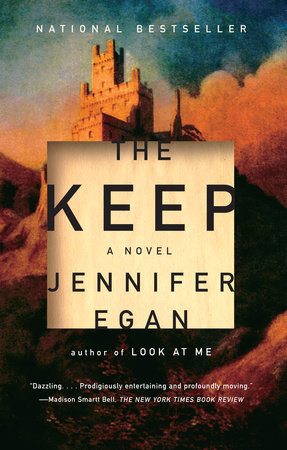
The Keep
When Danny travels from New York to help his wealthy cousin Howard turn a remote Eastern European castle into a hotel, their reunion brings back a childhood incident that damaged their relationship.
About
Spoiler notice: Spoilers cover the cousins’ childhood history, the framing premise, and broad narrative setup; later outcomes and the ending are withheld.
The Keep begins with a return to a place that has been waiting longer than either visitor can admit. Danny, short of money and ready to leave his New York life behind, travels to an old castle in Eastern Europe after his cousin Howard asks him to help turn it into a hotel. The cousins have not been close for years. Their reunion brings the present-day work of renovation into contact with a childhood incident that changed Howard and left Danny with a memory he has spent years trying not to revisit. The castle gives that history a physical shape: it is remote, difficult to know, and full of spaces that invite the imagination to supply what cannot be seen. The book’s suspense grows from the pressure between these two men, the history they share, and the unsettling place where they meet.
Danny arrives carrying the habits of a connected, mobile city life into a setting defined by distance and old stone. The castle stands apart from the outside world, and its atmosphere intensifies the cousins’ growing suspicion. Egan makes that separation part of the story’s structure: contemporary concerns about money, communication and self-invention sit beside the familiar Gothic ingredients of an isolated stronghold and possible supernatural activity. Danny’s perspective is quick to notice surfaces and social power, but returning to Howard also forces him toward memories that challenge his preferred account of the past. The castle is not simply scenery for those recollections. Its long corridors, hidden spaces and uncertain history make the act of remembering feel like entering a place whose layout cannot be mastered at a glance.
Howard is now wealthy, retired young and committed to remaking the castle as a hotel. His project suggests that money can alter a building’s use, but it cannot make its history legible or guarantee control over what happens inside it. Cut off from the world, the men find themselves reenacting the event that damaged their relationship, with more serious consequences in the present. That repetition links childhood play and adult responsibility without treating the past as safely finished. Their reunion asks what each of them chose to remember and what their childhood cruelty concealed. Their different positions—as the host with resources and the visitor who needs work—add another imbalance to a relationship already burdened by guilt and mistrust.
The castle narrative is itself framed by another story. Early in the book, a prisoner named Ray speaks from a writing class in jail and reveals that Danny’s story is part of the fiction he is composing. The shift changes how the reader understands the voice that has been guiding events: details that first seem to belong to an all-knowing narrator also belong to a person trying to make a story. Ray’s circumstances give that writing a distinct setting and audience. His teacher, Holly, asks him to think about the doors available to people whose physical choices are restricted, and the class becomes a place where the act of imagining can matter. Egan places this account alongside the Gothic tale rather than treating it as an explanatory appendix, so the two narratives keep affecting how each other is read.
This layered form also makes the novel’s interest in storytelling concrete. Ray’s manuscript contains Danny, while Ray’s own account shows the conditions in which he is trying to write. The reveal of Danny as Ray’s character shifts the apparent balance of the two plots. The frame is therefore part of the reader’s task: every change in perspective prompts a question about who is speaking, what that speaker knows, and how invention can connect people who are otherwise isolated. Gothic conventions such as an old structure, possible supernatural activity, separation from the ordinary world, twins and a found manuscript sit beside present-day technology and prison life, allowing the novel to move between eerie atmosphere, social observation and the act of making fiction.
The title points to a building’s innermost stronghold, but the word also carries the idea of preservation: what someone tries to hold on to, and what may have to be surrendered. The keep becomes both something worth protecting and something that must be given up in order to survive. That double meaning fits a novel where the characters’ defenses can become traps. Danny has built a life around movement and distraction; Howard has turned the castle he bought into a project; Ray uses a story to approach experiences that are difficult to state directly. Each kind of protection has a cost. As the hotel’s isolation and the cousins’ shared history tighten around them, the frame story keeps a second question alive: whether making a story can open a way forward, even when its maker cannot control everything the story contains.
First published in 2006, The Keep is Egan’s third novel. Its Anchor paperback edition was published on July 10, 2007, and contains 272 pages. The book brings together Gothic suspense, a family history marked by guilt, contemporary isolation and a prison writing class, while keeping the borders between those elements deliberately active. The castle’s uncertain atmosphere matters, but so does the practical world beyond its walls; Ray’s narrative matters, but it is also a piece of writing made under particular constraints. The result is a novel whose central mystery includes the relationship between events and their telling. Its movement between Danny, Ray and Holly makes imagination more than an escape from confinement: it becomes one of the forces through which the characters encounter what they have avoided and consider what they might change.
Book details
- Author
- Jennifer Egan
- First published
- 2006
- Series
- No series listed
- Subgenre
- Gothic horror, Experimental fiction, Psychological thriller
- Primary genre
- Literary Fiction, Mystery & Thriller
- Tags
- No tags for this book.
Review
Editor profile
Baby Bat
Goodreads and social links will be added soon.
- Goodreads — link coming soon
- Social media — link coming soon