
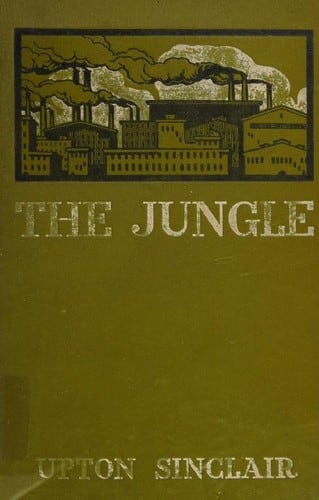
The Jungle
The novel follows a Lithuanian immigrant family in the Chicago stockyards at the beginning of the twentieth century, and it exposes the conditions of their working lives.
About
The Jungle is a novel by the American author and journalist Upton Sinclair. In 1904 Sinclair spent seven weeks gathering information in the meatpacking district of the Union Stock Yards in Chicago for the socialist newspaper Appeal to Reason, which published the novel in serial form in 1905, and it appeared in book form in 1906 under Doubleday.
The book portrays working-class poverty, immigrant struggle, the absence of social support and welfare, harsh living conditions and dangerous work, and it describes the hopelessness, cynicism and cruelty those conditions produce in people with no power. Those elements are contrasted with the corruption of the people who hold power, which is the political argument the narrative carries.
The novel's immediate effect was not the one its author intended. It was denounced by the conservative press as an un-American libel on the meatpacking industry and championed by progressive readers, and it became a catalyst for the passage of the Pure Food and Meat Inspection Act. Jack London, reviewing it at the time, compared it to the most famous American novel written to expose a cruel system.
Book details
- Author
- Upton Sinclair
- First published
- 1906
- Series
- No series listed
- Subgenre
- Social realism, Immigrant fiction
- Primary genre
- Historical Fiction, Literary Fiction
- Tags
- No tags for this book.
Rating
Review
Editor profile
Baby Bat
Goodreads and social links will be added soon.
- Goodreads — link coming soon
- Social media — link coming soon