
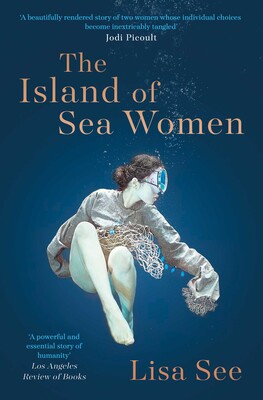
The Island of Sea Women
On Jeju Island, Mi-ja and Young-sook become close friends despite coming from very different families.
About
Spoiler notice: Spoilers cover the women’s changing friendship and the historical pressures that affect their families; the novel’s later revelations and final outcome are withheld.
The Island of Sea Women is built around two lives that begin together but never occupy the same position. Mi-ja and Young-sook grow up on Jeju, the Korean island where the sea is both livelihood and danger. The girls come from sharply different family circumstances, yet their shared work in a village diving collective binds them to one another and to a community older than either of them. Lisa See frames the story as a long friendship under pressure: affection and shared labour create a durable connection, while family histories and public events give each woman reasons to understand that connection differently. The novel’s scale lets the reader see how a childhood bond changes as its members take on adult responsibilities.
The haenyeo at the centre of the novel are not simply a colorful backdrop for a private drama. They are working divers whose knowledge, skill and collective practices make the sea an economic and social world. UNESCO’s description of the living Jeju haenyeo tradition records women harvesting shellfish without oxygen equipment, passing diving knowledge between generations and organizing through local fishery cooperatives. See’s fictional collective gives this work an intimate narrative shape: a young diver learns within a community, and rank, experience and family lineage affect the place she may eventually hold. The novel therefore connects an individual coming-of-age story to a form of knowledge sustained by groups of women, rather than presenting diving as a solitary feat.
That collective has its own structure of authority. Young-sook is born into a family whose women have led divers, and her future appears linked to her mother’s place in the village. Mi-ja’s family background carries a different burden: the publisher identifies her as the daughter of a Japanese collaborator, an association that shapes how others see her. These positions do not determine every choice the women make, but they influence what they can inherit, what they must explain and how readily neighbours extend trust. The book asks how much room friendship has when each friend is read through a history she did not choose. Their different starting points also complicate easy ideas of solidarity: being close does not erase distinctions of status, memory or responsibility.
The sea work brings physical danger into the ordinary rhythm of family life. The divers’ livelihood depends on repeated exposure to cold water, breath-holding and unpredictable conditions, while the income they bring home helps shape household roles. UNESCO’s account emphasizes that haenyeo culture contributes to women’s status and to community management of fishing practices, but the novel also tests the distance between earning power and freedom. Women may carry substantial responsibility for household income and local work while facing constraints set by kinship, reputation and political authority. See’s focus on spouses, children and elders keeps those pressures connected: the consequences of the women’s work reach into domestic life, and family decisions feed back into the collective’s future.
The story stretches from the Japanese colonial period through the Second World War, the Korean War and the years that follow, then returns to a later Jeju. Those periods are part of the novel’s fictional setting; the real Jeju 4.3 events were a prolonged and devastating episode in the island’s modern history. Jeju’s official tourism organization describes a period beginning with violence at a 1947 demonstration and continuing from the April 1948 events until martial law was lifted in September 1954, with tens of thousands of people killed. Against this documented history, See follows invented characters and their families as political conflict enters village life. The distinction matters: Mi-ja, Young-sook and their relatives are fictional, while the island’s historical trauma belongs to real people and communities.
See’s structure links the older Young-sook’s later life with the story of the girls who became divers and friends. The movement across time lets the reader encounter the consequences before understanding the relationships that produced them. This approach makes memory part of the novel’s design: the past is not a sealed chapter but something people carry into work, marriage, parenthood and encounters with younger generations. Lisa See has described forgiveness as a central concern of the book, and the narrative places that question at more than one scale. A personal breach can echo through families and a community, while historical suffering complicates the possibility of assigning blame neatly. The book’s questions remain specific to these characters rather than offering an easy formula for healing.
The novel also attends to change in the material world of Jeju. A livelihood once organized around bodily knowledge and inherited practice meets new technologies, different expectations and a younger generation whose future may not follow the same path. The real haenyeo tradition is recognized by UNESCO as intangible cultural heritage, with transmission supported through families, cooperatives, associations and teaching institutions. In the novel, shifts in tools and daily life reach beyond convenience: they alter how work is done, what skills are valued and what continuity might mean. See uses these changes to give the friendship a historical setting without making the women stand in for every diver. The community remains diverse, with its own relationships and choices.
First published in 2019, The Island of Sea Women is a historical novel about friendship, work and the limits that family history and political upheaval place on personal choice. Its Jeju setting gives the story a distinctive cultural and historical frame, while its central relationship remains the changing bond between Mi-ja and Young-sook. The selected Scribner UK paperback, ISBN 9781471183836, was published on 9 July 2020 and runs 384 pages. The book’s movement between intimate life and public history invites attention to both: the people who sustain a community through skilled labour, and the ways conflict can make neighbours, relatives and friends see one another differently.
Book details
- Author
- Lisa See
- First published
- 2019
- Series
- No series listed
- Subgenre
- Literary historical fiction, Family saga, Literary fiction
- Primary genre
- Historical Fiction, Literary Fiction
- Tags
- No tags for this book.
Review
Editor profile
Baby Bat
Goodreads and social links will be added soon.
- Goodreads — link coming soon
- Social media — link coming soon