
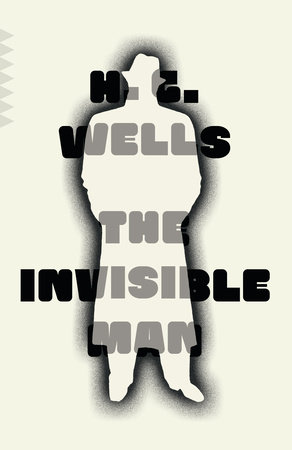
The Invisible Man
A heavily bandaged stranger arrives in Iping and unsettles the village with his secrecy, volatile temper and strange experiments.
About
Spoiler notice: Full-plot spoilers, including the Iping unveiling, Griffin’s account of his experiments and London flight, his break with Kemp, the pursuit and his death, and Marvel’s epilogue about the hidden notebooks.
The Invisible Man begins not with an explanation but with a disturbance in a small Sussex village. On a snowy February day, a heavily wrapped stranger arrives at the Coach and Horses in Iping and pays Mrs. Hall for a room. He will not remove his hat, glasses, bandages or gloves, and his requests for privacy grow sharper as neighbours try to make sense of him. The novel lets their partial impressions accumulate: a clock repairer finds him unnervingly hostile, a dog tears his clothing, and glass bottles and scientific equipment crowd his room. The stranger’s unusual precautions are at first interpreted as evidence of an accident or disfigurement. Wells builds suspense through that gap between what the villagers can see and what they can reasonably infer.
The inn’s mystery becomes a public crisis when Mrs. Hall challenges the stranger over his unpaid bill and his unexplained movements. He responds by removing his false nose, spectacles and wrappings, revealing no face beneath them. During the ensuing struggle with the village constable, his clothes come off too, and the truth becomes undeniable: he is present, but invisible. This disclosure answers one question while intensifying another. The crowd sees an impossible body, yet knows nothing about the man’s name, method or purpose. He escapes Iping and forces Thomas Marvel, a wandering tramp, to act as his assistant. Marvel is ordered to retrieve the stranger’s belongings and notebooks, but his fear and opportunism make him an unstable accomplice rather than a dependable partner.
The narration then shifts to Dr. Kemp’s house in Port Burdock, where an exhausted and wounded fugitive has taken refuge. Kemp initially discovers evidence of an unseen intruder before hearing the voice of the man who calls to him. The stranger identifies himself as Griffin, a former fellow student, connecting the Iping fugitive with a scientist Kemp once knew. Kemp struggles to reconcile that remembered man with the invisible person now demanding his help. Griffin’s account explains that he studied light and optical density, then found a way to lower the refractive visibility of living tissue. His experiment makes him unseen, but not invulnerable: food remains visible until his body processes it, while rain, snow, dirt and clothing expose or obstruct him. Invisibility brings new practical problems at every turn.
Griffin recounts the costs of his discovery through a series of choices, not as a detached scientific lecture. He steals money from his father to continue his work; the stolen money was not his father’s own, and his father dies by suicide. Griffin describes the funeral without remorse, dismissing his father’s response as sentimentality. In London, he burns down the lodging house where he had been working, then struggles to find clothing, food and shelter without exposing himself. He describes the experiment on a cat and the failed attempt to make every part of it invisible. Each episode links the scientific procedure to a human consequence: concealment requires deception, ordinary needs become difficult, and Griffin treats other people’s fear and property as obstacles to his plans. His confidence that he can reverse the process depends on notes that Marvel has taken.
Kemp listens as Griffin explains his hope of becoming visible again, but the former classmates do not share a moral outlook. Griffin imagines using his invisibility to command others and proposes a campaign of terror; Kemp pretends to cooperate while quietly seeking help. The promised collaboration collapses when Griffin hears approaching visitors and discovers Kemp’s betrayal. The struggle that follows spreads beyond the house: Griffin escapes, police and townspeople organize a search, and an innocent man, Wicksteed, is found dead after a violent encounter whose exact sequence the narrator can only reconstruct. The book makes clear that the danger is no longer a scientific secret or a village puzzle. Griffin’s capacity to move unseen now collides with collective attempts to track, contain and survive him.
The pursuit returns to Kemp’s house, which Griffin attacks while trying to reach his former friend. Kemp escapes and runs down the hill, using the open road and rough ground to make the invisible pursuer’s bare feet vulnerable. Their chase turns the doctor, who had earlier watched Marvel flee from his window, into a hunted man himself. The villagers and police join in, and Griffin is eventually overcome by the crowd. As he dies, his body slowly becomes visible again. The revelation confirms his identity to those around him and shows the physical consequences of the experiment, but it does not reconcile him with the people he has harmed. He dies injured and unpitied, his scientific ability and his destructive conduct held together in the narrator’s final description.
The epilogue follows Marvel after Griffin’s death. Now the landlord of a small inn near Port Stowe, he tells visitors stories about the events and insists that he does not possess Griffin’s three notebooks. The narrator reveals that Marvel has secretly kept them, studying the coded pages and dreaming of the knowledge they contain. This ending gives the novel a comic aftertaste, but it also leaves Griffin’s discovery unresolved: his own notebooks survive, hidden with a man who admires their secrets while claiming he would not repeat their author’s actions. Wells closes on the possibility that knowledge can outlast its maker, while its future use remains uncertain.
Book details
- Author
- H. G. Wells
- First published
- 1897
- Series
- No series listed
- Subgenre
- Classic science fiction, Psychological thriller
- Primary genre
- Sci-Fi, Literary Fiction
- Tags
- No tags for this book.
Review
Editor profile
Baby Bat
Goodreads and social links will be added soon.
- Goodreads — link coming soon
- Social media — link coming soon