
The Intuitionist
In an unnamed metropolis, elevator inspector Lila Mae Watson is drawn into controversy after a car falls into freefall on her watch.
About
Spoiler notice: Discusses the elevator crash, the competing inspection factions, the investigation and black box premise; it does not disclose later revelations or the ending.
Colson Whitehead’s debut novel makes elevator inspection the foundation for a speculative city and a story about competing forms of expertise. In the unnamed metropolis, Empiricists rely on tests and measurements, while Intuitionists claim they can identify defects by entering an elevator car and sensing its condition. These are rival professional schools, with different accounts of what an inspector needs to know and how that knowledge should be demonstrated. Their disagreement shapes the Department of Elevator Inspectors, where technical judgments carry institutional weight. The premise gives Whitehead a way to bring a hidden occupation into view: the ordinary ride between floors depends on decisions made by inspectors whom most passengers never see.
Lila Mae Watson, the department’s first Black woman inspector, is an Intuitionist with the highest accuracy rate in the department. When an elevator goes into freefall after receiving her approval, that record does not settle the question of responsibility. Instead, the accident places her professional judgment under scrutiny and makes her group vulnerable to blame. The event is a concrete crisis for Lila Mae, but it also tests the authority of a method whose practitioners claim a kind of expertise that outsiders may find difficult to verify. Whitehead starts with an error that appears measurable and then follows the dispute over who gets to explain it.
The accident occurs in an election year, giving the controversy a political deadline. The Empiricists would like to pin responsibility on an Intuitionist, and the factional stakes extend beyond whether one inspector made a mistake. The publisher synopsis connects the election year with the Empiricists’ effort to blame an Intuitionist, so the timing gives the accusation a wider political charge. Whitehead uses this pressure to make the case move on two tracks: Lila Mae needs to investigate what happened, while the rival school has reason to define the event before she can. The novel’s election context sharpens the conflict without making the elevator itself less important; technical judgment becomes the subject of a public contest over authority.
Lila Mae responds by investigating the crash, and the publisher’s description says she goes underground to do so. That movement takes the story beyond the initial report and its immediate accusation. The inquiry draws her toward the department’s past and the search for material whose significance cannot be reduced to a simple inspection result. The wording also gives the investigation a noir quality: the protagonist follows a case through a city and an institution that keep their histories partly concealed. The novel does not treat the failed elevator as a puzzle with an obvious mechanical answer. Its cause matters, but so does the larger question of what the department has forgotten, suppressed or chosen to believe about its own methods.
One strand of the inquiry concerns James Fulton, the founder of Intuitionism. Excerpts from his lost notebooks surface, describing the black box, a perfect elevator that might transform the modern city. The notebooks connect the current dispute to the school’s origin and give Lila Mae a second object to pursue: portions of the manuscript remain missing. Fulton’s idea changes the scale of the mystery. An elevator is no longer only a machine that can pass or fail an inspection; it becomes an imagined technology capable of reshaping urban life. The publisher account links Lila Mae’s investigation of the crash to her search for the missing notebook sections, placing present evidence and inherited theory in the same narrative.
The city itself remains unnamed, while its municipal Department of Elevator Inspectors supplies a precise institutional setting. The department’s work concerns a technology embedded in everyday life, and the novel builds its invented world around the people who certify that technology. Whitehead’s book description sets the two groups apart through the methods they use, while the review by Publishers Weekly notes that the novel gives its city a mythology and history of its own. That background helps the premise sustain more than a single accident: the professional schools have accumulated beliefs and traditions, and their members act within a system that predates Lila Mae’s case. The city’s vertical transport becomes a practical service and the centre of a civic bureaucracy.
Lila Mae’s position also keeps race and gender inside the investigation. The publisher identifies her as the department’s first Black female inspector, and Publishers Weekly describes the novel as weaving a meditation on race through its speculative world. Her professional record is strong, yet the accusation after the crash quickly places her at the centre of suspicion. The tension does not need a separate explanatory essay within the story: it appears in the contrast between the credentials she has earned and the readiness of others to use one incident against her method. The novel’s imagined department provides a focused way to examine how expertise is recognized, who receives the benefit of doubt, and how institutional tradition can protect some voices more readily than others.
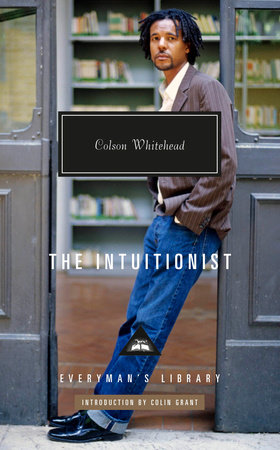
First published in 1999, The Intuitionist was Whitehead’s debut novel. Its central invention—a rivalry over how to know whether an elevator is safe—supports a mystery about evidence, professional loyalty and the future imagined by Fulton. The 2023 Everyman’s Library hardcover is a later 25th anniversary edition with an introduction by Colin Grant; that edition date belongs to the hardcover, while 1999 remains the work’s first-publication year. This account covers the accident, election-year pressure and early search for the black box notebooks. It withholds the later revelations and ending, where the novel’s mysteries reach their conclusions.
Book details
- Author
- Colson Whitehead
- First published
- 1999
- Series
- No series listed
- Subgenre
- Literary fiction, Noir, Experimental fiction
- Primary genre
- Literary Fiction
- Tags
- No tags for this book.
Review
Editor profile
Baby Bat
Goodreads and social links will be added soon.
- Goodreads — link coming soon
- Social media — link coming soon