
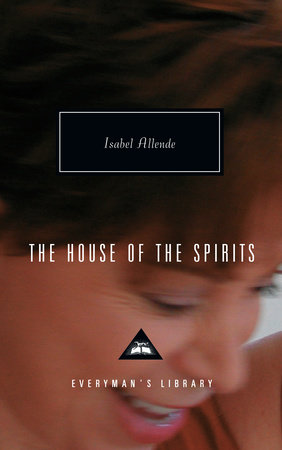
The House of the Spirits
Across three generations and a century of change in an unnamed Latin American country, the Trueba family lives through shifting social and political conditions.
About
Spoiler notice: Spoilers cover the Trueba family’s premise, central relationships, and political divisions; later outcomes and the ending are withheld.
The House of the Spirits follows Esteban Trueba and the family formed around him across three generations and a century of change. Esteban is proud, volatile and driven by a hunger for land; he is also obsessed with Clara, the woman whose marriage to him makes her the elusive centre of his household. Those traits create a tension that gives the family story its force: Esteban’s desire to possess and control Clara collides with her independence and mystery. Their marriage is not simply the starting point for a family chronicle. It establishes a pattern of attachment shaped by unequal power, one that will echo in the lives of their daughter and granddaughter as the country around them enters political crisis.
Clara has a presence that changes the household’s sense of time and possibility. She predicts family tragedies and helps determine the fate of the house and the Truebas, while her connection to spirits places the supernatural inside the family’s daily world. Allende pairs this gift with Clara’s elusiveness: she is a matriarch who cannot be fully contained by Esteban’s possessiveness or by conventional domestic expectations. The spirits are not an escape from the material history of the family. They share space with land, inheritance, love and resentment, giving memory and foreknowledge a place in the same story as political power. The novel’s magical realism grows from that closeness between the uncanny and the human.
The next generation gives the family’s conflicts a new shape through Blanca, Esteban and Clara’s daughter. Allende characterizes her as soft-spoken but rebellious, and her love for her father’s foreman’s son brings her into direct conflict with Esteban’s pride and authority. Their relationship crosses a boundary he wants enforced, so a private attachment becomes a source of lasting family tension. The connection also links the landowning household to the people who work on its estate. In Blanca’s story, class is not an abstract theme: it affects who can choose a partner, whose desires are treated as acceptable and how a father’s power reaches into his daughter’s life.
Blanca’s daughter Alba carries this history into the third generation. She is the child of the forbidden love that Esteban despises, yet she becomes the granddaughter he adores. That contradiction gives Alba a complicated place in his affections: she embodies a relationship he rejected, while also becoming someone he loves intensely. Her presence makes the family’s past difficult to simplify into permanent sides. Love can coexist with disapproval, and a person can be cherished even when the circumstances of her birth challenge a patriarch’s authority. Across the generations, the Truebas inherit more than a name or a house; they inherit unresolved attachments that continue to shape how they understand one another.
The novel’s political history eventually presses these intimate conflicts into public view. The country remains unnamed, though Allende calls it a Latin American nation in turmoil. Revolution and counterrevolution form the backdrop to the Truebas’ changing fortunes, and the family’s loyalties do not align neatly. Esteban and Alba, patriarch and granddaughter, find themselves on opposite sides of the barricades. Their division brings together the book’s central scales: one family’s long history and a society undergoing violent change. The setting invites readers to consider the political histories that echo through the novel while respecting the fictional country Allende has chosen to leave unnamed.
Allende’s focus on three generations lets one relationship alter the meaning of another. Esteban’s control over land and his household contrasts with Clara’s independence and foresight; Blanca’s forbidden love brings the estate’s class divisions into her personal life; Alba connects the family’s deepest attachments to a widening political divide. These are not separate strands placed beside one another. They form a chain in which affection, authority and inherited history keep crossing. The family’s love and hatred are durable, but they do not erase political disagreement or make its consequences abstract. The result is a family saga attentive to the ways private life is shaped by the social arrangements around it. The Trueba family’s story is personal because its members cannot escape those arrangements simply by loving one another.
First published in Spanish in 1982, The House of the Spirits was Allende’s first novel. Its magical elements belong to a story rooted in recognizable human motives: desire, pride, rebellion and the effort to define one’s own life inside a family. The selected Everyman’s Library hardcover presents the English translation by Magda Bolin and includes an introduction by Christopher Hitchens. Across its long family history, the novel asks how people live with attachments that resist control and histories they did not choose. The generational story keeps its central tensions in view even as circumstances change: Esteban’s devotion does not undo his possessiveness, Clara’s mysteries do not remove her from family life, and Alba’s generation faces a political landscape shaped by what came before and the choices each generation makes.
Book details
- Author
- Isabel Allende
- First published
- 1982
- Series
- No series listed
- Subgenre
- Family saga, Magical realism, Translated literary fiction
- Primary genre
- Historical Fiction, Literary Fiction
- Tags
- No tags for this book.
Review
Editor profile
Baby Bat
Goodreads and social links will be added soon.
- Goodreads — link coming soon
- Social media — link coming soon