
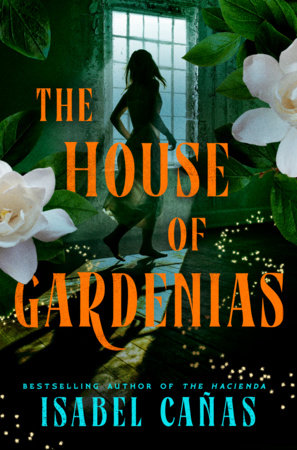
The House of Gardenias
Sixteen-year-old Minerva Treviño flees an abusive home and becomes lady’s maid to Encarnación del Valle, a wealthy widow who supports the deposed viceroy.
About
Spoiler notice: Spoilers for the opening circumstances and the novel’s central setting; later developments and the resolution are not described.
Isabel Cañas opens The House of Gardenias with a girl who has learned to survive by making herself small. Sixteen-year-old Minerva Treviño lives in a capital marked by political violence, while home offers little security: she is more likely to be beaten than fed. Her older brothers Arnulfo and Armando fled their father’s house six weeks earlier, leaving her with memories of their very different ways of facing danger. Hunger pushes Minerva to follow stray dogs through a refuse dump, searching for food thrown away by the wealthy. She steals her stepmother’s fine dress because arriving at a stranger’s door in the clothes she has worn for almost a year could end her chance of work before she speaks. Her flight is as much a practical calculation as an act of courage.
Minerva finds work as lady’s maid to Encarnación del Valle, a wealthy widow who supports the deposed viceroy. The change is immediate in its practical terms: Minerva has food and shelter, and the warm house glows with magical chispa. Yet her place there depends on people whose comfort is bound to the struggle outside. Her father worked in the chispa mines and spent his wages quickly, so the magic that now lights a rich household also belongs to the world of labour and scarcity she has escaped. Minerva initially cares more about the safety of a bed and a meal than about who governs the country. That is understandable for a teenager who has been hungry, though it does not leave her outside the political consequences of the widow’s allegiance.
The opening gives Minerva more than a simple frightened-girl role. She remembers Arnulfo’s quick wit and Armando’s firmness as she knocks at the door, trying to borrow qualities she doubts she possesses. An amulet Armando once tied around her wrist was meant to protect against spirits, ill luck and other harm; the piece of string could not protect her from her family. Such details place folk belief and magic beside ordinary choices about clothing, wages and food. They also show how the supernatural can be part of a household’s everyday understanding before the estate’s older, bloodthirsty forces come into view. Minerva’s survival depends on what she can do now, and the opening makes her fear inseparable from the resourcefulness it takes to leave.
When the viceroy returns to power, Encarnación leaves with Minerva for the del Valle family’s mountainside stronghold. They go there to wait out the rebel slaughter they expect to follow. The journey changes the scale of Minerva’s world: the city’s violence is no longer the only threat shaping her life, and the household’s retreat gathers the family and its servants behind the estate’s walls. At la Casa de las Gardenias, Minerva encounters haughty servants and del Valles described as cruel and scheming. Her position as a newcomer and employee gives her little control over the people around her. The house may look like refuge from the conflict outside, yet being enclosed with powerful people creates its own kind of exposure. Minerva must learn how this household works while the danger surrounding it keeps shifting.
The estate’s human occupants are not the only source of fear. Cañas’s premise gives the ancient house forces older and more bloodthirsty than anything Minerva expected, placing the supernatural inside the same setting as political upheaval and household hierarchy. That combination gives the gothic element a concrete shape: the danger is not confined to an isolated apparition or a threatening landscape but is bound to the place where Minerva has taken work and the people who control it. The mansion’s age and remoteness make it a stronghold, but they also make it a place with a past that reaches beyond its current residents. As Minerva discovers more about the estate, the distinction between the living dangers she can observe and the older forces she cannot understand becomes increasingly uneasy.
The book’s conflicts therefore meet at Minerva’s uncertain position. She has gained the safety of regular food and a warm house, but she remains dependent on a wealthy employer whose political commitments have brought the household into a dangerous moment. The journey from a refuse dump to the widow’s rooms makes the class distance tangible: what one household throws away can be another person’s meal, and a clean dress can determine whether a servant is heard. At the isolated estate, Minerva is surrounded by people with more status and power, while the restored viceroy and rebels shape the violence outside. Her earlier strategy—endure, avoid notice, and survive—has carried her away from one harmful home. The new setting asks whether that strategy can protect her when silence and obedience keep her close to danger.
The House of Gardenias is a young adult gothic fantasy about a maid caught between revolution, class power, and a haunted family estate. Its opening follows Minerva from hunger and abuse into a household that first appears to offer the ordinary protections she needs, then carries her with that household into an increasingly perilous retreat. Cañas joins political danger to supernatural horror without losing sight of Minerva’s practical circumstances: where she can sleep, who feeds her, and how much choice she has among people who command the house. The story’s menace comes from those pressures accumulating in one place, where a changing government, a powerful family, an uneasy staff, and ancient forces all shape Minerva’s chances of remaining safe. The setup promises a close view of survival when refuge itself becomes uncertain.
Book details
- Author
- Isabel Cañas
- First published
- 2026
- Series
- No series listed
- Subgenre
- Gothic horror, Haunted house, Historical fantasy
- Tags
- No tags for this book.
Review
Editor profile
Baby Bat
Goodreads and social links will be added soon.
- Goodreads — link coming soon
- Social media — link coming soon