
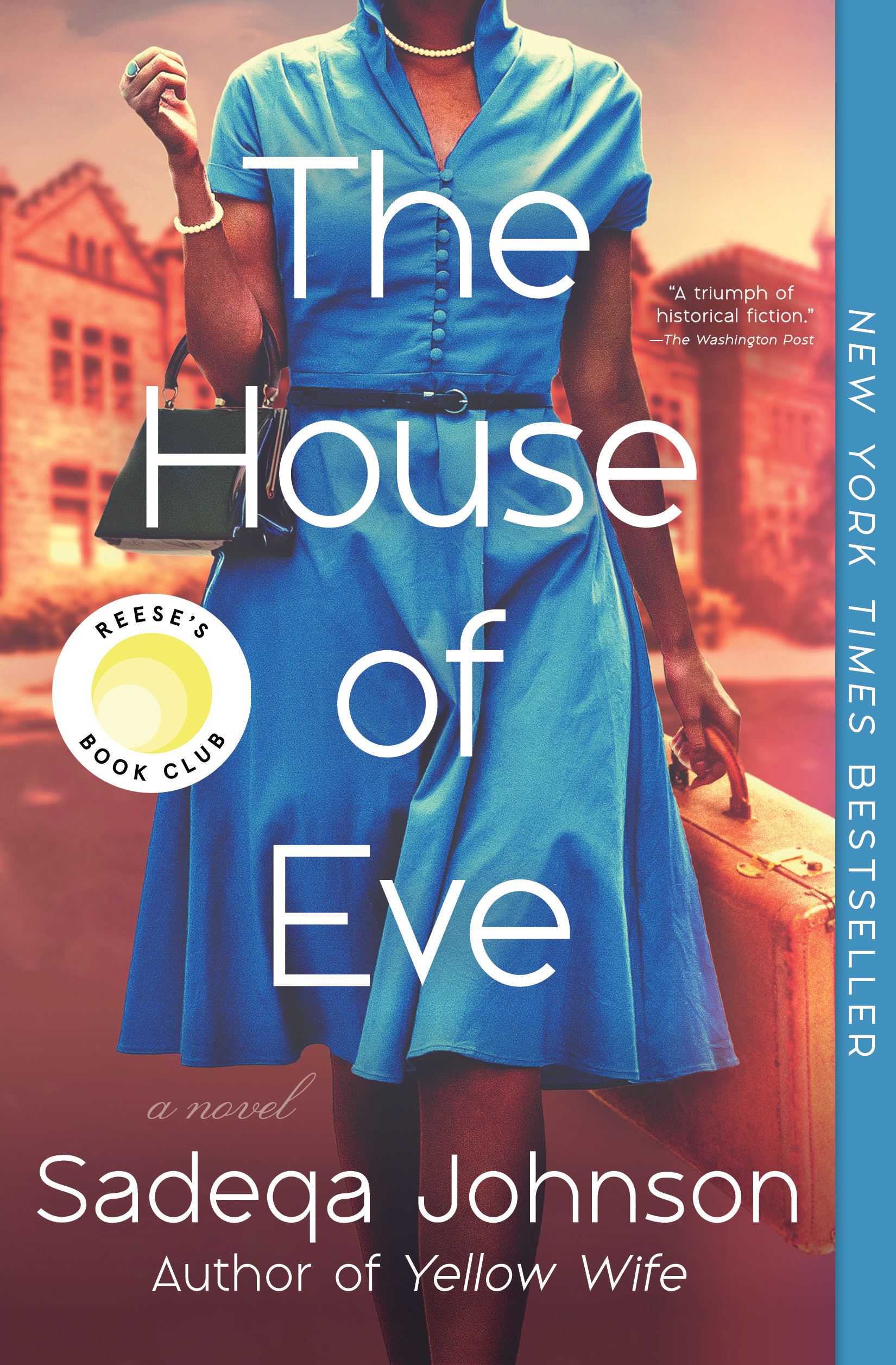
The House of Eve
Fifteen-year-old Ruby Pearsall hopes to become the first in her family to attend college, but a taboo romance and pregnancy threaten that future.
About
Spoiler notice: Spoilers cover Ruby’s pregnancy, her stay at the House of Magdalene, and the eventual meeting point of her and Eleanor’s stories. The final outcomes for either woman are not disclosed.
Set in the 1950s, The House of Eve moves between North Philadelphia and Washington, D.C., following two young Black women whose ambitions are shaped by different kinds of pressure. Fifteen-year-old Ruby Pearsall is trying to become the first person in her family to attend college. Eleanor Quarles arrives at Howard University with a loving home behind her and a new social world ahead, where questions of wealth, color, and belonging quickly complicate her plans. Both women fall in love, and each relationship touches the futures they are trying to secure. The story places education, family, and motherhood beside one another, showing how little room these women have to make a choice without its consequences reaching beyond themselves.
Ruby’s academic ability offers a way out of poverty, but the path depends on resources and expectations she cannot control. Her love for Shimmy, a Jewish boy, threatens to pull her away from the scholarship and college future she has worked toward. The adults around them understand that their relationship will be treated as a problem by people with power over Ruby’s prospects. Education is not a distant aspiration for her; it is the possibility of doing something other than the work available to her family, who earn a living serving white households. That practical calculation places affection and ambition in the same frame. Ruby can want a life with Shimmy and still recognise how easily other people can close off the future she is pursuing.
The family around Ruby is not a single source of safety. Her mother’s rejection and the precarity of home leave her without the steady protection a teenager should be able to expect, while Aunt Marie becomes a loving, protective presence. Marie’s confidence and independence draw on a very different model of Black womanhood from the respectability Ruby encounters elsewhere. She runs numbers as well, and her willingness to live on her own terms gives Ruby another example of adult independence. The difference between Marie’s expressive public life and Ruby’s narrow educational path gives their closeness a concrete shape: Marie can offer affection and practical support, but she cannot remove the social pressures that make Ruby’s future vulnerable.
Pregnancy turns those pressures into an immediate negotiation over Ruby’s body, schooling, and child. She is directed to the House of Magdalene, a maternity home for unmarried girls, where the public language of care sits alongside rules that demand compliance. The book places Ruby among other young women whose options are managed by adults and institutions. Her pregnancy disrupts the college path she has been pursuing, and the adults around her begin deciding what her future will require. The balance of power is unequal: the people arranging her stay hold far more money and authority than Ruby does. The home’s racial divisions and the shame attached to unmarried pregnancy make the limits of its supposed protection visible in daily life.
Eleanor’s story begins at Howard, where she meets William Pride and enters a world shaped by his family’s standing. She has come from a mostly white Ohio community and is unsettled by colorism within Washington’s Black elite, as well as by the class distinctions she meets there. Love gives her a possible place in William’s life, but it does not make his family’s expectations disappear. Eleanor works in the university library, where Mrs. Porter becomes a mentor. Porter’s connection to the preservation of African American and Caribbean history gives Eleanor a path into the institution that reaches beyond social acceptance. The contrast between a place built around study and a family gatekeeping its status keeps Eleanor’s desire for belonging tied to what she can learn and what she may be allowed to claim.
Eleanor’s longing for a child grows alongside her wish to feel at home in William’s family. The novel sets that desire against the secrecy surrounding adoption in the period and against the judgments directed at women who cannot conceive or carry a pregnancy. Ruby faces a different pressure: her pregnancy threatens the college future that could give her economic independence. Their circumstances are not interchangeable, and the narrative does not treat motherhood as one universal experience. Instead, it shows how class, color, family expectations, and access to support shape the choices each woman can imagine. Men and older relatives also bring their own assumptions into those choices, so neither romance can be separated from the community deciding whose future counts as respectable.
The two storylines unfold in alternating sections, with Ruby narrating in first person and Eleanor’s chapters told in third person. That change in distance marks how differently each woman enters the novel: Ruby’s voice brings the reader close to a teenager trying to name what is happening to her, while Eleanor’s chapters allow her position inside Howard and the Pride family to emerge from the outside. Their stories remain apart for much of the book before meeting late in its structure. The gradual convergence lets private histories carry their own weight before they become connected. Across both cities, the book follows a wider circle of women, including mothers, mentors, and relatives, whose decisions can shelter, direct, or restrict the younger women beside them.
Book details
- Author
- Sadeqa Johnson
- First published
- 2023
- Series
- No series listed
- Subgenre
- Literary historical fiction, Family novel
- Primary genre
- Historical Fiction, Literary Fiction
- Tags
- No tags for this book.
Review
Editor profile
Baby Bat
Goodreads and social links will be added soon.
- Goodreads — link coming soon
- Social media — link coming soon