
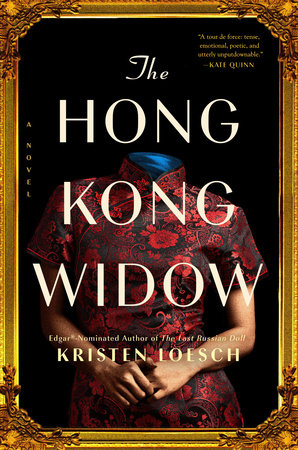
The Hong Kong Widow
In 1953 Hong Kong, refugee Mei accepts an invitation to Maidenhair House, where six spirit mediums compete in six séances over six nights.
About
Spoiler notice: Spoilers cover the premise, the invitation to Maidenhair House, the séance contest, and the later mother-daughter frame. The identity of the responsible party, what happened during the massacre, séance outcomes, and the ending are not revealed.
A haunted mansion, a disputed massacre and a woman’s unfinished past meet in The Hong Kong Widow. In 1953, Mei is living in Hong Kong after fleeing the Chinese Communist revolution and trying to leave her life in Shanghai behind. Then a former silent-film star invites her to Maidenhair House, a notorious place with a grim reputation. The invitation comes with a strange challenge: six spirit mediums will take part in six séances over six nights, and only one will win. Mei has good reason to decline. The hostess is married to the man who once destroyed her life. Money is promised, but Mei has another purpose for entering the house. The contest gives her a way to face a past she has spent years trying to escape.
The novel’s central setting is not just a stage for supernatural spectacle. Maidenhair House gathers people who bring different accounts of what happened there, and those accounts do not agree. Witnesses say a massacre took place; when police arrive, they find pristine rooms and no evidence of violence. The explanation offered at the time is collective hallucination. Mei knows what she saw, but the official version has become part of the story surrounding the house. This gap between testimony and proof gives the séances a second tension: the mediums are asked to make contact with the unseen, while the people outside the house are already arguing over whether the terrible event was real. The book keeps belief, memory and public certainty in uneasy proximity.
Mei’s invitation links the competition to a personal history with the hostess’s husband, the man who destroyed her life. The nature of that harm belongs to the novel’s unfolding past. The fortune offered to the winner is therefore a thin reason for Mei to risk returning to Maidenhair. Revenge is the prize she wants. That motive makes her participation more complicated than curiosity about spirits. She enters with a purpose, but the house contains other people’s interests and stories, and a six-night contest creates room for loyalties to shift. Each séance places the mediums within the same charged space, where performance and conviction can be difficult to separate. The question is not simply whether a ghost will appear, but what Mei will do with what she learns.
The timeline also reaches forward to 2015, when an older Mei’s past comes back into view. In Seattle, her daughter Susanna wants to know more about the night at Maidenhair House. Mei has kept quiet for decades, and her reluctance has left her daughter with an unfinished account. Their conversations turn the haunted-house mystery into a story about what mothers tell their children, what they protect them from, and what silence can leave behind. Susanna’s questions do not erase Mei’s experience; they press against the version of events that has followed her through old age. The later timeline gives the reader a view of consequences without resolving the earlier mystery at once. Mei is not only a young refugee entering a dangerous house; she is also a mother deciding whether to reopen a past she buried.
Between Hong Kong and Shanghai, the novel traces the movement of one life through upheaval, loss and reinvention. Mei’s refugee experience is part of the story’s foundation, while her connection to Shanghai’s film world runs through the hostess, a former silent-film star, and the man tied to Mei’s past. The result sits at the meeting point of historical fiction, gothic horror and supernatural suspense. The period setting shapes the characters’ options and gives the mansion a place in a changing city; the supernatural elements make its history feel present rather than safely finished. Ghosts are both a source of fear and a way the novel approaches memory. The book’s tension comes from allowing human harm and uncanny possibility to occupy the same story.
The two periods give The Hong Kong Widow a braided structure: one strand follows Mei in 1953, and another returns to her in 2015. The distance between those moments changes how each scene reads. A choice made in the mansion belongs to a young woman trying to survive and reclaim something from her past; decades later, the same night has become a question her daughter cannot leave alone. The novel can shift from a séance to a family conversation without abandoning its central concern: whose account of the past will be believed? It also lets the house function as both a physical location and a container for memory. The people connected to it carry different versions of what happened, while Mei must live with the knowledge that she has never told the whole story.
The Hong Kong Widow is for readers drawn to historical mysteries where the supernatural remains part of the suspense. Its hook is specific: a six-night séance contest in a haunted mansion, entered by a woman whose private reason for coming is revenge. Around that setup, Kristen Loesch builds a mother-daughter story shaped by displacement and long-kept secrets. The novel asks what happened on the final night at Maidenhair House, why the witnesses’ testimony conflicts with what police found, and what Mei is willing to say about it decades later. The distance between those questions and their answers lets the house remain frightening long after the contest itself is over.
Book details
- Author
- Kristen Loesch
- First published
- 2025
- Series
- No series listed
- Subgenre
- Gothic horror, Historical horror, Haunted house
- Primary genre
- Horror, Historical Fiction
- Tags
- No tags for this book.
Review
Editor profile
Baby Bat
Goodreads and social links will be added soon.
- Goodreads — link coming soon
- Social media — link coming soon