
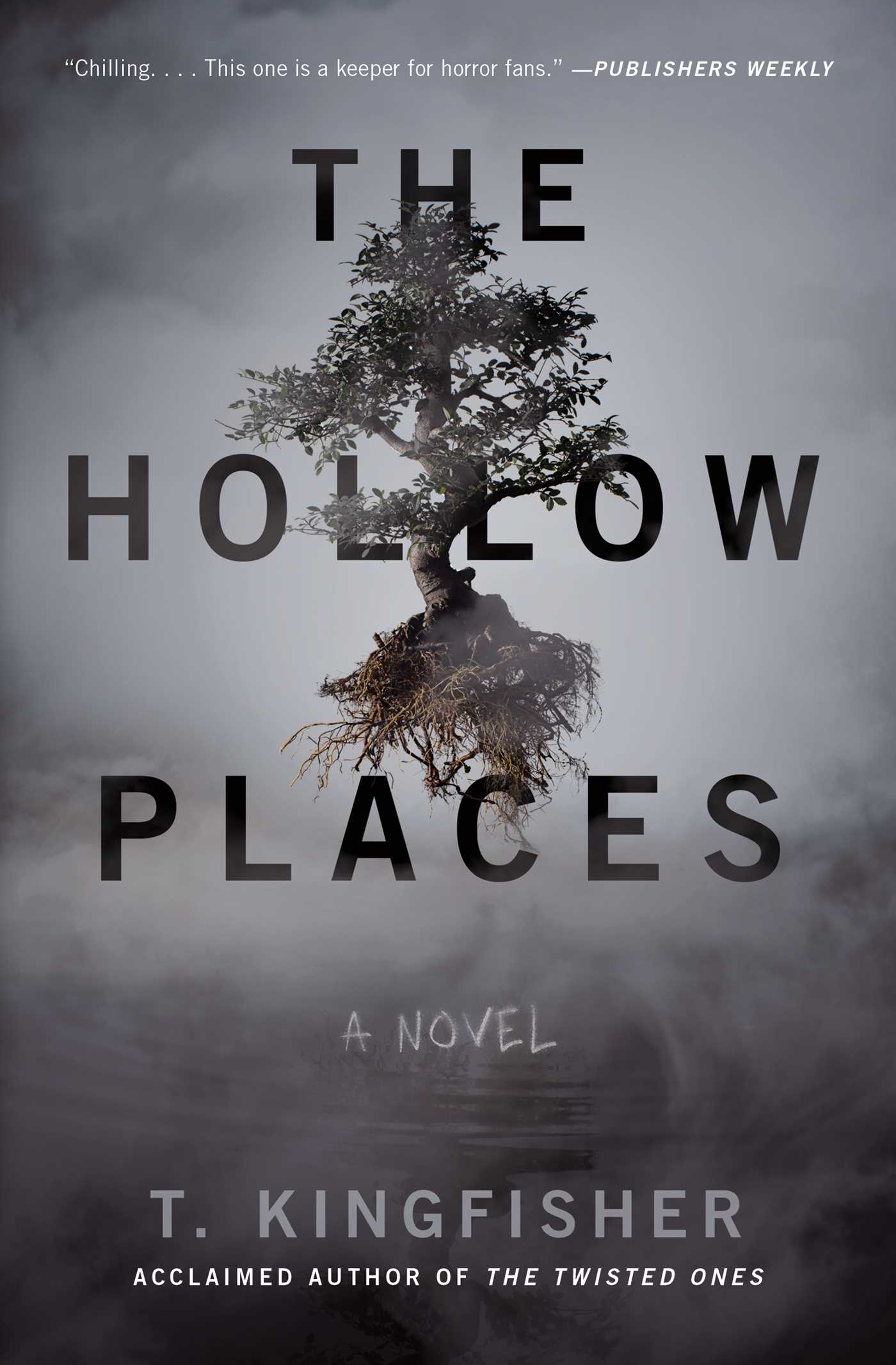
The Hollow Places
After her marriage ends, Kara moves into her uncle Earl’s North Carolina museum of curiosities and begins cataloguing its strange collection.
About
Spoiler notice: This account covers the setup and early portal discovery. It avoids later reveals and the ending.
Kara’s first problem is ordinary: her marriage has ended, money is tight, and moving back in with her parents feels harder than starting over somewhere else. At thirty-four, she earns a living as a freelance graphic designer, but the work does not bring in enough to quickly secure a new home. Her uncle Earl offers her a spare room in the museum he owns in Hog Chapel, North Carolina. Kara accepts because she already knows the place, and because living there gives her a chance to help with the collection. It is an unusual refuge, but a familiar one. The story opens with her return to a building filled with things that look strange to visitors and feel like home to her.
The Glory to God Museum of Natural Wonders, Curiosities, and Taxidermy is a small storefront packed with specimens, souvenirs, oddities and objects whose histories are not always what their labels suggest. There are stuffed animals, masks, thimbles, dried scorpions, disputed curios and handmade displays. The collection resists neat cataloguing: a case might mix taxidermy, folk objects and an item whose authenticity is uncertain. That disorder is part of the museum’s character. Earl gathers things from flea markets, estate sales and the internet, and sometimes makes them himself. Kara grew up among the cases, worked there as a teenager, and can remember rearranging its tiny armored mice. Other people find the glass-eyed animals unsettling; she has never needed the place to be tidy or conventional to feel at ease in it.
Earl is as difficult to classify as his exhibits. He believes in Christianity, Bigfoot, the healing power of crystals, secret histories and many other claims that do not sit comfortably together. Yet he is welcoming to people who believe none of the same things. Kara’s early memories show their relationship through small disagreements and his habit of calling her Carrot, a nickname he has used since she was a toddler. When she was sixteen, she tried to persuade him that the evidence for evolution was already in the everyday facts he accepted about inherited traits and survival. He eventually agreed, though his explanation involved Bigfoot as a missing link. Their conversations establish a bond built from affection, patience and a willingness to let an argument end without either person winning it.
The present-day Kara is not returning to the museum for a holiday. Her divorce follows a long, unhappy marriage rather than a single dramatic betrayal, and she describes the separation as both frightening and, in some ways, a relief. She cannot afford to keep the house her former husband offered her. Moving in with her mother is also a poor fit: the two are too much alike, and both know that they manage family visits better when they have space. Earl’s offer gives Kara another option. He has cleared a room beside his workshop and needs help at the museum. The arrangement lets her contribute rather than simply be looked after, while her memories of the place give her a point of stability during a period when nearly everything else is changing.
Once Kara is settled, the museum’s everyday work becomes part of the story. She catalogs the collection and takes on more responsibility when Earl is away for knee surgery. Simon, who works at the neighboring Black Hen coffee shop, becomes her companion after hours. He is talkative, wears a top hat, and tells stories about growing up in Florida. Their friendship grows through ordinary tasks and shared time, not through any prior knowledge of what lies behind the museum’s walls. When a significant hole appears in the drywall, Kara and Simon try to repair it. The practical job exposes a dark corridor where there should be no space at all. Beyond it is a door, and beyond the door is a place that makes the familiar museum feel like a boundary rather than a refuge.
The passage leads into a landscape of small islands and willows, with a concrete bunker and doors opening onto other realities. This is not a welcoming route to a magical country. The willows whisper, and the space carries signs of danger. Creatures there seem able to hear thoughts, and fear makes them stronger. Those details change how Kara and Simon have to move through the new place. Curiosity has brought them to the threshold, but the world beyond the door reacts to them. The ordinary tools that suit museum work cannot explain what the corridor is or make it safe.
The early tension comes from the collision between the Wonder Museum’s harmless strangeness and the corridor’s real threat. Earl’s building already contains objects with doubtful labels, handmade curiosities and a family history in which improbable beliefs are treated with warmth. A hidden passage could almost seem like one more oddity until Kara and Simon see where it leads. Their first challenge is to understand the place without a map or a reliable account of its rules. They also have reasons to protect the museum and the life Kara has begun to rebuild there.
Book details
- Author
- T. Kingfisher
- First published
- 2020
- Series
- No series listed
- Subgenre
- Weird fiction, Modern horror
- Primary genre
- Horror
- Tags
- No tags for this book.
Review
Editor profile
Baby Bat
Goodreads and social links will be added soon.
- Goodreads — link coming soon
- Social media — link coming soon