
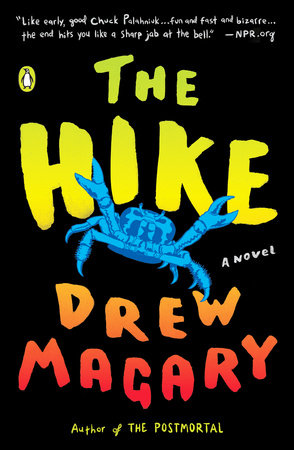
The Hike
Before a business dinner in rural Pennsylvania, family man Ben takes a walk in the woods and finds himself trapped on a path through a bizarre world.
About
Spoiler notice: Spoilers for the setup and early journey, including Ben’s business trip, the path that traps him, and several early encounters. Later journey developments and the ending are not summarized.
Ben takes a short walk in the Pennsylvania woods before a business dinner, expecting to return to his hotel without incident. The hike becomes an abrupt break from the ordinary: he encounters a threatening figure wearing a skinned dog’s head and finds that the route will not let him simply turn back. The shift from an unremarkable work trip to danger is the novel’s launch point. Ben is a suburban family man from Maryland, and his first concern is not adventure but getting back to the people waiting at home. The wilderness becomes a threshold into a place that follows different rules, where a familiar path can stretch into a life-threatening ordeal.
The landscape Ben enters has the loose, disorienting logic of a nightmare, but the story gives him concrete problems to solve. He must keep moving, judge which strangers might help, and survive creatures whose size and appetites make them immediate threats. His encounters include dog-faced pursuers, a human-eating giant, enormous insects and other uncanny beings. The sequence draws on the momentum of a quest: each new stretch of the path brings a different obstacle, and practical objects or unexpected allies may matter as much as strength. The danger is grotesque, yet the details are often absurd enough to make the world feel darkly comic as well as frightening.
One of Ben’s most distinctive companions is a talking crab. Its blunt, profane manner gives the journey a counterweight to its violence, and its presence turns conversation into one of the story’s strange survival tools. Ben also encounters people displaced from their own times and circumstances, including a fifteenth-century Spanish sailor. These meetings suggest that the path collects more than monsters; it gathers lives and histories into a world that does not obey ordinary geography or chronology. The people Ben meets can offer company, information or trouble, but no encounter makes the route safe. His progress depends on reading each situation while the rules keep shifting around him.
The threat also reaches inward. Ben’s journey draws on memories and missed opportunities, bringing versions of his past into contact with his present crisis. Dream episodes return him to missed opportunities, while folds in time allow childhood wounds to echo into his adult life. These moments give the fantastical encounters a personal dimension: survival requires more than escaping the next physical danger. Ben must face what his memories bring back even as he tries to keep moving. The novel does not reduce that process to a tidy lesson; its path leaves questions open and connects inner conflict to the same unpredictable world that surrounds him.
At the far end of the mystery is the Producer, the figure associated with the strange world and the person Ben believes can release him. The search for this unseen controller gives direction to what might otherwise be a succession of bizarre episodes. Ben’s goal remains legible even when the landscape does not: reach the person behind the path and find a way back to his family. The idea of a world arranged by an unseen author also lends the journey a game-like shape. Tasks, hazards and tools suggest a system, but the path’s apparent design does not guarantee that Ben understands it or controls what happens next.
Magary mixes contemporary domestic concerns with fantasy, horror and adventure imagery. Ben’s home and family give the story a recognizable emotional anchor, while the path turns a routine afternoon into a changing series of trials. The book uses motifs associated with fairy tales and video games, but its monsters and grotesque transformations give those patterns a harsher edge. Humor travels beside dread: a talking crustacean can share a scene with a serious threat, and an eccentric detour can still carry consequences. The result is a journey whose tone keeps shifting without abandoning the central question of how a person finds the way back from being lost.
The Hike’s central movement is outward through an impossible landscape and inward through Ben’s recollections. Each step pushes him toward the Producer while also bringing another part of his history into view. The book’s episodic obstacles make the journey feel like a sequence of levels, yet Ben’s attachment to his family keeps the stakes personal rather than abstract. The path promises no easy return and offers no stable map; allies, monsters and memories all complicate his attempt to move forward. The early encounters establish that the path can challenge Ben with memories as readily as monsters. They also leave the rules uncertain, so neither an ally nor an apparent destination can promise a safe return. The contrast between the scheduled dinner and the journey that replaces it shows how little warning Ben receives before the ordinary timetable disappears. The business trip supplies a specific route home, but the path puts distance between him and that life with every step. His determination to find the Producer gives the ordeal a destination even while its meaning remains uncertain.
Book details
- Author
- Drew Magary
- First published
- 2016
- Series
- No series listed
- Subgenre
- Portal fantasy, Dark fantasy, Weird fiction
- Primary genre
- Fantasy
- Tags
- No tags for this book.
Review
Editor profile
Baby Bat
Goodreads and social links will be added soon.
- Goodreads — link coming soon
- Social media — link coming soon