
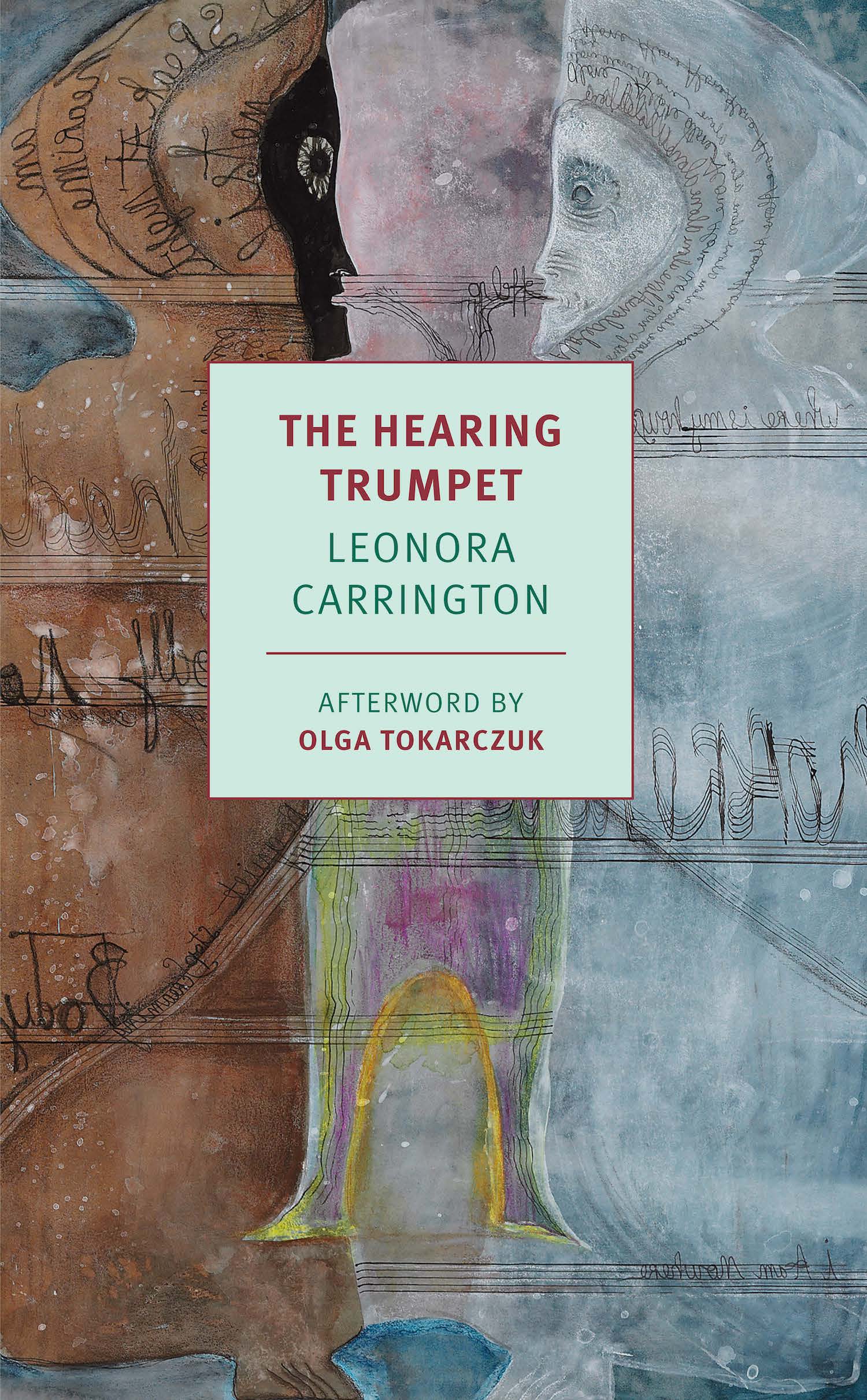
The Hearing Trumpet
At ninety-two, Marian Leatherby lives with relatives who regard her as an inconvenience.
About
Spoiler notice: Major spoilers, including the struggle at Lightsome Hall, the atomic catastrophe and New Ice Age, Marian’s cauldron episode, and the resolution of the Grail quest.
Marian Leatherby introduces herself as a ninety-two-year-old who is hard of hearing, toothless, vegetarian, and proud of the small gray beard on her chin. She is not waiting for her relatives to define her as helpless: she keeps herself clean and manages her own life. Her friend Carmella gives her an ornate hearing trumpet, its decorative scale almost comic beside its practical purpose. With it Marian can hear what her family says about her when they think she is not listening. Their plan is to send her away to a home for older women. The gift changes the balance of that conversation. Marian may be physically dependent on a listening device, but she now knows what is being decided and can describe it in her own dry, direct voice.
The destination is Lightsome Hall, a residential home connected to the Well of Light Brotherhood and managed by Dr. Gambit and his wife. It occupies a castle-like site whose residents live in separate buildings shaped like a toadstool, a boot, an igloo, a birthday cake, or a circus tent. The place looks like a child’s drawing of shelter, but its routines are controlled by an adult institution. Work, observation, and self-improvement are presented as a philosophy; the women are made to peel vegetables and perform exercises under rules devised by the management. Marian’s son and daughter-in-law have not inspected the home before delivering her there. Their departure leaves her to discover the gap between the reassuring language of care and the strange, restrictive life inside.
Marian observes the other residents rather than accepting the labels attached to them. The women have histories and private habits that do not fit Dr. Gambit’s system. One blind artist paints at remarkable length on toilet paper; another describes campaigns she claims to have fought across Europe and Africa. Christabel Burns, who says she is 184, becomes especially important to Marian. In the dining room Marian has noticed a portrait of a nun who appears to wink. Christabel recognizes her interest and gives her a book about the portrait’s subject, Dona Rosalinda, an abbess whose story is presented as a historical document translated from Latin. A painting, a resident’s gift, and a text within the novel begin to open a route out of the home’s ordinary rules.
The Abbess’s narrative moves the book into a different register. Rosalinda’s account involves religious authority, disguise, and a struggle over the Holy Grail. In this version of the story, the Grail belongs to Venus and the Mother Goddess, rather than to the Christian order that has taken possession of it. The old women’s present and the Abbess’s distant past begin to echo one another: both concern women living under systems that claim the right to govern them. Carrington lets the inserted book carry its own adventure, with priestly narration, letters attributed to the Abbess, and mythic figures such as the Knights Templar and the bard Taliessin. Marian does not leave her own story behind; the competing narrative gives her and the reader another way to interpret the portrait and the power struggle at Lightsome Hall.
Inside the home, the apparent eccentricity becomes dangerous. Dr. Gambit’s doctrine and the residents’ enforced routine give way to conflict, including a resident’s death connected with a batch of fudge and a hunger strike. The other women eventually resist the management and take control of the main hall. Their new life is collective and physical: they dance in the gardens, make their own arrangements, and cease to perform obedience for Gambit. The book does not turn them into conventional rescuers or reformers. Its rebellion keeps the unruly scale of a fairy tale, where the home’s absurd architecture, the portrait, religious history, and ordinary food can all become part of the same contest. The women’s age is not treated as a reason to remove them from action.
The upheaval expands beyond the institution. A global catastrophe throws the planet into a new Ice Age; Lightsome Hall and the surrounding modern world are destroyed. Marian and the surviving women shelter in a cavern, keep warm around a fire, and live on what they can gather. The change strips away the machinery and authority of the earlier setting, but it does not make the group passive. Taliessin arrives as a traveling postman with news that the Grail has to be recovered from those who still serve a punitive Father God. The old legend has become an urgent task in the frozen present. Bees and wolves join the women’s effort, and the novel makes the survival of human and nonhuman life part of the same imaginative problem.
Marian’s own journey also passes through an impossible interior landscape. In an episode described as a descent into the Womb of the World, she meets another version of herself preparing a stew. Marian enters the cauldron and sees her own body cooking; she seasons and eats the broth, then returns to the world outside it. The scene turns the figure of an old woman into both cook and food, observer and participant, without pausing to explain the transformation as realistic action. After the Grail is recovered, the ending imagines a future organized around the Goddess and a mixed community of people, animals, and other beings. The novel’s scale has moved from a family’s decision about one older woman to a struggle over who may shape life after catastrophe. Its shifts remain comic, unsettling, and deliberately unlike a conventional institutional escape story.
Book details
- Author
- Leonora Carrington
- First published
- 1974
- Series
- No series listed
- Subgenre
- Weird fiction, Classic fantasy
- Primary genre
- Literary Fiction, Fantasy
- Tags
- No tags for this book.
Review
Editor profile
Baby Bat
Goodreads and social links will be added soon.
- Goodreads — link coming soon
- Social media — link coming soon