
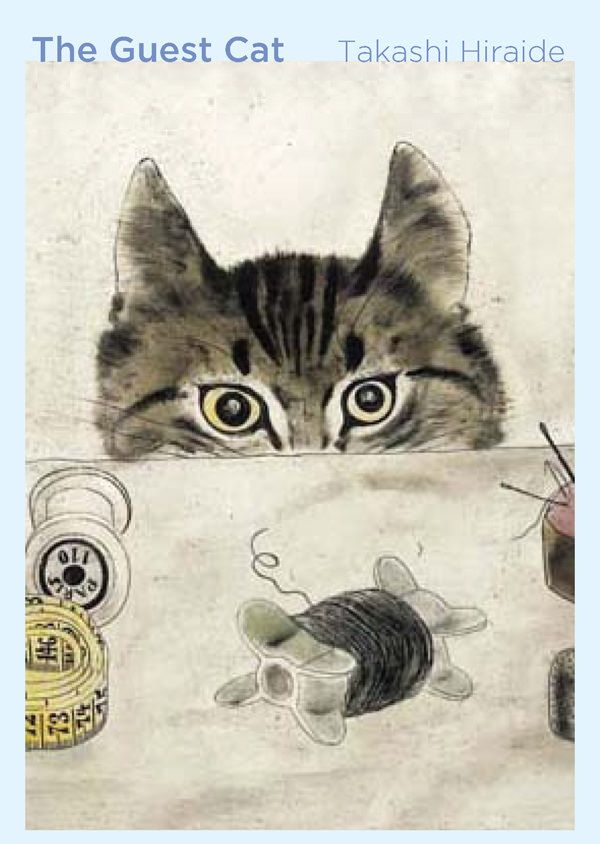
The Guest Cat
A freelance copyediting couple in a quiet Tokyo cottage grow close to a visiting cat who belongs to their neighbours.
About
Spoiler notice: Full-story spoilers below, including Chibi’s death, the loss of the couple’s home and the novel’s final return of a visiting cat.
The Guest Cat begins with a couple whose work and marriage have settled into the same small space. They live in a rented cottage in a quiet Tokyo neighbourhood and work from home as freelance copyeditors. They no longer have much to say to one another. Their daily life is not presented as a dramatic crisis; it is a narrowing of attention, in which two people share a household but have lost the habit of sharing their observations. The arrival of a neighbour’s cat gives that quiet a new centre. The cat is free to come and go, and the couple’s attachment grows through repeated visits rather than through a decision to adopt it. This modest arrangement establishes the book’s central tension: affection becomes consequential even when no one can claim ownership.
The cat’s visits change the couple’s days through small, practical rituals. They buy treats, watch how she moves, and begin talking about her. These actions make a relationship that had become muted more responsive. The cat does not repair their marriage by speaking for them or by becoming a symbol they consciously agree upon. Instead, she gives them something outside themselves to notice together. Their conversation has a subject, but also a shared rhythm: waiting, watching, remembering a visit and wondering whether the cat will return. Hiraide’s novel lets ordinary attention do the work that a more event-driven story might assign to a revelation. The change in the couple is visible in how they look at the same surroundings and in the fact that they now have details to exchange.
The cottage and its garden matter because the cat moves across boundaries the humans treat as settled. She belongs to a neighbouring household, yet spends time in the couple’s rooms and in the elderly landlord’s garden. She eats and sometimes stays overnight in the cottage, and keeps returning to the couple’s kitchen. These visits make the rented home feel open to a life that the couple cannot control. They care for the animal, but she remains capable of leaving; her independent movement is part of what attracts them. The title’s word “guest” holds both sides of that bond together. A guest is welcomed and made room for, but is never converted into property simply because the welcome is sincere.
The narrative’s attention to a small creature also alters the scale at which events are felt. A kitten’s agility and habits can fill a day, while the people around her remain exposed to changes they cannot prevent. The couple delight in the cat’s intelligence and speed, and come to think of her as a gift from far away. That feeling does not erase the ordinary fact that she has another home. It records how the couple’s sense of value changes: a brief encounter can become central without being permanent. The cat is not made to explain every human difficulty. Rather, the care directed toward her reveals what the couple can still feel and how alert they have become to the passing texture of their surroundings.
The story later places this attachment against several kinds of loss. A friend and the elderly landlord die; the old house and cottage are demolished along with the garden; and the relationship between the couple and their neighbours is broken after the cat’s death. These events make the setting more than a picturesque refuge. It is a lived place shaped by ownership, age, family decisions and redevelopment, and its familiar arrangements can disappear. The cat’s death is especially painful because the couple’s bond with her was intimate but incomplete: they did not own her, and they cannot negotiate a different outcome. Their grief does not depend on a legal or familial status. The novel treats time spent caring as real, even where the relationship has no formal name.
That loss changes how the earlier visits read. The routines that once opened the couple’s days also measured a period that could not last. This gives the book’s attention to small details a double effect: noticing can deepen happiness, but it also makes change more sharply felt. The couple’s rented cottage and the lush garden seemed like a stable frame for a recurring visitor; in retrospect, they are temporary conditions. Hiraide keeps the focus on particular lives and places rather than turning impermanence into a lesson delivered from outside the story. Each departure belongs to its own circumstances. The friend, landlord, house, garden, cat and neighbourly relationship do not vanish in the same way, even though their losses gather around the same household. The result is a portrait of grief that grows from the ordinary commitments of daily life.
Near the end, another cat begins visiting the couple at their new home. The return does not restore Chibi or return the demolished garden, and the book does not present a new animal as a substitute for the one who died. It offers a changed possibility: the couple may again welcome a creature whose life remains partly beyond their reach. That closing movement makes the title’s idea of hospitality recur after the losses, now carrying memory as well as anticipation. First published in Japanese as Neko no kyaku in 2001, the novel later appeared in English in Eric Selland’s translation. Its restrained focus on observation gives the premise room to widen—from a cat in a kitchen to questions of attachment, private space and the limits of possession. Its emotional force rests on how much a temporary presence can alter the shape of a home.
Book details
- Author
- Takashi Hiraide
- First published
- 2001
- Series
- No series listed
- Subgenre
- Literary fiction
- Primary genre
- Literary Fiction
- Tags
- No tags for this book.
Review
Editor profile
Baby Bat
Goodreads and social links will be added soon.
- Goodreads — link coming soon
- Social media — link coming soon