
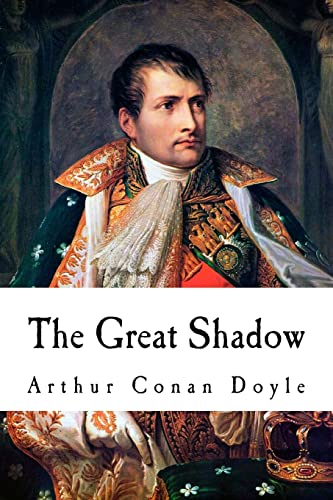
The Great Shadow
Jock Calder looks back on a youth spent near the Scottish-English border, where fear of Napoleon's wars touches his family and farm.
About
Spoiler notice: This overview discusses Edie’s marriages, the deaths following Waterloo, and Jock’s return and later family life.
Jock Calder begins The Great Shadow with a view from his fields towards a world that has changed almost beyond recognition. Trains and steamships now move through the landscape that he remembers from childhood, while people talk confidently about peace. At fifty-five, he looks back on years when warfare seemed as ordinary and permanent as the seasons. Napoleon supplies the shadow of the title: a distant figure whose influence reaches into farms and households far from France. A light along the coast can suggest invasion, and the fear of an enemy landing makes even a familiar stretch of shore uncertain. Jock's recollection gradually brings that enormous public threat into the smaller circle of people whose choices will determine his own life.
West Inch is a sheep-farming household near the border, with a practical daily existence that offers little of the grandeur Jock's cousin Edie finds in romantic stories. His friendship with Jim Horscroft belongs to this local world of childhood, school and familiar neighbours. Edie brings a different appetite into it, responding to the possibility of heroic achievements and a life more exciting than the farm can provide. Jock's affection for her makes those possibilities matter to him even when they sit awkwardly beside his circumstances. The early chapters give space to these relationships before the military campaign begins, establishing why a disappointment at home can later travel with a man into a foreign battlefield.
Jim's return from his studies makes the courtship painfully complicated. Jock discovers that the encouragement he has received from Edie is not an assurance that she considers herself committed to him. Jim, meanwhile, has understood her to be free, and the friends must confront what she has said to each of them. Their conversation nearly becomes a fight, but their long acquaintance gives them a basis for believing one another that her competing assurances lack. They put the choice to Edie, who selects Jim. Jock must bear a loss without turning his oldest friend into a dishonest rival. That difficulty gives the romantic strand its particular force: loyalty has to survive an injury that neither man can simply explain away.
The apparent end of the war brings a new arrival to the coast. Bonaventure de Lapp, a French veteran, enters the Calder household with charm and stories that seem to carry the experience of distant campaigns into their rooms. His scars reveal a life of extraordinary violence, while evasions about his past suggest more than an unfortunate soldier seeking shelter. Jock's curiosity shades into unease as the guest's military knowledge and hidden connections become harder to ignore. Edie responds to the kind of adventurous figure she has imagined. The discovery that she has married him overturns the future Jim expected, and her departure aboard a cutter takes a household crisis beyond the family's immediate reach.
Napoleon's escape from Elba and the renewal of war then bring the two friends into the army. Under Major Elliott they join the 71st Highland Light Infantry, leaving home for training and a passage to Belgium. Jock carries homesickness with him; Jim's thoughts remain fixed on the Frenchman now known as de Lissac. Their neighbour also becomes their officer, changing the terms of a relationship that had seemed familiar in the country. Jock tells this part through what he sees and hears, rather than pretending to direct events from above. Doyle's fictional account of Waterloo consequently reaches the battle through recruits, marching orders and strange towns, with private disappointment still present beneath the public purpose of military service.
The battle brings de Lissac back into their lives, and its aftermath strips the fighting of the excitement that might have sustained men during an attack. When Jock accompanies the Major to reckon their losses, he finds Jim dead. Nearby lies the mortally wounded Frenchman, who explains that Jim shot him before French soldiers struck Jim down. De Lissac still speaks with familiar courtesy, sending greetings to the people who sheltered him, but his final disclosures make his past darker. He claims responsibility for leading the party that captured and shot the Duc d'Enghien. He asks Jock to take a message to Edie, then dies beside the man whose hopes he destroyed. Their burial in the same trench gives a stark physical ending to the rivalry.
Jock's journey to Paris completes the story without preserving Edie as an unattainable romantic ideal. She is mourning de Lissac when he visits, yet dismisses their conversation for Count de Beton and asks her cousin to leave by a side entrance. Jock understands that she does not want fashionable acquaintances to see the ordinary people from her past. He later hears of her marriage to the Count and her death in childbirth. His own future leads back to Corriemuir: he buys his discharge, takes over the farm after his father's death, marries Lucy Deane and raises seven children. Writing the recollection reopens griefs that peaceful family life has not erased, even as his children find those distant adventures difficult to imagine.
Book details
- Author
- Arthur Conan Doyle
- First published
- 1892
- Series
- No series listed
- Subgenre
- Historical adventure, Classic adventure
- Primary genre
- Historical Fiction, Adventure
- Tags
- No tags for this book.
Review
Editor profile
Baby Bat
Goodreads and social links will be added soon.
- Goodreads — link coming soon
- Social media — link coming soon