
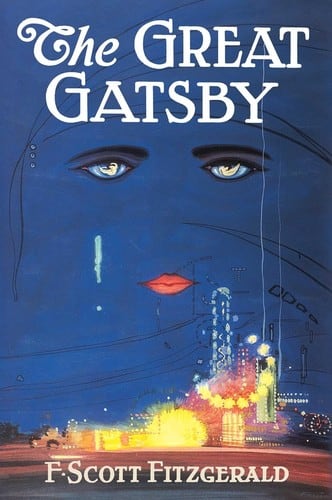
The Great Gatsby
Nick Carraway takes a small house on Long Island for the summer of 1922, next door to a mansion where enormous parties are thrown by a man nobody seems to know.
About
Spoiler notice: Spoilers: this overview includes the central relationships, the accident and the ending.
F. Scott Fitzgerald's The Great Gatsby is narrated by Nick Carraway, who looks back on a summer of 1922 after leaving the East. Nick has come from the American Midwest to work in the bond business and rents a modest house on Long Island. His neighbor is Jay Gatsby, a man whose large mansion and open-air parties attract crowds, gossip and strangers, but whose own purpose is far narrower than the spectacle. Nick's cousin Daisy Buchanan lives across the bay with her husband Tom, and the connection between these two households turns Nick into a witness and then a participant. Nick also becomes involved with Jordan Baker, a professional golfer and Daisy's friend, who helps explain Gatsby's connection to Daisy. Because the account is retrospective, Nick can introduce his impressions, revise them with later knowledge and admit what he did not understand at the time. The story therefore follows both the events of the summer and the narrator's changing judgment of the people who shaped it.
The setting is divided into two wealthy communities that Nick describes as West Egg and East Egg. Gatsby lives in West Egg, which is newer and less socially established; Tom and Daisy occupy a grand East Egg house associated with inherited wealth. Between Long Island and New York City lie the ash heaps around George Wilson's garage, a bleak industrial stretch crossed by the road. These places structure the characters' movements: Nick travels by train into Manhattan, visits the Buchanans, attends Gatsby's gatherings and enters the garage where Myrtle Wilson lives with her husband. Fitzgerald makes the geography concrete through houses, lawns, cars, train journeys and the bay, while the contrast between districts repeatedly brings money and social access into the action. The book also gives ordinary objects narrative weight, especially Gatsby's mansion and pool, the billboard overlooking the ash heaps and the green light at the end of Daisy's dock.
Gatsby's parties seem to make him public property. Guests arrive without invitations, drink, dance and trade stories about their host, most of them unable to distinguish rumour from fact. Nick attends one and meets Gatsby without initially recognizing him as the man of the house. The carefully maintained performance—his courteous manners, grand setting and shifting accounts of his past—makes the mystery part of the entertainment. Nick later meets Meyer Wolfshiem, one of Gatsby's business associates, whom Gatsby identifies as the gambler behind the fixing of the 1919 World Series. Later, Tom accuses Gatsby and Wolfshiem of selling illegal alcohol through drugstores. The novel does not treat the parties as a simple measure of Gatsby's social success: their crowds are large, but the people who fill the lawn are mostly absent when he needs them. Nick's account gradually separates the rumor surrounding Gatsby from the narrower set of facts he can establish.
The private request behind the parties is that Nick arrange a meeting between Gatsby and Daisy, whom Gatsby loved before the war and has not seen for years. Their reunion takes place at Nick's house on a rainy afternoon; after an awkward beginning, Gatsby invites Nick and Daisy to his mansion. His rooms and possessions are displayed for Daisy, and the scene makes clear how much he has built around the hope of recovering their earlier relationship. Gatsby presents himself as someone who can restore the past exactly, while Nick sees that the reunion is also an encounter between a remembered woman and the life she has since made with Tom. Fitzgerald later supplies Gatsby's history in a chapter of backstory: he was born James Gatz, imagined a different future for himself as a boy, met the wealthy Dan Cody and changed his name. This delayed account alters how the present-day performance reads without making every detail of his fortune transparent.
The summer's tensions gather in a journey to Manhattan on an exceptionally hot day. Tom confronts Gatsby about Daisy, and the argument exposes the difference between Gatsby's wish that Daisy erase her marriage and Daisy's inability to give the answer he wants. On the drive back, Myrtle runs into the road and is struck by the yellow car returning from the city. Daisy is driving, with Gatsby beside her; Gatsby tells Nick he will take responsibility. Afterward he waits outside the Buchanan house because he fears Tom may harm her. Myrtle has been having an affair with Tom, who earlier drove Gatsby's yellow car to the city. Wilson has discovered her infidelity without knowing her lover's identity, and now tries to trace the car that killed her. The narrative then changes its pace, moving from the fast, crowded confrontation to the consequences that follow. Nick recounts Wilson's grief, the story's uncertainty about what he believes, and his search for the person he holds responsible.
Gatsby is killed at his pool by Wilson, who then kills himself nearby, and the crowds that once filled Gatsby's lawn do not come to his funeral. Nick makes calls on Gatsby's behalf, but Daisy and Tom have left, Wolfshiem refuses to attend, and most of the guests remain absent. Gatsby's father arrives from the Midwest and brings a childhood book containing the young James Gatz's schedule and resolutions, a small record of the ambition that preceded the mansion. Only a few people attend the burial. Nick's final chapters move beyond the summer, showing him confronting Tom and then preparing to return West. The structure ends by widening from one man's dream to Nick's account of the country and its past: the closing image returns to the green light and the water separating Gatsby from Daisy. That frame gives the ending a backward pull, as the novel links Gatsby's forward-looking hope to the distance between what he wants and what has already passed.
Book details
- Author
- F. Scott Fitzgerald
- First published
- 1925
- Series
- No series listed
- Subgenre
- Modern classics, Literary fiction
- Primary genre
- Literary Fiction
- Tags
- No tags for this book.
Review
Editor profile
Baby Bat
Goodreads and social links will be added soon.
- Goodreads — link coming soon
- Social media — link coming soon