
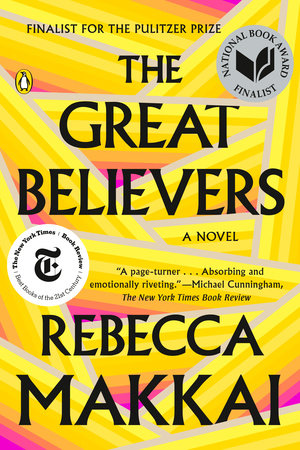
The Great Believers
In 1985 Chicago, art-gallery development director Yale Tishman is poised to secure a collection of 1920s paintings as AIDS devastates his circle of friends.
About
Spoiler notice: Spoilers cover the premise and the two timelines: Yale’s circle of friends during the 1985 Chicago AIDS crisis, Nico’s funeral, and Fiona’s 2015 search in Paris for her estranged daughter. Later developments and the ending are withheld.
The Great Believers moves between two moments shaped by the same losses. In 1985 Chicago, Yale Tishman works in the development office of an art gallery and is close to securing a major gift of paintings from 1920s Paris. His professional hopes rise just as AIDS begins taking people from his circle of friends. After Nico dies, Yale finds himself leaning on Fiona, Nico’s younger sister, as the epidemic reaches further into the community around them. Thirty years later, Fiona is in Paris, searching for a daughter who has become estranged from her and disappeared into a cult. A stay with an old friend, a photographer who documented the Chicago crisis, brings Fiona back to grief she has never fully been able to set aside. The novel follows both stories, giving the later one room beyond aftermath.
Yale’s storyline begins in a city where friendships, work and ordinary plans continue even as the epidemic changes what the future can mean. The gallery’s prospective collection offers him a chance to advance his career and secure a lasting cultural contribution. At the same time, people he knows are becoming ill and dying. Those two pressures are not separate tracks: Yale’s professional ambitions take shape amid a crisis that makes the idea of a stable future increasingly difficult to trust. The paintings connect Chicago to an earlier Paris art world, while Yale’s work also gives him a practical reason to think about institutions, patrons and what can be preserved. Around him, however, the immediate work is more personal: staying close to friends, absorbing loss and trying to understand how quickly a once-familiar social world can narrow.
Makkai sets the novel among friends and chosen family rather than making Yale face the crisis alone. Nico’s death changes the group’s shape, and Fiona remains as one of the few connections Yale can still depend on. Their bond carries shared experience, though grief is not identical for those who survive. The wider circle matters because the epidemic affects partners, siblings, friends and communities whose ties become a source of care. The novel’s title can be read against that changing landscape: belief may mean faith in other people, in the value of art or in the possibility that lives marked by illness and loss can still hold meaning. These kinds of belief exist beside fear, without cancelling the damage around them.
Fiona’s chapters shift the setting to Paris in 2015 and give the story a different set of responsibilities. She is no longer part of Yale’s Chicago workday, but the earlier crisis remains bound to her relationships and sense of herself. Her search for her estranged daughter brings mother and daughter’s distance into focus, while the stay with the photographer links Fiona’s present to images and memories of the people they knew. The novel’s alternating structure places these periods in conversation: one follows a group confronting catastrophe as it unfolds; the other follows a woman trying to reckon with what that catastrophe left behind in her own life. Fiona’s story is not only a return to the past, because her daughter’s absence creates a present-tense problem that cannot be resolved simply by remembering. Her search asks how much a parent can understand about a child beyond reach.
The two timelines let Makkai approach AIDS as an event with both an immediate history and a long personal afterlife. The Chicago sections look at the crisis from within one circle of friends, in a period when its effects are arriving one by one among people Yale knows. The Paris sections turn toward later memory and the difficulty of separating current family relationships from earlier loss. The book’s focus on friendship and family keeps that history particular: it is carried through people who share meals, work, affection, resentment and obligations, rather than presented as an abstract chronology. A crisis also alters lives beyond those who become ill. Fiona’s relationship with her daughter, and Yale’s changing connections to those around him, show how the effects of loss can travel through intimacy and across generations.
Art gives these concerns another form. Yale’s role at the gallery places the 1920s paintings at the centre of his professional hopes, and the Paris storyline continues the novel’s interest in artists and the ways images preserve or frame experience. The old friend Fiona visits is known for photographs made during the Chicago crisis, so the past is present not only in recollection but in records created by someone who witnessed it. Images can keep people and moments visible, yet they cannot contain everything that happened or restore those who are gone. The novel puts this tension beside Yale’s effort to secure an art collection and Fiona’s attempt to understand the history that shaped her family. Preservation and memory cannot make loss harmless; they attend to what remains and to the people who deserve remembrance.
Makkai has described how the novel’s form changed as she worked on it. She began with a story set in the 1980s, then added Fiona’s 2015 sections after writing about 150 pages. She has also said that the book grew from an interest in the Paris art scene between the world wars, which became a smaller but continuing thread alongside the Chicago narrative. That account helps explain why the book’s strands are linked by more than a calendar jump: art, friendship, AIDS and family cross between them in different ways. The novel attends to people living through crisis and those trying to understand what it left behind. First published in 2018, The Great Believers places those periods side by side, asking how people keep faith with one another when disaster disrupts both the lives they planned and the stories they tell about the past.
Book details
- Author
- Rebecca Makkai
- First published
- 2018
- Series
- No series listed
- Subgenre
- Literary historical fiction
- Primary genre
- Historical Fiction, Literary Fiction
- Tags
- No tags for this book.
Review
Editor profile
Baby Bat
Goodreads and social links will be added soon.
- Goodreads — link coming soon
- Social media — link coming soon