
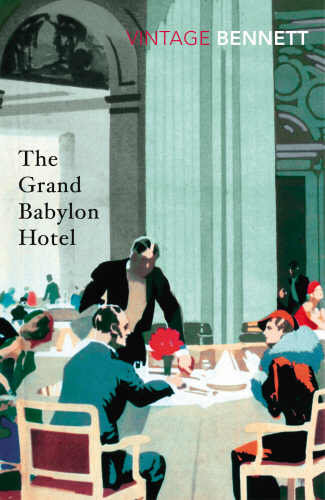
The Grand Babylon Hotel
American millionaire Theodore Racksole and his daughter Nella are staying at London's Grand Babylon Hotel when the staff resist their unconventional dinner orders.
About
Spoiler notice: This overview includes the conspiracy's explanation, Jules's death and the novel's ending.
The Grand Babylon runs on the assumption that important guests understand how an important hotel expects them to behave. Its head waiter Jules helps enforce that understanding with manners polished enough to make a refusal sound like an institution speaking. American millionaire Theodore Racksole and his daughter Nella are less impressed by the rules. When she asks for steak and beer instead of the elaborate dinner on offer, the resulting resistance sends her father to the proprietor, Felix Babylon. Racksole buys the hotel and makes sure the order will be served. Arnold Bennett's 1902 novel begins with this extravagantly expensive answer to a small inconvenience, then discovers how little ownership guarantees knowledge. The new proprietor has acquired an establishment whose celebrated staff possess skills and secrets he has barely begun to recognize.
The mystery develops around guests connected with the royal house of Posen. Nella already knows Prince Aribert from an earlier meeting abroad, and their renewed acquaintance supplies both attraction and questions about what he has chosen to conceal. Reginald Dimmock, a young member of the princely circle, attracts her attention before his sudden death changes the atmosphere. At first Racksole suggests a natural cause, but the doctor refuses that confident explanation without further examination. The luxurious building becomes a place where familiar appearances no longer settle what has happened. Bennett keeps the brisk conversational manner of the opening while introducing the possibility of murder, so the transition into danger feels like an escalation of the same contest over who knows more than the person opposite them.
Nella is an active investigator rather than a daughter waiting for her father's solution. Following the former hotel clerk Miss Spencer to Ostend, she confronts her with a revolver and presses for information about the missing Prince Eugen. Miss Spencer's story reveals connections between herself, Jules and the prince's captivity, but her distressed answers are not a complete or automatically trustworthy explanation. Nella must decide what to believe while maintaining an authority she is surprised to find herself capable of exercising. The scene gives her nerve a threatening aspect as well as an adventurous one. Like Racksole, she is willing to use force and act beyond official procedures. Her courage advances the investigation, while her methods contribute to the legal and practical risks accumulating around it.
Back in London, the hotel's layout becomes part of the puzzle. Racksole notices that room 111 sits directly above the state apartments and orders that it remain unoccupied. Nella has also warned him to watch Rocco, the celebrated chef whose reputation seems almost incompatible with suspicion. The kitchens initially offer reassurance through their impressive organization, equipment and specialized labour. Meeting Rocco there, Racksole finds a man who describes inventing dishes in his head as a composer might create music. That genuine professional distinction cannot guarantee innocence. Racksole tries false information about an arrest and a proposed search to test his response. The investigation repeatedly requires him to look past the prestige of a role and ask what the person performing it may be doing elsewhere.
The threat eventually extends to a bottle of Romanée-Conti intended for Prince Eugen. Wine service, normally another demonstration of the hotel's refinement, becomes a means by which an attack might reach its target. A pursuit through the cellars and surrounding streets also exposes how awkward Racksole's unofficial methods can become. A policeman sees him climbing the railings of his own property and insists on establishing his identity, delaying him while Jules escapes toward the river. The interruption is comic because the proprietor knows his business and the officer does not; it is dangerous because ownership does not make every suspicious action recognizable as legitimate. The enormous hotel, with its stairs, corridors and different entrances, supplies both investigative opportunities and routes through which the quarry can slip away.
Once Racksole captures Jules, also known as Tom Jackson, the conflict becomes an interrogation. Racksole threatens to take justice into his own hands, while his prisoner accurately points out that the investigator has broken laws himself. Jules's account connects the original plan to preventing Eugen from meeting the financier Sampson Levi before a deadline; later instructions seek the prince's death. Royal marriage, debts and competing interests give the intrigue its machinery. The explanation is presented through a criminal's confession, with limits to what he knows about the people behind the payments. Bennett's villains are inventive, but so is the millionaire opposing them, and their confrontation makes the resemblance uncomfortable. Racksole's successful pursuit does not erase the difference between obtaining an answer and establishing it through lawful procedure.
The final chapter resolves the immediate dangers without putting every conspirator through a courtroom. Jules dies after an escape attempt ends with a fall from a defective ladder. Miss Spencer disappears, while Rocco later resurfaces successfully employed in Buenos Aires. Racksole negotiates the authorities' questions with patience, influence and diplomatic assistance. Eugen recovers, and Aribert proposes marriage to Nella while renouncing his princely status to avoid an unequal royal marriage. Her father's enormous financial settlement puts the couple's prospective household on a different footing again. Finally, Felix Babylon admits he misses running the hotel and buys it back at the price Racksole paid. The return closes the original bargain, but the reader now knows how much danger, theatrical ingenuity and concealed activity that apparently simple purchase contained.
Book details
- Author
- Arnold Bennett
- First published
- 1902
- Series
- No series listed
- Subgenre
- Classic crime, Classic adventure
- Primary genre
- Mystery & Thriller
- Tags
- No tags for this book.
Review
Editor profile
Baby Bat
Goodreads and social links will be added soon.
- Goodreads — link coming soon
- Social media — link coming soon